

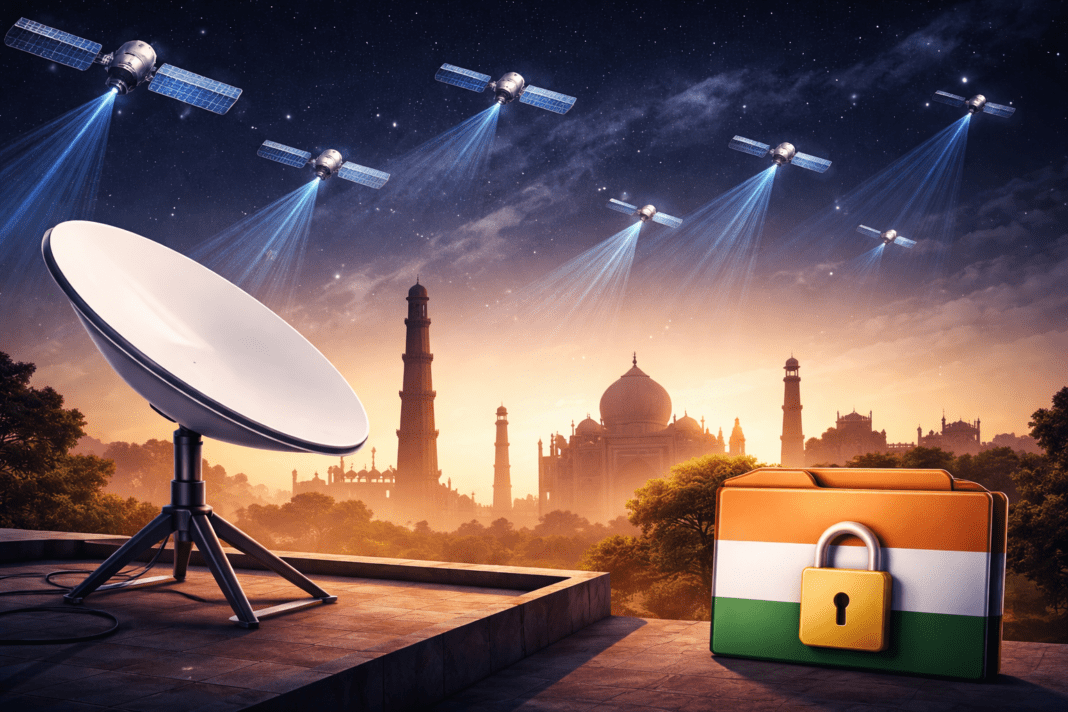

India has paused final investment approvals for Starlink, the satellite internet service by SpaceX, as it reviews the company’s ownership structure and technical details amid growing security concerns in sensitive sectors like telecom and space. The move is not a ban but a precaution to ensure compliance with regulations and protect national security, while Starlink continues to await final clearances to begin operations in the country.
Government Raises Questions Over Ownership and Security
Indian authorities are mainly concerned about SpaceX’s ownership structure. Since Starlink is part of a foreign company, officials want complete clarity on who controls the service and how decisions are made. This is especially important in sectors like telecom, where data and communication networks are involved.
Telecom networks are considered critical infrastructure. They play a major role during emergencies, defense operations, and everyday communication. Because of this, the government wants to be sure that no outside influence can misuse the system.
Another key concern is related to security risks. Satellite internet works differently from traditional networks. Instead of using ground-based towers, it relies on satellites orbiting the Earth. This makes it harder to control or monitor in certain situations. Indian officials want to ensure that the system can be managed properly within the country’s legal and security framework.
Global tensions have also made governments more cautious. Many countries are now reviewing foreign investments more strictly, especially in technology and communication sectors. India is following a similar approach by carefully checking all aspects before giving final approvals.
Final Approvals Still Pending Despite Initial Licenses
Starlink has already received some basic permissions to operate in India. However, these are only the first steps. The company still needs final approvals for spectrum allocation and foreign investment clearance.
Spectrum refers to the radio frequencies used to transmit internet signals. Without proper allocation, Starlink cannot provide its services to users. The government controls this spectrum and must ensure it is used safely and efficiently.
Investment approval is another major requirement. Since Starlink plans to invest in India, it must follow foreign direct investment (FDI) rules. These rules are designed to protect national interests and ensure transparency in financial dealings.
U.S. Senator urges Elon Musk to stop Starlink abuse by Southeast Asia scam rings
Both these approvals are linked to security checks. Officials are reviewing technical systems, data handling methods, and operational plans before making any decisions. This process can take time, especially when multiple agencies are involved.
The delay highlights how complex the approval process can be for foreign companies entering India’s telecom sector. Even with initial licenses in place, companies must meet several conditions before launching services.
Concerns Grow After Past Misuse of Satellite Technology
Reports of satellite internet devices being misused in countries like Iran have increased caution among Indian authorities. Such incidents raised concerns about control and regulation, especially when services operate beyond traditional telecom systems. This has made officials more alert while reviewing Starlink’s plans in India.
The government wants to prevent similar risks and maintain strong control over communication networks, particularly during emergencies or sensitive situations. While satellite internet can improve connectivity in remote areas, its independent nature creates regulatory challenges that need careful handling.
SpaceX pivots from Mars as Elon Musk backs fast-track plan for self-growing city on the Moon
Officials are also examining how Starlink will manage user data. Data security remains a major concern, and authorities want to ensure that all information is protected and handled according to Indian laws and standards.
Starlink is expected to hold discussions with government officials to address these concerns. The company is working to meet regulatory requirements, but until all issues around security, ownership, and operations are fully resolved, final approvals for its investment and services in India are likely to remain on hold.