

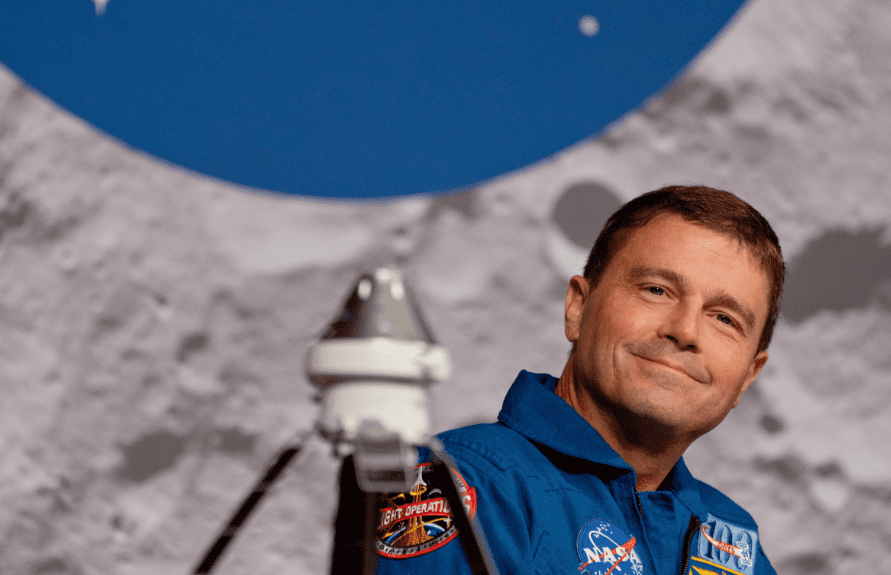

The crew of NASA’s Artemis II mission has expressed strong confidence that a human Moon landing could happen soon, following their successful journey around the Moon. The astronauts called the mission a major step forward, marking the first human lunar flyby in over 50 years since the Apollo program era. Artemis II is part of the Artemis program, which aims to return humans to the Moon and prepare for future missions to Mars.
A Historic Journey Around the Moon
The Artemis II crew included Commander Reid Wiseman, Pilot Victor Glover, Mission Specialist Christina Koch, and Mission Specialist Jeremy Hansen from the Canadian Space Agency. Together, they launched on April 1 and spent just over nine days traveling through space.
Their journey took them on a path around the Moon and back to Earth. This type of mission is called a “lunar flyby.” Unlike a landing mission, the spacecraft does not touch the Moon’s surface. Instead, it travels around it, collecting data and testing systems.
Nuclear power takes center stage in NASA’s plan to sustain lunar habitats during long moon nights
During the mission, the crew tested important systems inside the spacecraft. These included navigation, communication, life support, and heat protection for re-entry into Earth’s atmosphere. All of these systems are critical for future missions that will involve landing astronauts on the Moon.
The astronauts also experienced the deep space environment. This includes exposure to higher radiation levels and the challenges of being far from Earth. These experiences provided valuable information for scientists and engineers working on upcoming missions.
Crew Expresses Confidence in Moon Landing
After returning safely, the crew spoke about their experience and what it means for future missions. Commander Reid Wiseman said that based on what they observed, a Moon landing is “absolutely doable.”
This statement reflects the crew’s confidence in the technology and planning behind the Artemis program. The mission showed that spacecraft systems are working as expected and that astronauts can safely travel beyond low Earth orbit.
Pilot Victor Glover highlighted how smoothly many parts of the mission went. He noted that the spacecraft handled well, and the team on the ground provided strong support throughout the journey.
Moon resources in high demand among powerful nations.
Christina Koch, who already has experience from long-duration space missions, explained that the teamwork between astronauts and mission control played a key role in their success. She pointed out that communication systems worked reliably, even when the spacecraft was far from Earth.
Jeremy Hansen, representing Canada, also emphasized the importance of international cooperation. He said the mission showed how countries can work together to achieve big goals in space exploration.
A Step Forward for Artemis Program
The Artemis II mission is an important milestone in NASA’s plan to return humans to the Moon. It follows earlier test missions that focused on uncrewed flights and system checks.
One of the key goals of Artemis II was to test the spacecraft with a human crew onboard. This helps ensure that everything is ready before attempting a landing mission.
The data collected during this mission will now be studied carefully. Engineers will use it to make any necessary improvements to the spacecraft and mission plans.
The success of Artemis II builds on lessons learned from previous missions. These include understanding how spacecraft respond to extreme conditions like heat, pressure, and vibration during launch and re-entry.
Christina Koch and Victor Glover make history as Artemis-II mission heads toward the Moon
The mission also demonstrated that astronauts can safely travel long distances in space and return without major issues. This is a crucial step before attempting more complex missions involving landing and extended stays on the Moon.
The Artemis program aims to land astronauts near the Moon’s south pole. This area is of interest because it may contain water ice, which could be used for future exploration.
For now, the Artemis II crew’s statements highlight a growing confidence within the space community. Their experience shows that the goal of landing humans on the Moon again is not just a distant dream, but a realistic and achievable step forward in space exploration.