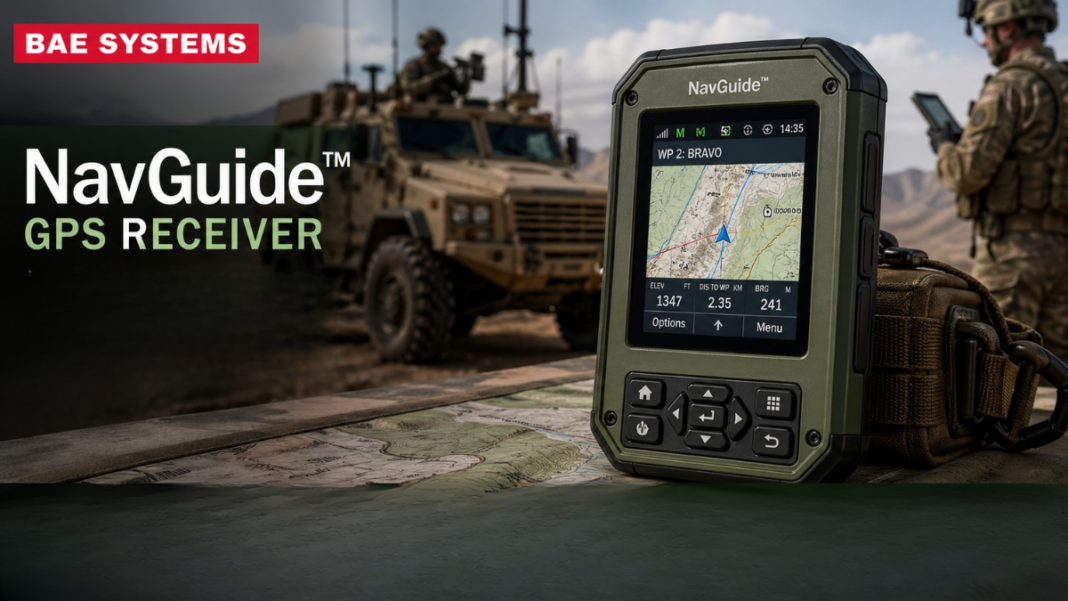

BAE Systems has begun production of its NavGuide™ GPS receiver, introducing a more secure and advanced navigation solution for military use. Designed to provide accurate positioning, navigation, and timing, the system supports vehicles, handheld devices, and sensors while addressing modern challenges like signal jamming and spoofing.
BAE Systems Begins Production of NavGuide™ GPS Receiver
BAE Systems has officially moved into production and started initial deliveries of its new NavGuide™ GPS receiver. This device is designed to provide secure positioning, navigation, and timing (PNT) for a wide range of military uses. These include vehicles, handheld devices, and sensor systems used in the field.
NavGuide™ is a portable and field-installable GPS receiver. This means it can be easily carried and quickly set up wherever it is needed. It is built to work in demanding environments and is designed to support modern military operations where accurate location data is critical.
US Air Force cancels the troubled OCX GPS program to protect vital global navigation stability
The receiver uses advanced M-Code GPS technology. M-Code is a newer, more secure GPS signal designed specifically for military use. It helps protect against threats like jamming and spoofing, which can disrupt or mislead GPS systems. With this technology, NavGuide™ offers more reliable performance even in challenging conditions.
Designed as a Direct Upgrade to DAGR Systems
NavGuide™ is developed as a direct replacement for the long-serving Defense Advanced GPS Receiver (DAGR), a system that has been widely used in military operations for more than two decades. Since its introduction in 2004, over 650,000 DAGR units have been deployed across the world, establishing it as a dependable tool for positioning, navigation, and timing in demanding environments.
One of the most important advantages of NavGuide™ is its backward compatibility with existing DAGR systems. This allows current users to upgrade without the need for major changes to their equipment. The receiver is designed to fit into the same mounts and operate with the same cables and accessories, making the transition smooth and efficient for operators.
Brain Health Alert: Why Experts Say You Shouldn’t Rely on GPS Too Much
The “drop-in” upgrade approach ensures quick and simple installation. In many cases, NavGuide™ can be installed in less than two minutes, without requiring any modifications to vehicles or software systems. This helps reduce downtime and ensures that operations can continue without interruption, which is critical in active and time-sensitive situations.
NavGuide™ has already been successfully integrated into more than 30 vehicle platforms, demonstrating its flexibility and adaptability. It is available not only to U.S. armed forces but also to allied nations through foreign military sales programs, supporting a wide range of operational needs.
Advanced Features for Modern Military Needs
NavGuide™ brings several important upgrades compared to earlier GPS receivers, making it more practical and efficient for modern use. One of its key features is its compact and lightweight design. This allows it to be easily carried and quickly installed in different environments, whether it is used on military vehicles or as a handheld device by personnel in the field.
The receiver is equipped with a full-color user interface that is designed to be simple and easy to understand. Even users with limited technical knowledge can operate it without difficulty. It includes useful navigation tools such as waypoint navigation and a moving map display. These features help users clearly track their position and better understand their surroundings in real time.
Qatar freezes maritime traffic amid unexplained GPS fault — global energy trade on alert
Another major improvement is the use of advanced M-Code GPS signals. This technology provides stronger protection against threats like signal jamming and spoofing. It ensures that positioning, navigation, and timing data remain accurate and dependable, even in challenging or disrupted environments.
BAE Systems has extensive experience in developing military GPS technologies. The company has supplied anti-spoofing modules to more than 45 countries and continues to deploy secure M-Code GPS systems for U.S. forces and allied nations, reflecting growing demand for reliable navigation solutions.