
Last updated: November 23, 2026.
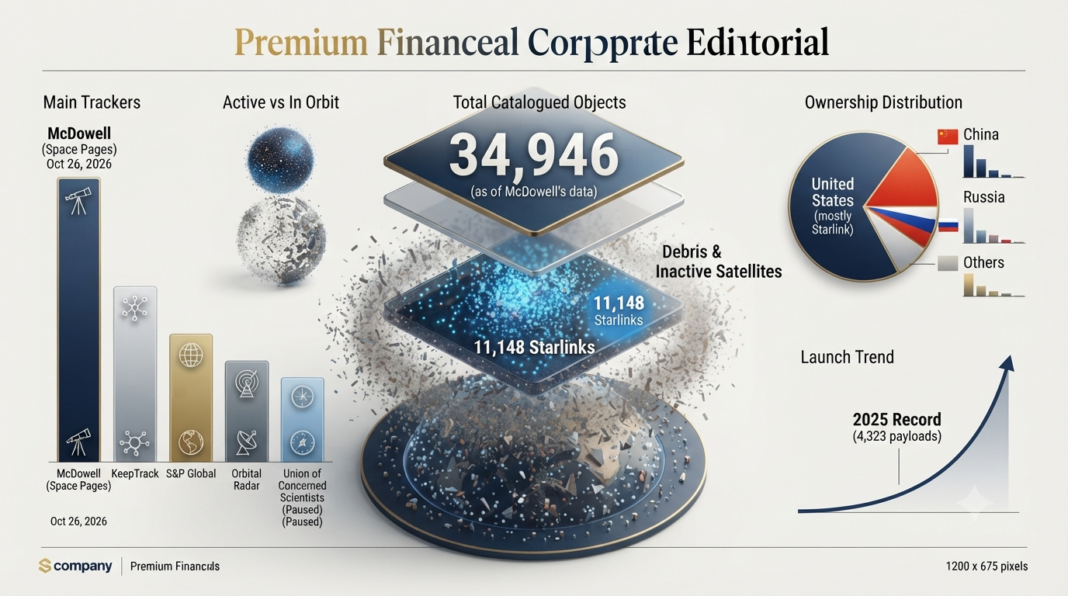
Short answer: As of October 26, 2026, astrophysicist Jonathan McDowell’s catalogue counts 17,099 active satellites in orbit, and 11,148 of them are SpaceX Starlinks. Other trackers give figures from about 15,900 to about 18,000, depending on what they count and when.
The numbers from the main trackers
| Source | Figure | Date | What it counts |
|---|---|---|---|
| — | — | — | — |
| Jonathan McDowell (Space Pages) | 17,099 active | Oct 26, 2026 | Active satellites, including 11,148 Starlinks |
| KeepTrack catalogue | 16,800 active; 20,290 in orbit | Oct 2026 | Operational status in its catalogue, and all satellites still in orbit |
| S&P Global Market Intelligence | Nearly 18,000 active | Jul 2026 | Active satellites; up more than 17 times since 2010 |
| Orbital Radar | 15,870 active | Oct 20, 2026 | Active satellites by its own definition |
| Union of Concerned Scientists | 7,560 operational | May 1, 2023 | Frozen. The database has paused updates |
Why the numbers differ
- Active versus in orbit. A satellite that has died but not yet re-entered still counts as “in orbit”. McDowell’s data shows thousands of dead payloads still circling Earth, so a count of everything in space is higher than a count of working satellites.
- Definitions of “working”. Some catalogues count a satellite as active only if it can manoeuvre. Others include non-manoeuvrable payloads such as many CubeSats.
- Dates. Starlink launches several times a week, so a count from a month ago is already out of date.
- Frozen databases. The widely quoted UCS Satellite Database stopped updating after May 2023, so any article still quoting 7,560 is using old data.
Who owns them
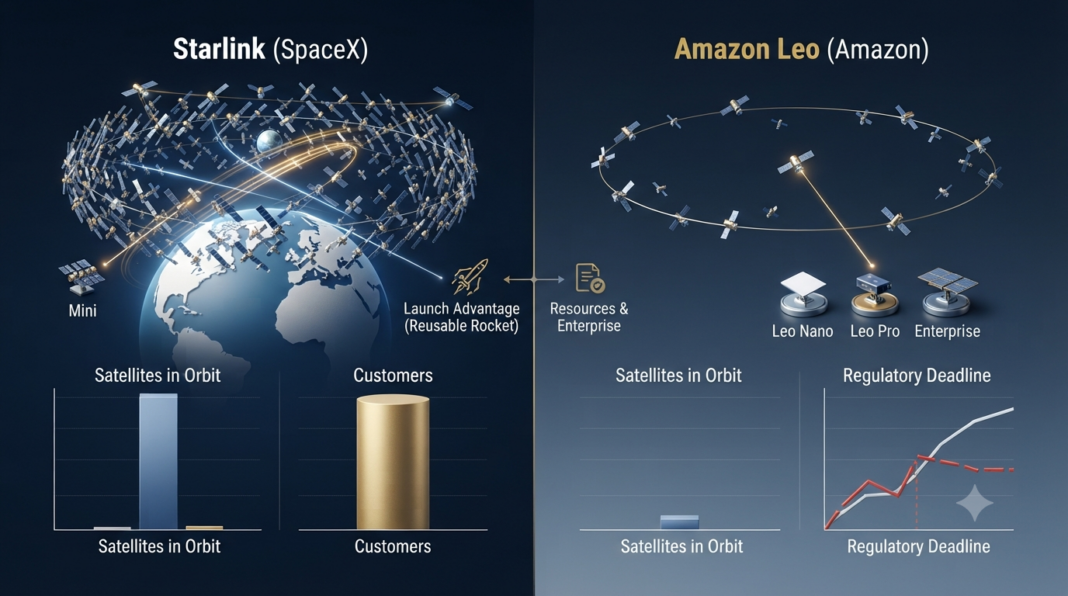
Starlink alone accounts for roughly two of every three working satellites. McDowell’s catalogue lists 3,669 other active manoeuvrable payloads and 2,281 active non-manoeuvrable ones. The United States dominates the count, largely because of SpaceX. China and Russia each have fewer than 2,000 satellites in orbit, according to KeepTrack’s catalogue. See how the big networks compare in our guide to satellite internet constellations, and our head-to-head Amazon Leo vs Starlink.
Why it matters
More satellites mean more objects to track and avoid. Total catalogued objects in orbit, including debris, stood at 34,946 in McDowell’s data. Collisions create more debris, which is the risk behind the scenario explained in our glossary entry on Kessler syndrome. Launch activity is also rising: KeepTrack reports that 2025 set a record, with 4,323 payloads launched.
Which number should you use?
For “how many working satellites are there”, quote the McDowell figure with its date. For “how many are up there in total”, use a catalogue count of objects in orbit and say what it includes. Always give the date, because the numbers change weekly.
Frequently asked questions
How many satellites are in orbit right now?
About 17,100 active satellites as of October 26, 2026, according to Jonathan McDowell’s catalogue. Other trackers range from about 15,900 to about 18,000.
How many satellites does Starlink have?
McDowell’s data shows 11,148 active Starlinks in orbit on October 26, 2026, about two thirds of all active satellites.
Why do different sites give different satellite counts?
They define active satellites differently, count dead satellites that are still in orbit differently, and update on different dates.
Is the UCS Satellite Database still accurate?
No. It reports 7,560 operational satellites but its data runs only through May 1, 2023, and updates are paused.
How many objects are in orbit including debris?
McDowell’s catalogue lists 34,946 catalogued objects in orbit including debris and inactive satellites.
Official and primary sources
- Jonathan’s Space Pages: satellite and debris population
- Union of Concerned Scientists Satellite Database