

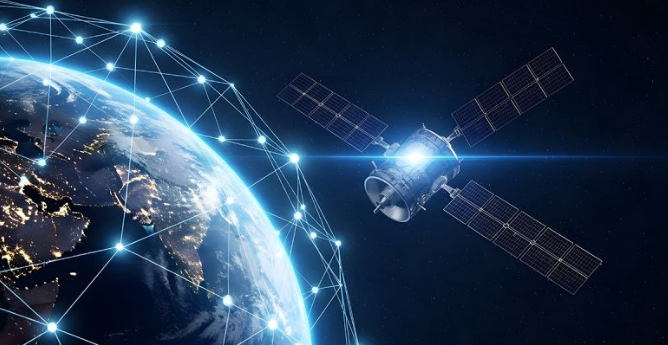

Satellites collect vast amounts of data daily, but sending it all to Earth for processing can cause delays. With AI-powered edge processing, satellites now analyze data directly in orbit and transmit only key insights, making systems faster, more efficient, and less energy-intensive.
How AI Is Transforming Data Processing in Space
Artificial intelligence plays a key role in enabling satellites to process data onboard. AI systems can quickly sort through large datasets, identify patterns, and make decisions without human intervention. This is especially useful in space, where communication delays can limit real-time control from Earth.
For example, satellites equipped with AI can detect changes in weather systems, track storms, or identify unusual activity on the ground. Instead of sending thousands of images, they can send only the most important information. This makes the entire process faster and more efficient.
Meta looks to space based solar energy to help power its AI operations around the clock
One major advantage of this approach is reduced latency. Latency refers to the time it takes for information to travel from space to Earth and back. By processing it in orbit, satellites can act immediately without waiting for instructions from the ground.
Another benefit is energy efficiency. Transmitting large volumes of information requires significant power. By reducing what is sent to Earth, satellites can conserve energy and extend their operational life.
AI-driven processing is also improving accuracy. Advanced algorithms can filter out noise and focus on meaningful insights. This ensures that the information sent back is more precise and useful for decision-making.
Real-World Applications Across Industries
The ability to process satellite data directly in orbit is transforming multiple industries. In defense and intelligence, faster data processing allows for quicker responses to potential threats. Satellites can analyze images in real time and alert systems on the ground almost instantly.
In agriculture, AI-powered satellites help monitor crop health and soil conditions. Farmers can receive timely insights about irrigation needs, pest activity, and crop growth. This helps improve productivity and reduce resource waste.
Climate monitoring is another important area. Satellites collect data on temperature, ice levels, and greenhouse gases. With onboard AI, this data can be processed more quickly, helping scientists track environmental changes more effectively.
Artificial Intelligence in Space: Exploring New Frontiers
Disaster response also benefits greatly from this technology. During events like floods, wildfires, or earthquakes, satellites can quickly analyze affected areas and provide critical information to emergency teams. This can help save lives and reduce damage.
Border surveillance and maritime monitoring are additional applications. Satellites can detect unusual movements, track ships, and monitor remote regions. With AI processing data in orbit, these tasks become faster and more reliable.
Advanced Space Computing Systems in Action
Technology companies are actively developing systems that bring powerful computing capabilities to space. Hewlett Packard Enterprise has demonstrated how high-performance computing can work in orbit through its Spaceborne Computer-2 system aboard the International Space Station.
This system is designed to handle complex data processing tasks directly in space. It shows that advanced computing hardware can operate reliably in the harsh environment of orbit, where factors like radiation and extreme temperatures pose challenges.
At the same time, newer companies such as Pixxel are building satellite systems that use AI to analyze Earth observation data. These satellites are designed to process large volumes of information efficiently while using minimal power.
Such developments highlight how space technology is evolving. Satellites are no longer just tools for data collection. They are becoming intelligent systems capable of analyzing and acting on information independently.
This progress is helping reduce dependence on ground-based infrastructure. By handling more tasks in orbit, satellite missions can operate more smoothly and with greater autonomy.
As more companies invest in orbital computing, the space industry continues to move toward smarter and more efficient systems. AI is at the center of this transformation, enabling satellites to do more than ever before while improving speed, accuracy, and energy use.