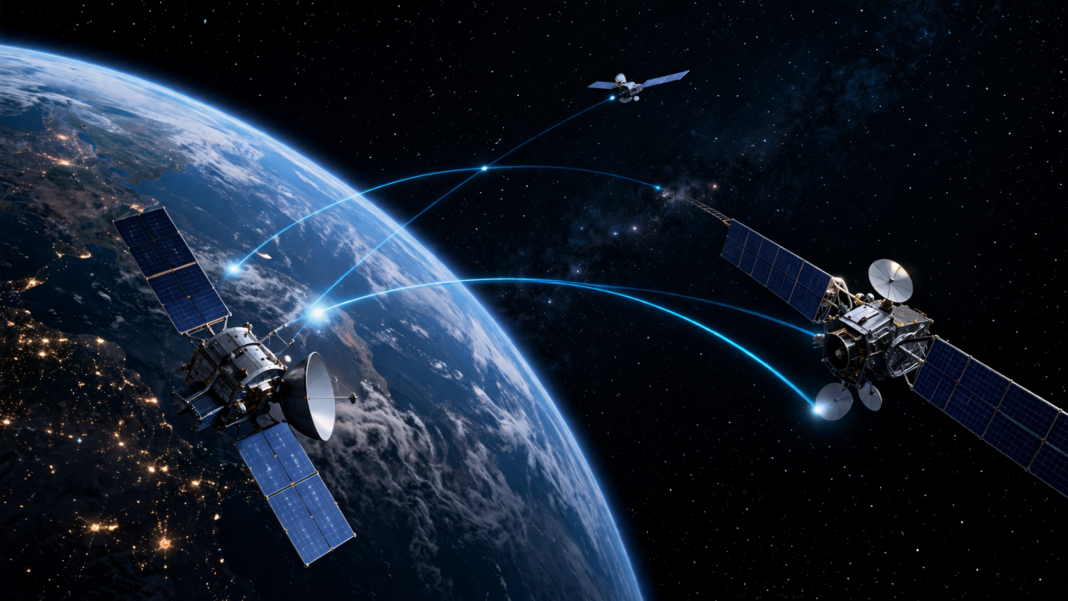

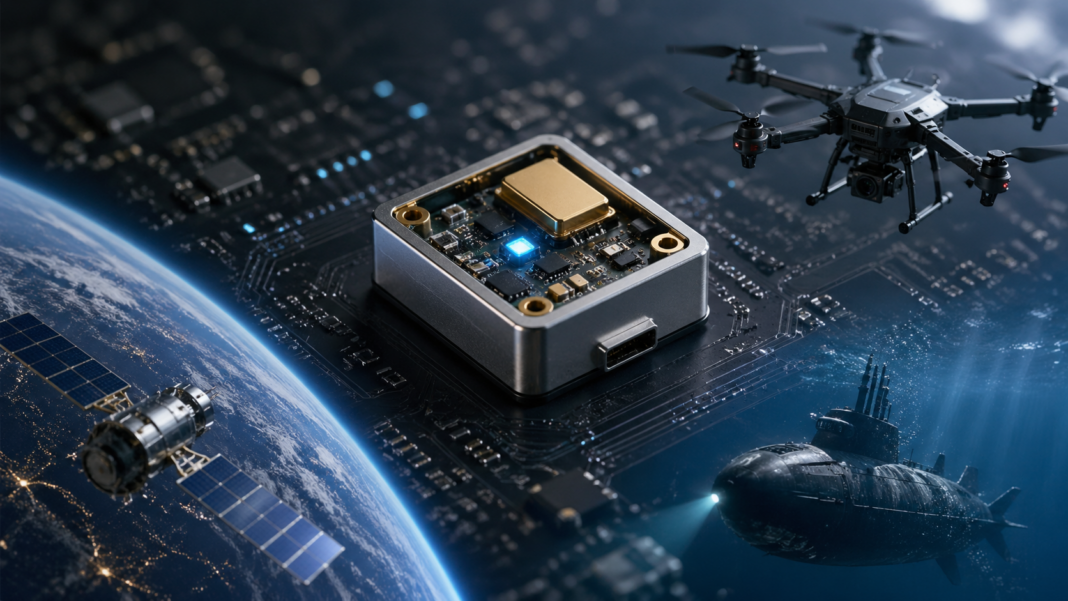

China has unveiled a breakthrough in timekeeping. It has developed a fingernail-sized atomic clock. The device combines extreme precision with a compact design. It is now being mass-produced. This marks a significant step forward in advanced technology.
A Tiny Clock with Extraordinary Precision
China has achieved a major breakthrough by mass-producing a chip-scale atomic clock as small as a fingernail. Despite its tiny size, it is extremely precise, losing just one second over 30,000 years. This makes it one of the most accurate timekeeping devices available today.
Even a tiny timing error of one nanosecond — one billionth of a second — can lead to a positioning mistake of about 0.3 meters. This is why an atomic clock is so important for satellites, navigation systems, and advanced communication networks. In comparison, even high-quality regular clocks can drift by more than 10 seconds per year, making them unreliable for long-term precision tasks.
A key highlight of this atomic clock development is large-scale production. These atomic clocks are no longer limited to laboratories and are now being manufactured in significant numbers for practical, real-world use, making them suitable for compact and energy-efficient devices.
How This Technology Works in Simple Terms
Traditional atomic clocks are widely known for their extreme accuracy, but they come with practical limitations. These systems are usually large, complex, and consume significant amounts of power. They operate by using microwave radiation to interact with atoms, producing a highly stable frequency that serves as a precise time standard. However, because microwaves have relatively long wavelengths, the physical components required for this interaction cannot be made very small, which restricts how compact these clocks can become.
The new chip-scale atomic clock takes a different and more efficient approach. Instead of depending solely on microwaves, it uses laser light that is carefully controlled by microwave signals. Laser light has a much shorter wavelength, allowing it to be confined within extremely small spaces. This enables the same precise atomic interaction to occur, but within a significantly reduced size, without sacrificing accuracy or stability.
Military secrets for sale as FlamingChina leaks classified chinese weapons research data
As a result, the clock is not only smaller but also far more energy-efficient. It consumes less than 200 milliwatts of power, making it suitable for devices that operate on limited energy sources, such as drones, portable systems, and small satellites. This low power requirement is critical for applications where battery life and energy conservation are essential.
With a volume of just 2.3 cubic centimeters, the device is about one-seventh the size of comparable products, while still delivering similar performance. This balance of compact design, efficiency, and precision makes it a major technological advancement.
Real-World Uses in Challenging Environments
One of the biggest advantages of chip-scale atomic clocks is their ability to operate independently without relying on external timing signals. Many modern technologies depend on satellite-based systems like GPS to maintain accurate time, but these signals are not always available in every environment. This limitation creates serious challenges for systems that require continuous and precise timing.
In environments such as underwater, underground, deep space, or in regions where GPS signals are blocked or intentionally jammed, devices must depend entirely on their internal clocks. Without a stable and accurate time reference, navigation systems can drift, and communication networks may lose synchronization, leading to errors or complete system failure.
China’s 56-satellite navigation system creates a massive strategic edge over India
The new chip-scale atomic clock addresses this issue by providing highly accurate and stable timing even in the absence of external signals. This makes it especially valuable for underwater navigation systems, where satellite signals cannot penetrate. It is also being used in low-Earth-orbit satellites and drone swarms, where precise timing is essential for coordination and safe operation.
China has already begun commercial production of these clocks, with hundreds of units sold and manufacturing steadily increasing. While challenges remain, particularly in reducing the cost of key components, the technology is proving to be practical and increasingly important across multiple industries.