

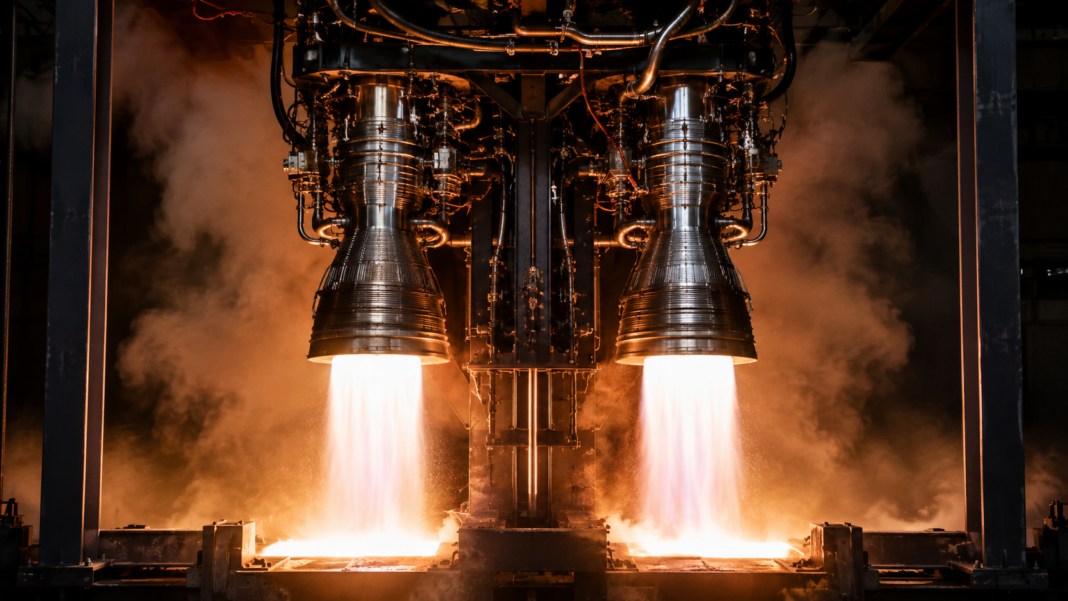

Agnikul Cosmos successfully test-fired two fully 3D-printed semi-cryogenic rocket engines together using electric pump technology and software-based thrust control, marking a key milestone for its upcoming Agnibaan launch missions and India’s growing private space sector.
Agnikul Uses Fully 3D-Printed Rocket Engine Technology
Agnikul Cosmos used its proprietary Agnilet engine technology during the recent rocket test, with the engines fully 3D-printed as a single piece instead of being assembled from hundreds of separate components. Traditional rocket engines require complex welding and assembly, which can increase production time and create possible weak points.
Agnikul’s single-piece printing method reduces joints, simplifies manufacturing, and helps speed up engine production for the growing small satellite launch market. The semi-cryogenic engines use liquid fuel and oxidizers stored at very low temperatures, offering improved efficiency compared to older propulsion systems.
The bright flame of a rocket launch becomes a symbol of Iran’s space ambition and progress
Combined with electric pump-fed technology, the design allows engineers to digitally control thrust through software instead of relying mainly on mechanical systems. The successful simultaneous firing of two engines also showed the company’s progress toward operating multi-engine rocket stages used in orbital launch vehicles.
Agnibaan SOrTeD Mission Moves Closer After Engine Test
Agnikul Cosmos is continuing preparations for its Agnibaan SOrTeD mission following the successful test firing of its 3D-printed semi-cryogenic rocket engines. The suborbital mission is designed to validate the company’s launch systems and engine performance before future launches.
The Agnibaan rocket is expected to become India’s first launch vehicle powered by a completely 3D-printed rocket engine. The rocket is being developed for the growing small satellite launch market, where demand for faster and dedicated launches continues to increase worldwide.
Return to Space Review: A Human Story Beneath the Rocket Flames
Small satellites are widely used for communication, Earth observation, scientific research, agriculture, weather tracking, and defense applications. Agnikul is developing a flexible launch system capable of carrying small payloads into low Earth orbit with customized mission options.
The recent engine test also highlights the growing role of Indian private startups in the country’s expanding space sector. Regulatory reforms in recent years have opened new opportunities for companies involved in satellite manufacturing, launch vehicle development, propulsion systems, and commercial space services.
India’s Private Space Sector Expands With New Rocket Developments
Agnikul operates from India’s first private launchpad and mission control center located at Satish Dhawan Space Centre. The launch facility represents an important development for India’s commercial space industry because it allows private companies to conduct launches and mission operations using dedicated infrastructure.
The company’s launch systems are being developed to support responsive and on-demand launches for small satellites. This type of launch service is becoming increasingly valuable as satellite operators seek shorter waiting times and more flexible mission scheduling.
Globally, private space companies are investing heavily in reusable launch systems, advanced propulsion technology, additive manufacturing, and software-controlled rocket operations. Agnikul’s latest engine test places the company among a growing group of startups exploring modern propulsion solutions for future launch vehicles.
The use of fully 3D-printed rocket engines is still relatively rare in the global space industry. Additive manufacturing allows companies to produce highly complex engine structures with fewer materials and reduced assembly requirements. This can help lower manufacturing costs while also speeding up testing cycles.
Innovative OptoSAR technology allows India’s newest satellite to see through thick clouds
The simultaneous engine firing further demonstrates the company’s ability to manage synchronized propulsion systems using internally developed software. Precise control over multiple engines is considered critical for stable rocket performance during launch sequences.
India’s private space sector has continued attracting attention as startups develop new technologies aimed at satellite launches, propulsion systems, and commercial space operations. The successful Agnikul engine test adds another important milestone to the country’s rapidly evolving commercial space industry and strengthens India’s position in the competitive global small satellite launch market.