

As demand for artificial intelligence and cloud computing grows rapidly, companies are exploring orbital data centres as a possible solution to rising energy use and infrastructure pressures on Earth. However, recent attacks on critical facilities have raised concerns that moving data centres into space may create new security and geopolitical risks instead of eliminating them.
Orbital Data Centres Are Being Seen as the Next Big Technology Shift
Recent drone attacks on data centre facilities in the United Arab Emirates and Bahrain during the US–Israel–Iran conflict have raised concerns about the physical vulnerability of cloud infrastructure. Although cloud computing seems invisible, it relies on real buildings, servers, cables, cooling systems, and power networks that can be damaged during war or cyberattacks.
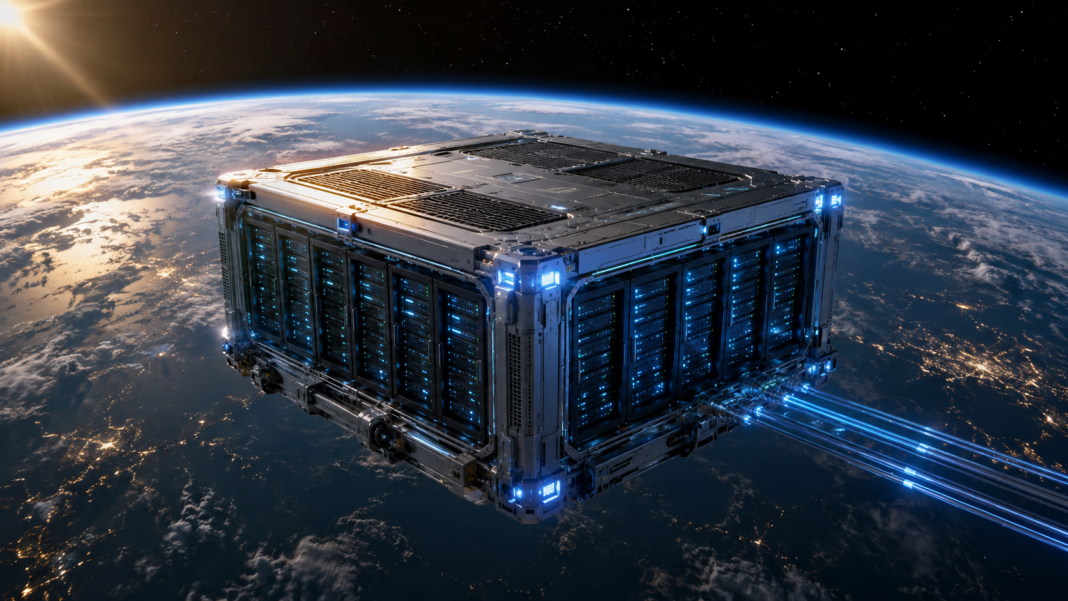
As artificial intelligence grows, data centres are consuming huge amounts of electricity, land, and water. To reduce these pressures, technology companies are exploring orbital data centres powered by continuous solar energy in space. Projects linked to Google, SpaceX, and Meta are studying space-based computing and communication systems.
However, major technical challenges remain. Radiation in space can damage computer chips, while cooling systems are difficult to manage in orbit. Repairs and launches are also extremely expensive. Orbital data centres would depend on stable satellite communication links, meaning even small disruptions could interrupt services across industries and create new security risks during international conflicts.
Space Is Already A Contested Military Environment
The idea of placing data centres in orbit is often presented as a way to protect digital infrastructure from conflicts, cyberattacks, and environmental pressures on Earth. However, space itself has already become a highly contested and strategically important environment. Modern satellites are deeply connected to military operations, global communications, navigation systems, weather forecasting, surveillance, and emergency response networks.
During periods of international conflict, satellites can become targets for jamming, hacking, spoofing, laser interference, or even direct physical attacks. Orbital data centres would operate in this same environment, making them vulnerable to both cyber and military threats. If companies begin placing large artificial intelligence systems and cloud computing infrastructure in orbit, these facilities could quickly gain strategic importance, especially if they support government services, defence communications, logistics, or military analysis.
India is building the next global AI powerhouse with massive investment of $12.7 billion from AWS
The risks in space are far more complex than attacks on ground-based data centres. A collision, explosion, or anti-satellite attack involving an orbital data centre could create massive debris fields that remain in orbit for years. This debris could threaten unrelated satellites used for GPS navigation, aviation, internet services, banking systems, disaster response, weather monitoring, and telecommunications.
As the global economy becomes increasingly dependent on satellite infrastructure, experts warn that attacks on orbital data centres could disrupt industries worldwide and raise tensions between countries, increasing the danger of broader geopolitical escalation during future conflicts.
Governments And Companies Face Growing Pressure Over Space Governance
As interest in orbital computing grows, experts say security and governance concerns are becoming increasingly urgent. Discussions are no longer focused only on whether space-based data centres can become commercially successful. The bigger challenge is how these systems would safely operate in an already crowded and militarised space environment.
Transparency is expected to become a major issue. Operators of orbital data centres may need to share details about satellite numbers, orbital positions, collision-avoidance systems, manoeuvrability, spectrum usage, and deorbit timelines. Many orbital systems would also continue relying on Earth-based ground stations for communication and control, creating additional vulnerabilities.
Legal classification during wartime is another growing concern. Governments may eventually need to decide whether orbital data centres should be treated as civilian infrastructure or strategic assets if they support defence communications, logistics, or military analysis.
SpaceX files plan for orbital AI supercomputers powered by the sun, bypassing Earth’s energy limits
Cybersecurity risks are also significant. Orbital data centres could become major targets for hacking, electronic interference, and digital sabotage during international crises. At the same time, debris caused by accidents or attacks in orbit could threaten unrelated satellites for years, disrupting navigation, telecommunications, weather monitoring, and internet services worldwide.
Experts also warn that poor communication between governments, cloud providers, and satellite operators could increase tensions during crises, where technical failures or debris events may be mistaken for deliberate military actions in space.