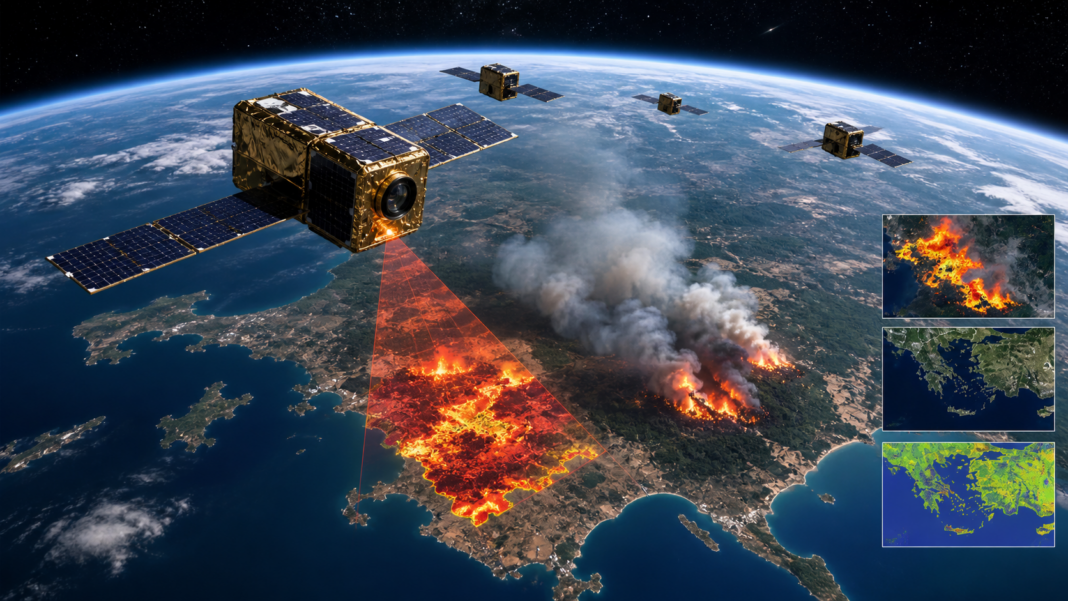

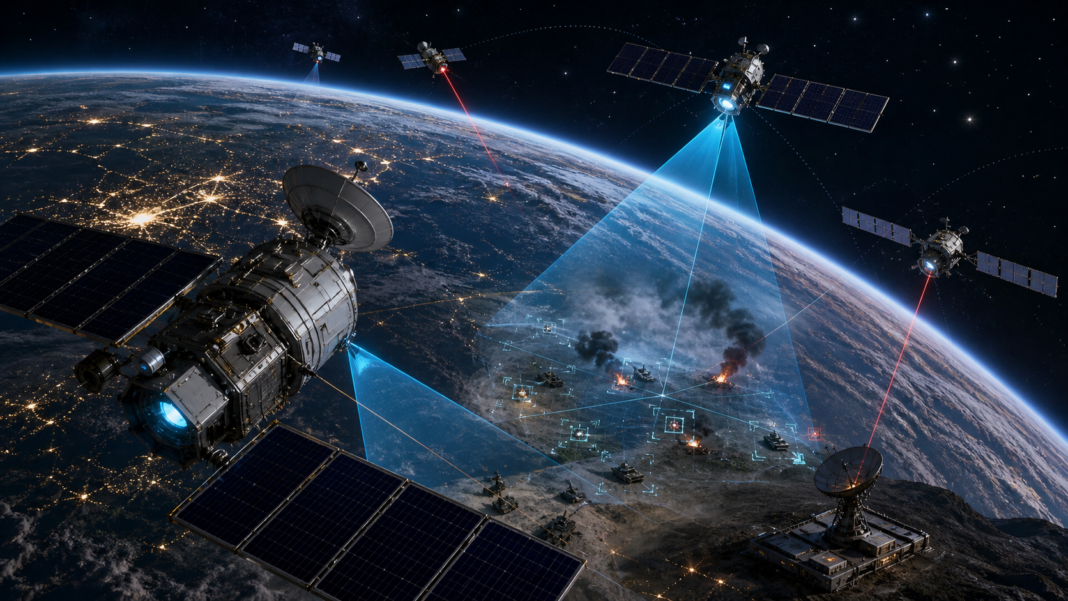

Satellites support everyday services like GPS, communication, and weather updates, but many now serve both civilian and military roles. These “dual-use” satellites are making it harder to tell peaceful space activities from military operations as space becomes more crowded and complex.
What Are Dual-Use Satellites and Why They Matter
Dual-use satellites are space systems that can serve both civilian and military roles. For example, a satellite that provides internet services can also be used to support military communication. Similarly, satellites that capture images of Earth for weather forecasting or farming can also be used to track troop movements or monitor sensitive locations.
This overlap is what makes dual-use satellites so important—and also concerning. In the past, military satellites were clearly separate from civilian ones. Governments controlled them, and their purposes were easier to identify. Today, that line is fading.
China pledges cleanup after fueling space junk explosion with massive satellite launches
Private companies now play a big role in space technology. Many of them launch satellites that offer services like high-speed internet or Earth imaging. These services are useful for normal life, but they can also support military actions during conflicts. For example, real-time satellite images can help in planning operations or tracking changes on the ground.
Because of this, satellites that appear harmless can become part of military strategies. This creates confusion about whether a satellite is a safe civilian tool or a potential military target.
How Dual-Use Satellites Are Changing Modern Conflicts
Modern conflicts are no longer limited to land, sea, or air, as space has become an important domain where countries compete, gather intelligence, and prepare for potential threats. At the center of this shift are dual-use satellites, which are designed to serve both civilian and military purposes. These satellites support everyday needs like communication, navigation, and weather monitoring, while also playing a role in defense activities such as surveillance and secure data sharing.
One major challenge is that these satellites can assist military operations without being officially labeled as military assets. This creates confusion for other nations trying to interpret their role. If a satellite is helping in military planning or tracking movements, it becomes unclear whether targeting it would be considered a legitimate act of war or an attack on civilian infrastructure, which could violate international norms.
Satellite Constellations: Revolutionizing Spacetech
This uncertainty increases the risk of misunderstandings between countries. One side may believe it is acting against a military system, while the other may see it as an attack on essential civilian services. Such misinterpretations can quickly raise tensions and increase the chances of conflict escalation.
The growing involvement of private companies adds another layer of complexity. Commercial satellites often provide critical data to governments during conflicts. At the same time, the increasing number of satellites in orbit is making space more crowded, raising the risk of accidental collisions, signal interference, or incidents that could be wrongly seen as deliberate actions.
The Growing Complexity of Space as a Strategic Domain
As technology advances, space is becoming more important for both daily life and national security, with dual-use satellites playing a central role. These satellites provide essential services but also introduce new risks due to their ability to serve both civilian and military purposes.
One major concern is the lack of clear international rules. Existing space laws were created when space activities were limited and mostly controlled by governments. Today, these rules do not fully address the challenges posed by dual-use systems, leading to different interpretations by countries.
Rocket Lab’s Suborbital Tech Gains Dual Defense Role in U.S. and U.K. Hypersonic Weapons Programs
Another issue is the difficulty in tracking and understanding satellite activities. While some satellites clearly state their purpose, others operate with limited transparency, creating uncertainty and suspicion among nations. This makes it harder to distinguish between peaceful and strategic uses.
Protecting space infrastructure is also a growing challenge. Many essential services on Earth, such as communication, navigation, and weather forecasting, depend on satellites. Any disruption can have serious consequences. As more satellites are launched and shared between civilian and military needs, separating their roles becomes increasingly difficult, adding to the complexity of modern space operations.