

Greece has entered a new phase in environmental protection by using space technology to tackle one of its biggest challenges—wildfires. With the successful launch of its first thermal satellites, the country is now better equipped to detect fires early, monitor natural changes, and respond quickly to emergencies. This mission marks an important step in strengthening disaster management systems while also expanding the use of advanced satellite data for climate and environmental monitoring.
A New Space-Based System to Track Fires in Real Time
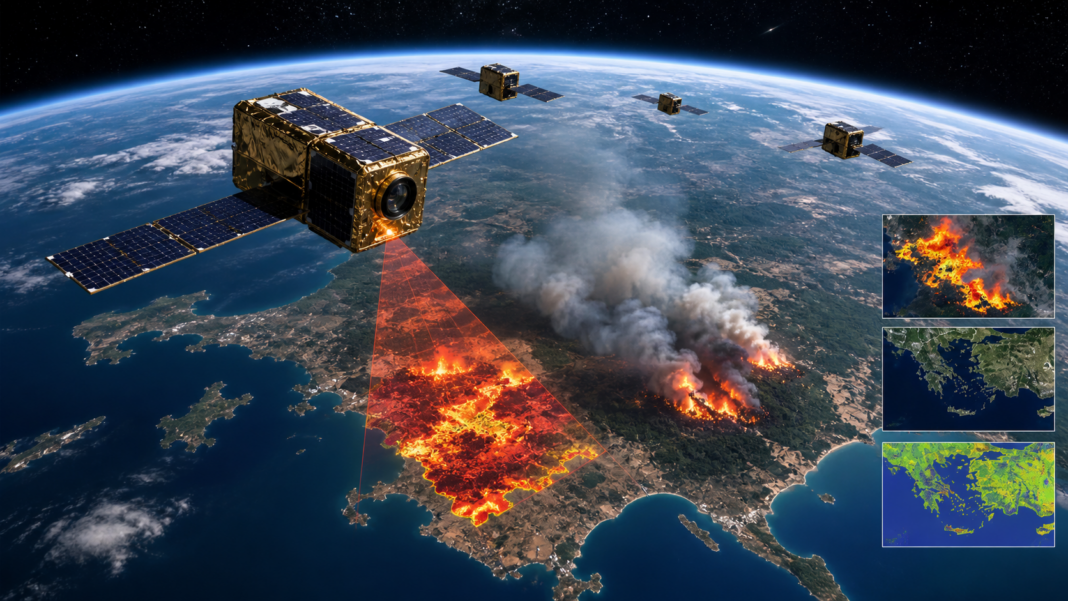
Greece has taken a major step to protect its environment by launching its first thermal satellites into space. These satellites are designed to detect wildfires early and track their spread, helping improve disaster response and climate monitoring. The satellites were launched on a Falcon 9 rocket and are now orbiting Earth, collecting important data.
There are four satellites in total, each equipped with advanced thermal sensors that can detect heat from fires, even in remote areas. This allows authorities to identify wildfires quickly and respond faster, reducing damage to forests, homes, and wildlife. Early detection is especially important during hot and dry conditions when fires can spread rapidly.
Innovative OptoSAR technology allows India’s newest satellite to see through thick clouds
The satellites work together as a connected network, covering large areas of land and sea. When one satellite detects a fire, the others help monitor it continuously. This improves accuracy and gives authorities a clearer, near real-time understanding of wildfire situations.
How the Satellites Help in Disaster Management and Environmental Monitoring
The new satellite system is designed not only for wildfire detection but also for broader environmental monitoring using advanced thermal technology. It can collect detailed data about land, water, and temperature changes across the country.
For example, the satellites can measure thermal variations in sea surface temperatures. This helps scientists understand changes in ocean conditions. They can also monitor lakes and reservoirs, which is useful for managing water resources more efficiently.
The system can observe different types of land use through thermal imaging. This includes forests, farms, cities, and wetlands. By tracking these areas, authorities can make better decisions about agriculture, urban planning, and conservation.
Ozone Layer at Risk: Starlink Satellites Pose New Threat
All the data collected by the thermal satellites will be sent to a central platform known as the Earth Observation Hub. This platform will bring together information from different sources into one place. It allows government agencies to access real-time data and respond more effectively.
This integrated system improves coordination between different departments. For example, fire services, environmental agencies, and local authorities can all use the same data. This leads to faster and more organized responses during emergencies.
The satellites were developed with the help of advanced space technology. They are part of a larger plan to strengthen the country’s ability to deal with climate-related risks. Wildfires have become more frequent in recent years, making such systems increasingly important.
Additional Satellites Expand Capabilities in Space Technology
Along with the four thermal satellites, two smaller experimental satellites were also launched during the same mission. These are part of a separate program focused on testing new space technologies and expanding Greece’s capabilities in space-based observation.
These small satellites, known as CubeSats, are designed for Earth monitoring. They can help detect ships at sea, track coastal flooding, and support disaster response in coastal regions. They also assist agriculture by observing crop conditions from space, helping farmers and planners manage resources more effectively.
Mexico City is sinking by nearly 10 inches every year according to new satellite data
A key feature being tested is laser-based communication, which allows faster and more secure data transfer between satellites and ground stations. This improves the efficiency of data sharing and real-time monitoring.
The mission is part of a national program aimed at strengthening space technology, supported by government agencies and European collaboration. With these systems now in orbit, Greece has improved its ability to monitor environmental changes, manage disasters, and use real-time satellite data for better decision-making.