
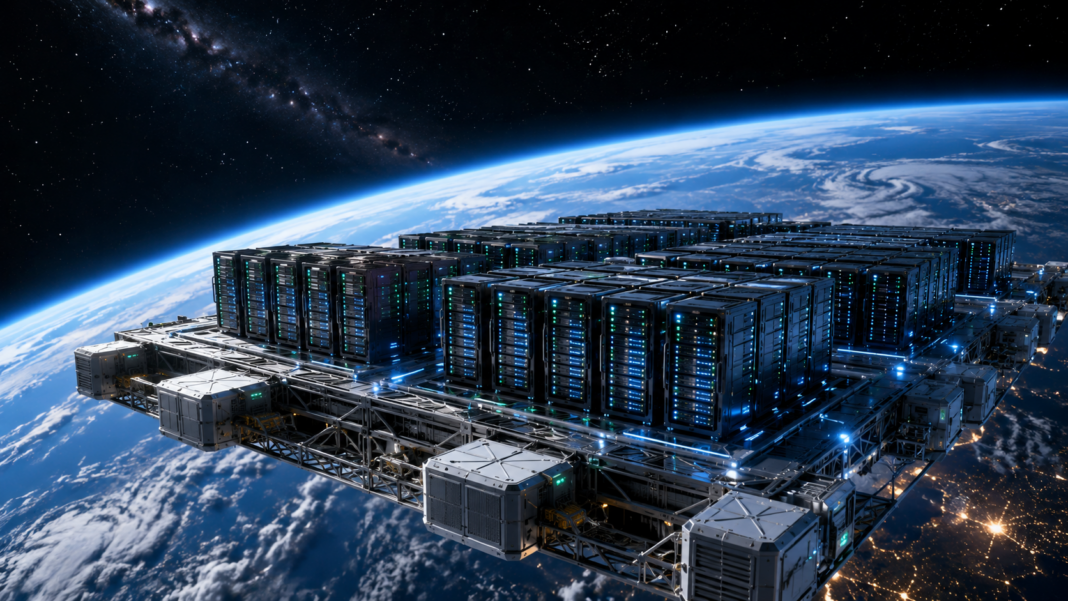

As demand for artificial intelligence and cloud computing continues to rise, Google and SpaceX are reportedly exploring a futuristic idea — launching data centers into space. The concept involves placing computing hardware inside satellites to process and store data in orbit using solar energy, offering a possible alternative to energy-intensive data centers on Earth.
Google and SpaceX Discuss a New Era of Space-Based Computing
Google and SpaceX are reportedly discussing a partnership to launch experimental data centers into space. The idea focuses on placing computing hardware in satellites that could process and store data while orbiting Earth. The talks come as technology companies search for new ways to support the growing demand for artificial intelligence and cloud computing services.
According to reports, Google is also speaking with other launch providers while continuing work on its satellite initiative called Project Suncatcher. The company plans to test compact computing systems in orbit using prototype satellites developed with Planet Labs.
A rare lunar collision event is expected as a stray SpaceX booster closes in on the moon
Orbital data centers are being explored as an alternative to traditional facilities on Earth, which consume massive amounts of electricity and require heavy cooling systems. Supporters believe space-based systems powered by solar energy could help reduce energy pressure on Earth-based infrastructure.
Why Orbital Data Centers Are Attracting Attention
The rapid growth of artificial intelligence is increasing the global demand for advanced computing infrastructure. AI systems require powerful processors capable of analyzing huge amounts of information in seconds. Running these systems consumes enormous electricity and requires constant cooling to prevent overheating. As more companies adopt AI technologies, traditional data centers are placing greater pressure on energy grids and water resources across the world.
To solve these challenges, technology companies are exploring orbital data centers, where compact server systems operate inside satellites in space. Instead of depending fully on Earth-based power systems, these satellites could use solar energy collected directly in orbit. Supporters believe space-based technology could eventually reduce the environmental strain caused by massive land-based facilities.
SpaceX is reportedly treating orbital data centers as a major future opportunity. The company has already built extensive experience through its Starlink network, which operates thousands of satellites worldwide. Reports suggest the company is also exploring plans for much larger satellite systems linked to future AI infrastructure.
Despite growing interest, experts continue debating whether orbital data centers can work efficiently at scale. Satellites and server hardware in space must survive radiation, extreme temperatures, and harsh environmental conditions. Launching equipment into orbit is also extremely expensive, while repairing damaged systems in space remains far more difficult than maintaining traditional data centers on Earth.
Engineering Challenges Continue To Raise Questions
Although orbital data centers are gaining attention across the technology industry, experts believe the concept still faces several major technical and engineering challenges. Building computing systems in space involves far more complexity than simply launching satellites into orbit. Companies must develop reliable solutions for cooling systems, radiation protection, communication speed, and long-term hardware maintenance before space-based computing can become practical on a large scale.
One of the biggest concerns is heat management. Traditional data centers on Earth use powerful air-conditioning and liquid cooling systems to prevent servers from overheating. In space, there is no normal air circulation, meaning engineers must create completely different cooling technologies to safely remove heat from sensitive hardware. Radiation exposure is another serious issue because satellites constantly face cosmic radiation and solar particles that can slowly damage electronic systems over time.
Orbital data centres face growing security risks as space becomes a contested military domain
Communication delays between Earth and orbit may also create performance problems for certain computing tasks. Even minor latency issues could affect advanced applications that depend on real-time data processing.
Despite these obstacles, Google and SpaceX continue exploring orbital computing as global demand for AI infrastructure rises. SpaceX’s experience operating the Starlink network has further increased industry interest in space-based computing systems.