

Artemis-II marks NASA’s return to deep space after more than 50 years since the Apollo era. The mission sends astronauts around the Moon aboard the Orion spacecraft to test key systems needed for future lunar landings. It also stands out for its historic crew, reflecting how human space exploration has become more diverse over time.
Apollo Era Legacy: A Historic Achievement with a Limited Face of Representation
Apollo missions marked one of humanity’s greatest achievements when Apollo 11 landed on the Moon in July 1969, proving that humans could travel beyond Earth and walk on another celestial body. However, all twelve astronauts who walked on the Moon during the Apollo program were white American men, with no women or people of colour among them.
This outcome was closely linked to the time period. In the 1960s and early 1970s, space agencies mainly selected military test pilots, a field where women had very limited access. As a result, the astronaut selection system reflected the inequalities of that era.
Artemis II hits major milestone as NASA conducts full SLS fueling rehearsal
Women were only allowed to become military pilots in the United States in 1976, after the Apollo missions had ended in 1972. This meant many qualified women scientists and engineers were not part of Moon mission crews.
After Apollo 17, no human mission went beyond low-Earth orbit for over 50 years. The Moon remained untouched by astronauts, leaving the Apollo program as both a historic success and a reflection of its time.
Artemis-II Mission: NASA’s Return to Deep Space with a New Crew
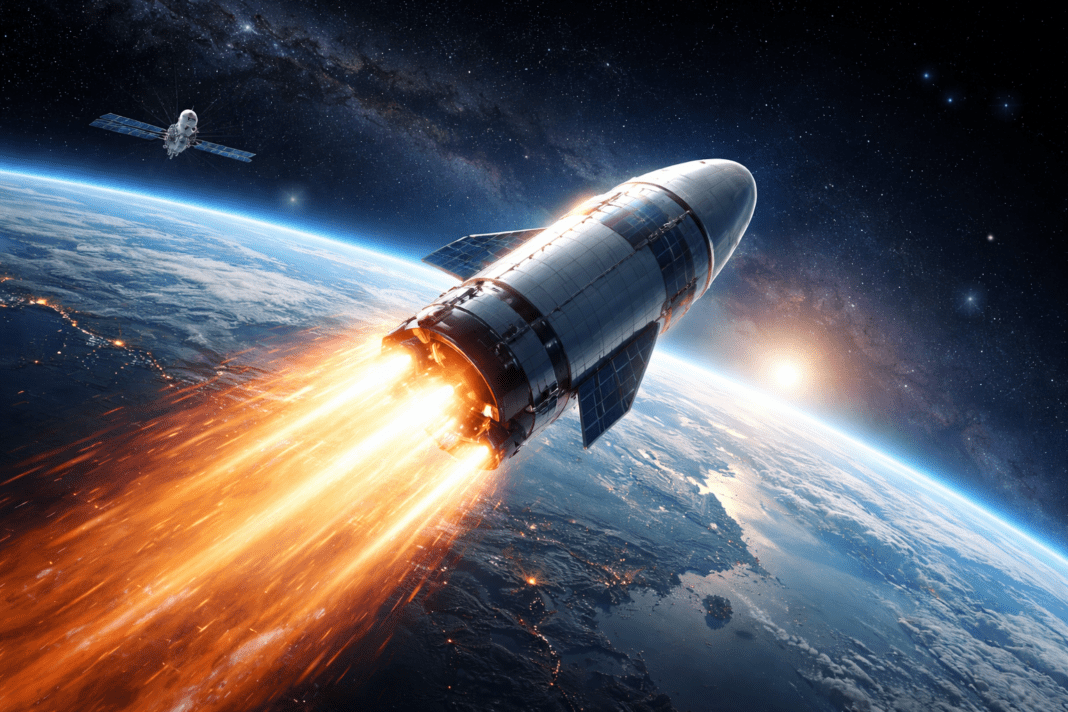
On April 2, 2026, NASA launched Artemis-II, marking humanity’s return to deep space travel beyond low-Earth orbit for the first time since 1972. The mission uses the Orion spacecraft, a new-generation vehicle built to carry astronauts farther into space than previous missions.
Artemis-II is not a Moon landing mission. Instead, it is a test flight designed to send astronauts around the Moon in a flyby before returning to Earth. The main goal is to test important systems such as life support, navigation, communication, and radiation protection. These systems must function safely before future Moon landings can take place.
Moon resources in high demand among powerful nations.
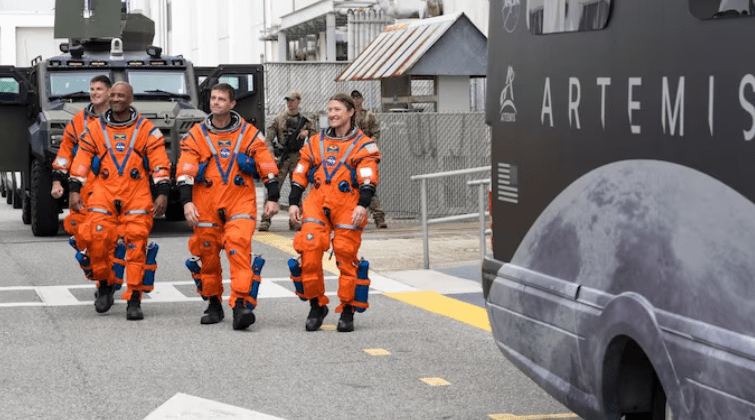
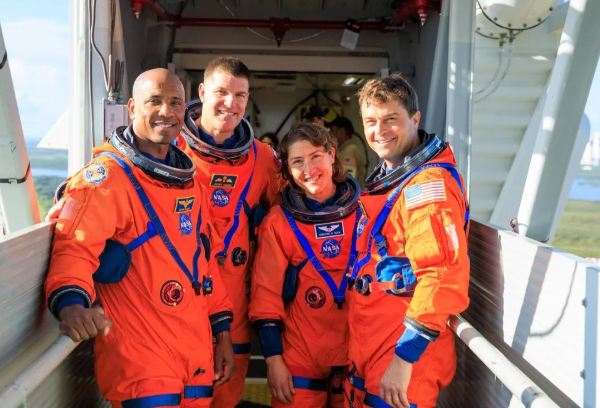
The mission includes four astronauts with key roles. Christina Koch, 47, is a NASA engineer and one of the most experienced astronauts in the crew. She previously set a record for the longest single spaceflight by a woman and was part of the first all-female spacewalk in 2019. In Artemis-II, she becomes the first woman to travel beyond low-Earth orbit toward the Moon’s vicinity.
Victor Glover is the mission pilot and a NASA astronaut and naval aviator. He becomes the first person of colour to travel toward the Moon’s vicinity, marking a major milestone in representation in space exploration.
The mission is led by Commander Reid Wiseman, while Canadian astronaut Jeremy Hansen also joins the crew, becoming the first Canadian assigned to a deep-space lunar mission.
Artemis-II’s Historic Meaning: Breaking Old Patterns in Space Exploration
Artemis-II is historic not only for its advanced technology but also for what it represents for humanity. For the first time since the Apollo era, a mission heading toward the Moon includes both a woman and a person of colour in key crew roles. Christina Koch and Victor Glover are at the center of this milestone.
This is a major shift from the Apollo program, where all twelve Moonwalkers were white American men. Artemis-II reflects how astronaut selection has evolved and how space missions now include broader representation.
NASA shifts Artemis II launch dates after fuel system seals fail critical stress tests
The Artemis program was designed to return humans to the Moon and support a long-term presence there. Unlike Apollo, it also aims to reflect the diversity of humanity in space exploration, even during periods of political debate over diversity programs in the United States.
Beyond representation, the mission is also scientific. As the spacecraft travels beyond Earth’s magnetic field, astronauts are exposed to deep-space radiation that helps researchers study future long-duration missions. Artemis-II also tests the Orion spacecraft’s systems for safe travel and return from deep space.