

The Global Positioning System, or GPS, is one of the most important technologies today, even though most people hardly notice it. It helps drivers navigate roads, supports aircraft landings, and powers many everyday services. Billions of people use GPS through smartphones and vehicles, and it remains free to access worldwide, allowing businesses to grow while making daily life simpler and more efficient.
How Global Positioning System Became Essential to Daily Life
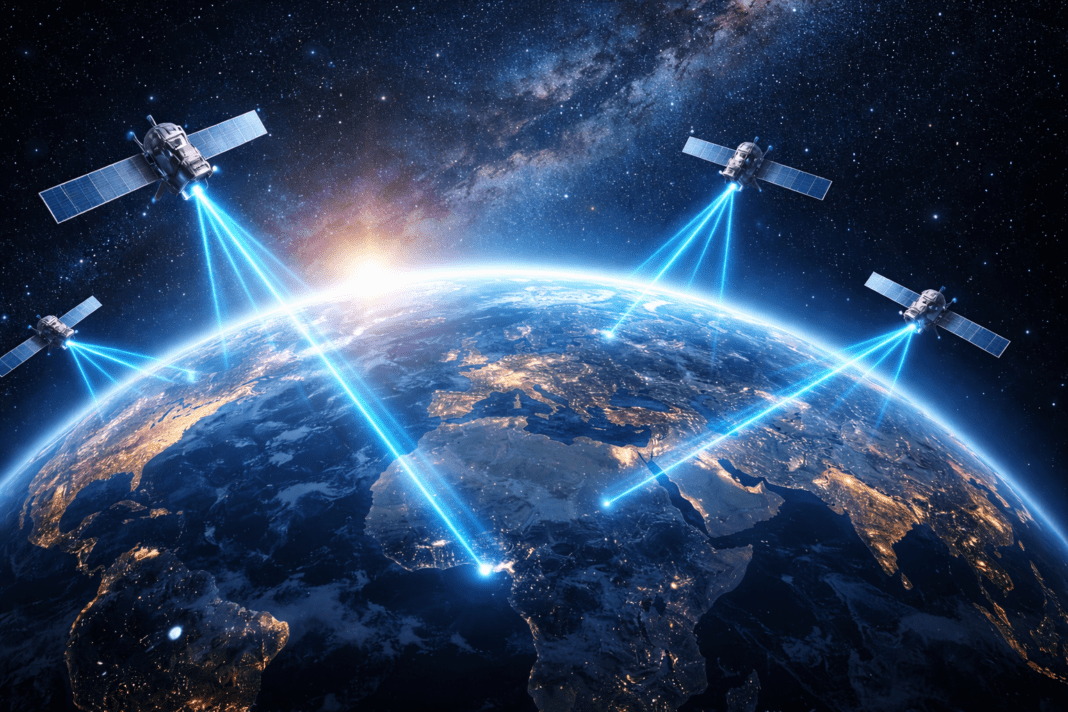
The Global Positioning System is a network of satellites orbiting Earth that sends signals to devices like smartphones. By measuring how long these signals take to arrive, it can calculate an exact location. This simple system powers navigation apps, helps drivers find routes, and allows delivery services to track packages. Farmers use it to guide equipment with precision, while ride-sharing services depend on it to connect drivers and passengers efficiently.
Beyond navigation, it supports critical systems that many people rarely notice. Financial networks rely on its precise timing to process transactions, power grids use it to manage electricity flow, and emergency services depend on it to locate people quickly. Because so many systems rely on it, even brief disruptions can cause serious problems, highlighting its importance in modern life.
Russia space nuclear threat could wipe out global GPS and communications, Canada warns
A Government-Funded Global Utility
Even though Global Positioning System is free for users, it is not free to maintain. The system requires constant investment. Satellites need to be built, launched, and replaced over time. Ground stations must monitor and control the system. Engineers work continuously to improve accuracy and reliability.
These costs are mainly covered by government funding. This is because GPS is not just a public tool. It also plays a major role in national security. It was originally created for military use, helping with navigation, targeting, and coordination during operations.
📡 GPS Terror at Sea—Houthi Rebels Launch Radio Signal Attacks, Ships Drift Blind in Red Sea
Later, civilian access was expanded, allowing people and businesses to use the system freely. This decision helped unlock huge economic benefits. Entire industries grew around GPS technology, including logistics, transportation, and mobile applications.
Despite being widely used by civilians, the system still supports defense operations. It provides precise positioning and timing, which are critical for modern military systems. This dual role makes GPS both a public service and a strategic asset.
Rise of Global Navigation Systems
While Global Positioning System remains one of the most widely used systems, it is no longer the only one. Other regions have developed their own satellite navigation networks. Europe operates Galileo, and China runs BeiDou.
These systems work alongside Global Positioning System, creating a multi-system environment. Devices today can often connect to multiple satellite networks at the same time. This improves accuracy and makes positioning more reliable, especially in cities where tall buildings can block signals.
Having multiple systems also adds an extra layer of security. If one system faces technical issues, others can continue to provide service. This redundancy is important for critical industries that rely on constant and accurate data.
Hidden kill switch scandal rocks Massachusetts police — officers could erase GPS tracking at will
The development of different navigation systems also highlights the growing importance of space technology. Countries see satellite navigation as a key part of their infrastructure. It supports not only economic activity but also national independence in technology.
A Massive Economic Impact
The Global Positioning System has driven major economic growth by powering location-based services worth billions each year. From food delivery apps to airline operations, it supports countless industries. Small businesses benefit as well, as shops can appear on maps to attract nearby customers, while delivery drivers and travelers rely on it for accurate directions.
Its wide availability has made it one of the most valuable public goods, reaching people across cities and remote areas alike. As technology advances, its role continues to grow, supporting smart devices, autonomous vehicles, and communication systems that depend on precise positioning and timing.