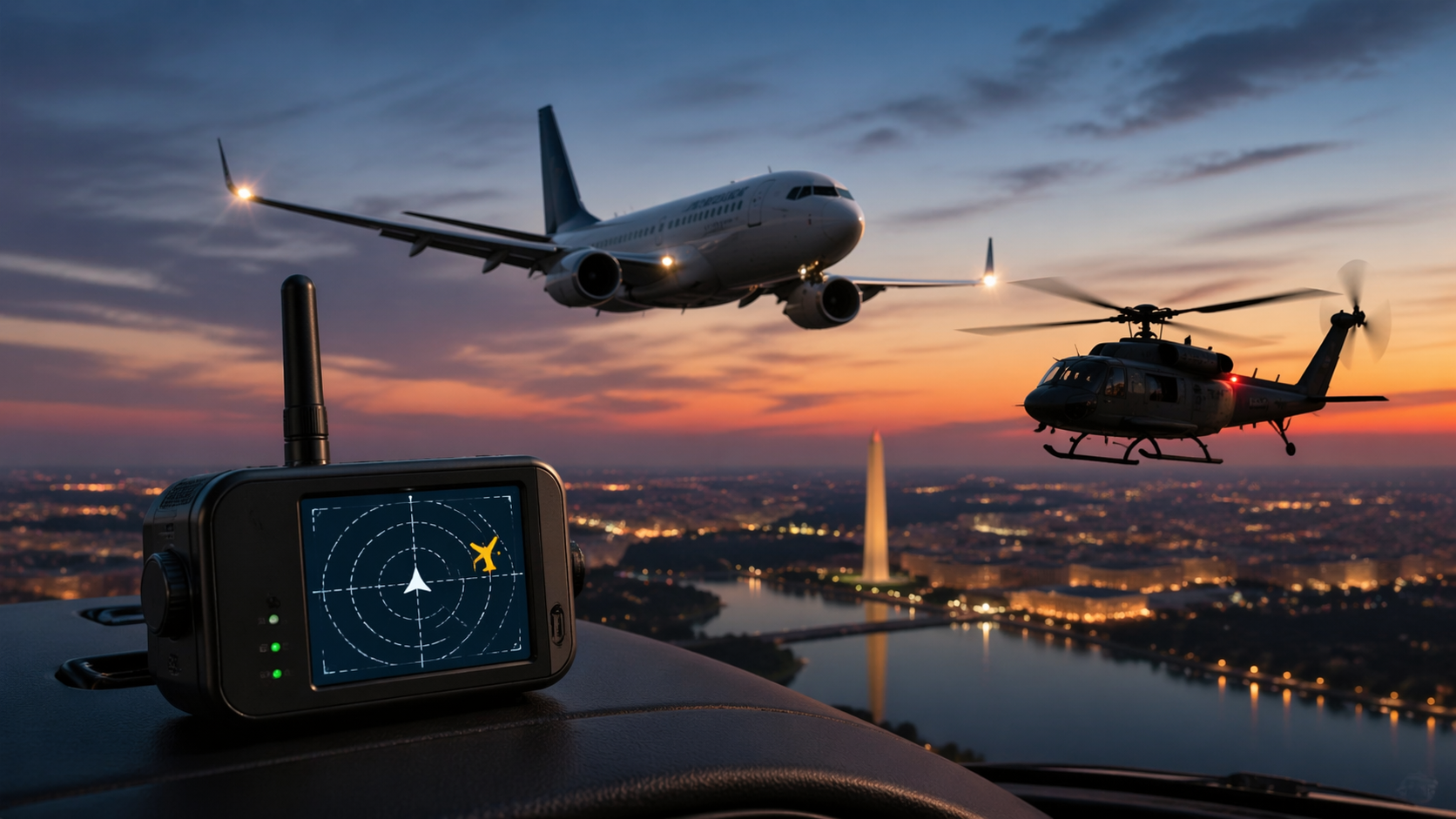
A key finding from the January 29, 2025, midair collision near Washington, DC shows that a $400 ADS-B GPS device could have provided pilots nearly a minute of warning before impact, possibly preventing the crash. This has raised concerns about why such low-cost safety technology is not widely used.
A Simple Device That Could Have Saved Lives
The device at the center of the investigation is an ADS-B receiver, a small portable tool that helps pilots detect nearby aircraft in real time using shared GPS signals. It shows surrounding air traffic on a cockpit display, improving awareness during flight.
Investigators found that if this device had been active, pilots of the commercial aircraft could have received an alert about the nearby helicopter nearly 59 seconds before the collision. In aviation, even a few seconds matter, and a full minute could have provided enough time to change direction or altitude to avoid the crash.
US Air Force cancels the troubled OCX GPS program to protect vital global navigation stability
The concern is greater because this technology is affordable and already used by many smaller aircraft and private pilots, but not consistently in large commercial planes. While commercial jets have advanced safety systems, they may not detect every aircraft, especially when signals are missing, making ADS-B receivers an important extra layer of safety.
Gaps in Communication Between Aircraft Systems
The investigation has also highlighted a major issue in how different types of aircraft communicate with each other. Commercial planes and military helicopters do not always operate under the same systems or rules.
ADS-B technology depends on aircraft broadcasting their location data. This is known as “ADS-B Out.” Other aircraft can then receive this information using “ADS-B In” devices, such as the portable receivers being discussed.
However, not all aircraft consistently send out these signals. Military helicopters, especially during certain operations or flight patterns, may not always transmit ADS-B data. This creates gaps, sometimes referred to as “blind spots,” where nearby aircraft cannot be detected using these systems.
📡 GPS Terror at Sea—Houthi Rebels Launch Radio Signal Attacks, Ships Drift Blind in Red Sea
In busy airspace areas like Washington, DC, this becomes even more dangerous. The region is known for heavy air traffic, including commercial flights, military aircraft, and government operations. When communication systems are not fully aligned, the risk of accidents increases.
The findings suggest that the helicopter involved in the collision may not have been consistently visible to the commercial aircraft’s existing systems. As a result, the pilots may not have had enough information to understand the risk in time.
Rising Concerns Over Aviation Safety Technology
The discovery that a low-cost device could have helped prevent the crash has sparked serious concern across the aviation sector. It has led to fresh questions about whether current safety standards are enough and if airlines should adopt additional tools to improve pilot awareness. Many experts are now focusing on how such a simple and affordable solution could make a meaningful difference in critical situations.
One major issue being raised is why this kind of technology is not already a standard part of cockpit equipment. Compared to the high costs involved in operating aircraft, a $400 device is a very small expense. Despite this, it has the ability to provide real-time traffic information that could help pilots detect nearby aircraft and respond quickly to potential dangers.
Russia space nuclear threat could wipe out global GPS and communications, Canada warns
The investigation has also highlighted the growing challenge of managing crowded airspace. With more flights operating every year, maintaining clear and reliable communication between all aircraft is becoming more difficult and more important at the same time. However, current regulations do not require all aircraft to use portable ADS-B receivers, which has resulted in uneven use across the industry.
The incident has also exposed coordination gaps between civilian and military aviation, especially in shared airspace. In such complex environments, stronger communication systems are essential, as air traffic control may not always provide complete real-time awareness, making onboard tools a crucial backup for pilots.