

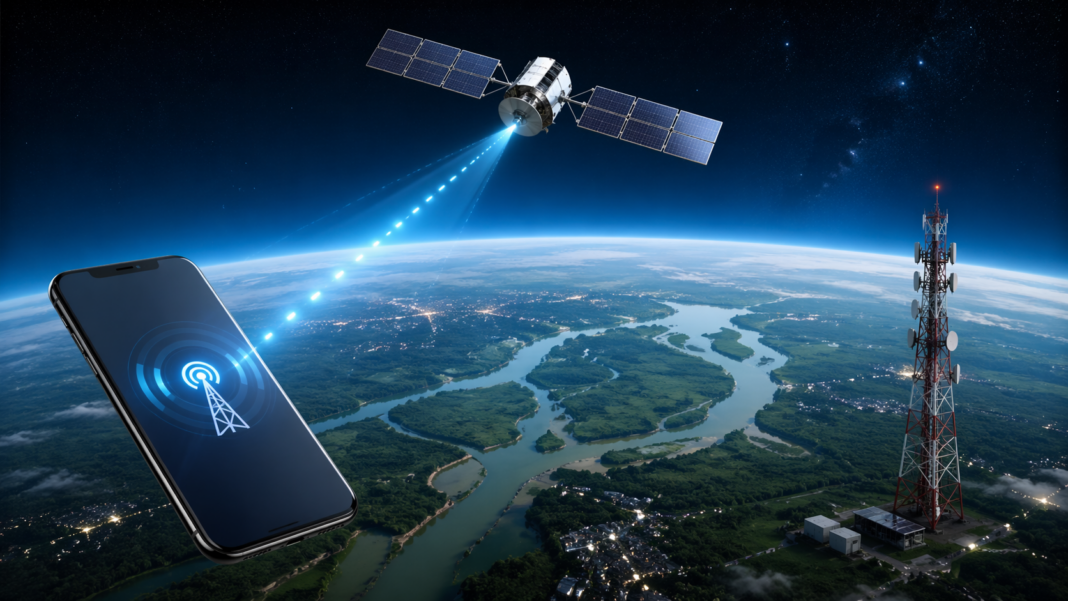

Banglalink and SpaceX have applied to the Bangladesh Telecommunication Regulatory Commission to test satellite-based mobile services in Bangladesh. The proposal aims to enable smartphones to connect directly to satellites, helping improve coverage in areas where traditional networks are limited.
A New Step Toward Space-Based Mobile Connectivity
Banglalink and SpaceX have applied for approval to test satellite-based mobile services in Bangladesh. The proposal has been submitted to the Bangladesh Telecommunication Regulatory Commission (BTRC) and includes a 60-day trial period. During this time, mobile phones will be able to connect directly to satellites instead of depending only on ground-based towers.
The trial will use SpaceX’s Starlink system, which operates hundreds of low-Earth-orbit satellites that act like cell towers in space. These satellites are closer to Earth, allowing faster and more reliable connections. The companies will test how this satellite connectivity can be integrated into Banglalink’s existing mobile network. The service will not be available commercially during this phase.
Elon Musk outlines a visionary new direction for SpaceX focusing on AI and space-based computing
Initially, the system will support SMS services, with light data capabilities planned later. With more than 650 satellites involved, the initiative aims to improve connectivity in remote and disaster-prone areas where traditional mobile networks are often weak or unavailable.
How the Satellite-to-Mobile System Works
Unlike traditional mobile networks that depend on ground-based towers, this new system allows regular smartphones to connect directly to satellites in space. This means users will not need any special devices or hardware upgrades, as standard 4G LTE phones can support the service. Banglalink will carry out the trial using its existing licensed spectrum, ensuring the process remains within approved regulatory limits.
The testing will use specific frequency bands already assigned to the operator, including the 2110–2115 MHz range for downlink and the 1920–1925 MHz range for uplink. By using its own authorized spectrum, Banglalink can integrate satellite connectivity smoothly with its current mobile network while maintaining compliance with national telecom regulations.
Misleading Marvels: The Peril of Deepfake Targeting Elon Musk During SpaceX Launch
This system is designed to combine terrestrial networks with satellite communication, creating a reliable backup during network failures. In situations like floods, cyclones, or other disasters where mobile towers may be damaged or stop working, satellite connectivity can help people stay connected, send messages, and access essential services.
Similar satellite-to-mobile solutions have already been used in emergency situations worldwide, demonstrating their effectiveness. The trial will be conducted at selected locations within Banglalink’s service areas, following all regulatory requirements, and will not be available for commercial use during the testing phase.
Regulatory Review and Trial Details
The Bangladesh Telecommunication Regulatory Commission is currently reviewing the application submitted by Banglalink and SpaceX. A final decision will be made after consultation with the government, which will determine whether the proposed satellite-to-mobile trial can move forward. This review process is important to ensure that the new technology meets all national telecom regulations and operates safely within the country’s communication framework.
In addition to seeking approval for the trial, the companies have requested regulatory support to introduce satellite-based mobile services more broadly. This may involve changes or updates to existing telecom rules so that such advanced technology can be implemented without legal or technical barriers. These adjustments are necessary for smooth integration with current mobile networks.
The companies have also asked for permission to move directly to a commercial rollout after the trial, if the testing proves successful. However, this step will depend entirely on regulatory clearance and whether all operational and compliance requirements are fully met during the trial phase.
The testing is expected to begin in April 2026, subject to approval, and will focus on integrating satellite connectivity with existing mobile networks. The goal is to improve coverage in remote areas and maintain connectivity during emergencies when traditional ground-based networks may not function.