

Germany is reportedly preparing a major expansion of its military space capabilities, planning to invest around €35 billion in advanced satellites and potentially laser-based defense technologies. This move underscores how nations increasingly view space as a critical domain for national security, alongside land, sea, air, and cyber domains.
The planned expansion reflects Germany’s intent to strengthen its military reach in orbit. The focus is on better protecting strategic assets while improving coordination with international defense partners. In modern military operations, satellites play a vital role, making space security a top priority for countries seeking to maintain a technological edge.
Satellites Take Center Stage in Defense
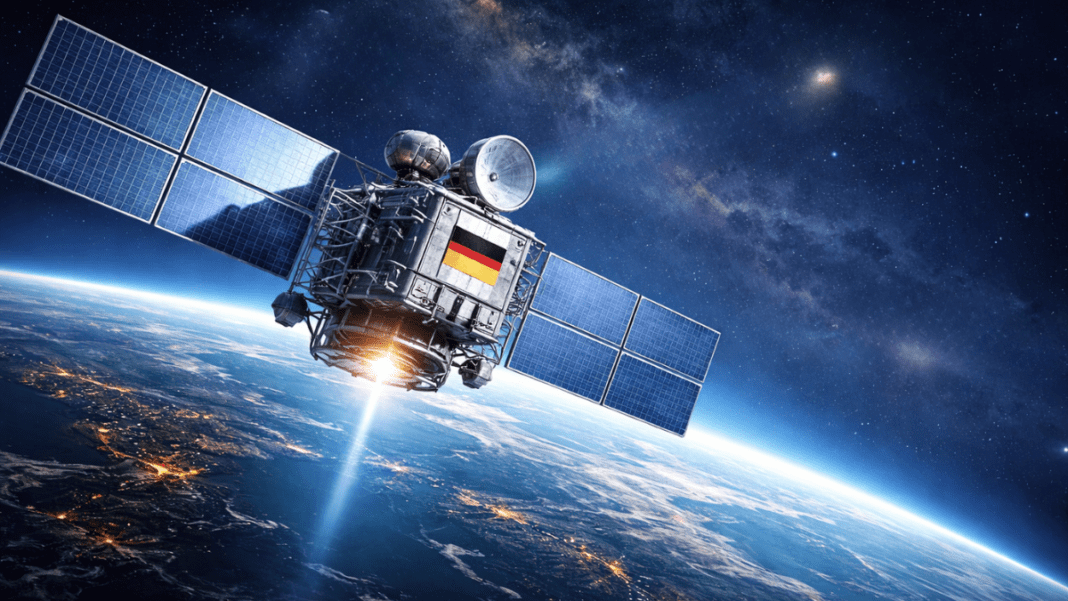
Satellites have become essential to defense systems around the world. They enable military forces to communicate over long distances, navigate precisely, and monitor potential threats on Earth. In addition, satellites provide early warning for missile attacks and gather intelligence that helps nations respond quickly to global security challenges.
Germany Slams Starlink Dependence, Backs French Eutelsat Lifeline for Ukraine
Germany’s plans to expand its satellite network aim to enhance the country’s ability to track activity both in orbit and on the ground. The new satellites could improve cooperation with NATO allies, making joint operations more seamless and secure. Strengthening space capabilities also supports Europe’s ability to respond independently to security threats, reducing reliance on other nations.
Laser technology may also form part of this ambitious program. While specific details remain limited, such systems are typically defensive. They can protect satellites from potential damage, intercept incoming missiles, or target hostile drones. Experts emphasize that these technologies are designed for protection rather than offensive attacks against other countries’ space assets.
The combination of satellites and laser defense highlights the modern approach to military security: it is not only about firepower on Earth, but also about safeguarding critical infrastructure in space, which is increasingly indispensable for national defense.
Rising Global Interest in Space Defense
Germany joins a growing number of countries recognizing space as a strategic frontier. Worldwide, nations are investing in space-based security to protect vital infrastructure. Satellites are now seen as equally important to national defense as armies or naval forces.
Boeing Starliner: Set to Send NASA Astronauts to Space
This increased focus on militarization of space has raised concerns about potential risks in orbit. As more countries develop advanced satellites and defense technologies, the management of possible conflicts and escalation becomes more critical. Germany’s expansion reflects both a commitment to maintaining strong defense capabilities and recognition that space is a central component of modern military strategy.
Although full details of Germany’s plans are not yet public, the investment highlights a clear trend: space is no longer reserved for scientific exploration or commercial activities. Instead, it is becoming a fully active domain for national and regional security. The €35 billion program represents a substantial commitment to enhancing surveillance, communications, and protection of essential space infrastructure.
Strategic Importance for Europe and NATO
Germany’s military space expansion carries important implications for Europe. Advanced satellites and laser defense systems could strengthen the European defense network, enabling faster intelligence sharing, more accurate missile warnings, and more reliable communications among allied nations.
These enhanced capabilities may make NATO operations more coordinated and efficient while providing Europe with greater autonomy in handling regional security threats. Germany’s investment underscores that space is no longer a distant or secondary concern. Satellites and protective technologies are now central to ensuring national and regional safety.
Europe launches its boldest challenge yet to Starlink with Airbus-Thales-Leonardo pact
By investing heavily in military space programs, Germany joins a growing number of nations treating space as a key strategic domain. The move emphasizes the need to maintain technological superiority and operational readiness in an increasingly competitive global environment.
Germany’s €35 billion plan signals a decisive step toward modernizing military defense for the space era, reflecting both global trends and the nation’s commitment to securing critical assets in orbit.