

A study published in JNeurosci examines how astronauts adjust their grip when transitioning between Earth and space. It shows that the brain continues to rely on learned expectations of gravity even in weightless conditions, which affects how strongly objects are held and moved. The research highlights how deeply gravity is embedded in human movement and how the brain gradually adapts to different physical environments.
What the Astronaut Grip Study Found
Scientists have discovered new details about how astronauts adjust their grip when moving between Earth and space. The study, published in JNeurosci, shows that the human brain does not quickly forget gravity, even after spending months in a weightless environment.
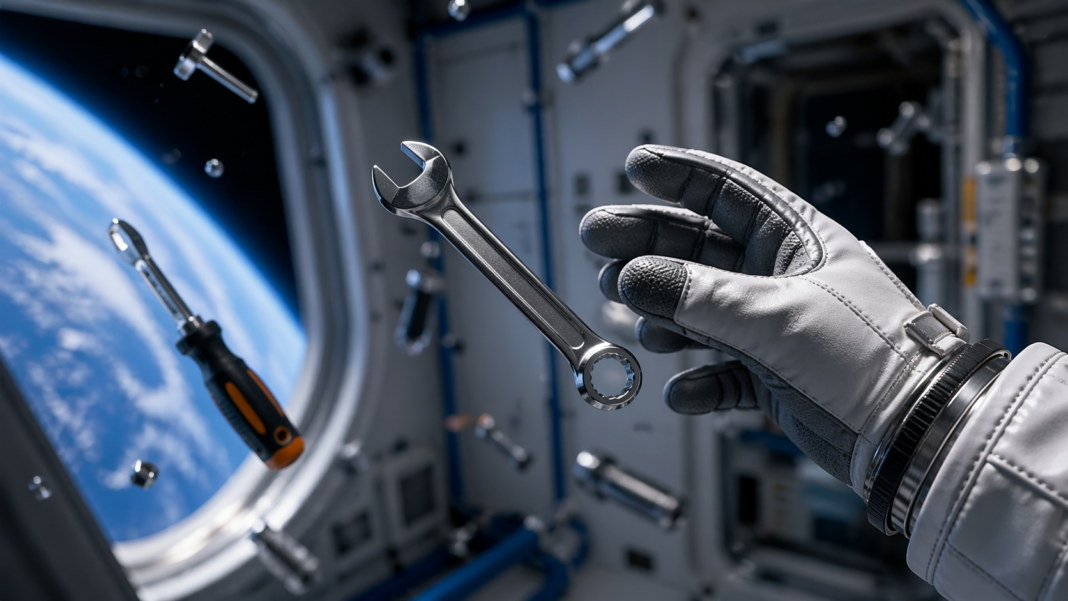
On Earth, people naturally grip objects firmly so they do not slip or fall. In space, however, gravity is almost absent, so objects do not fall when released. Instead, they float and move in different directions due to inertia when pushed or pulled.
Artemis II astronauts express high confidence in Moon landing after successful lunar flyby
Researchers Philippe Lefèvre and his team from Université catholique de Louvain and Ikerbasque found that astronauts often grip objects more strongly than needed in space. This happens because the brain still expects gravity to act on objects. The over-gripping becomes more noticeable during movement, as the brain prepares for possible mistakes by increasing grip strength as a safety response.
How the Brain Adapts Between Earth and Space
The human brain is always making predictions to help the body act quickly and safely. It estimates how heavy an object should feel and how much force is needed to hold it properly.
In space, these predictions become less accurate because there is no gravity. However, the brain does not immediately adjust. Instead, it continues to behave as if gravity is still present. This causes astronauts to grip objects more strongly than necessary when working in orbit.
Researchers found that this change is not instant. Even after spending months in space, astronauts still carry a kind of “memory” of Earth’s gravity. This memory affects how they control their hands, especially during tasks that involve moving objects from one place to another.
Breaking Barriers: Sunita Williams and the Historic Starliner Mission
When astronauts return to Earth, the opposite issue appears. Their brains initially expect weightless conditions, so they may grip objects too lightly or misjudge how heavy things are. Over time, the brain slowly readjusts through practice and feedback from everyday movements.
This shows that the brain does not switch quickly between environments. Instead, it gradually updates its internal model based on experience. Grip control is therefore not just about muscle strength, but also about how the brain predicts risk. If there is a chance of dropping something, the brain automatically increases grip force to keep it safe.
Why Gravity Leaves a “Memory” in Human Movement
One key finding of the study is that gravity leaves a lasting effect on the brain, even when it is not present in space. Scientists call this a “gravity memory,” which influences how astronauts control their movements and grip strength.
In space, this memory affects everyday tasks like picking up tools, moving equipment, or handling instruments. Because the brain still expects gravity, it prepares for a downward pull that does not exist, leading astronauts to grip objects more tightly than needed. This can also create extra tension in the hands.
Philippe Lefèvre explained that this shows how deeply Earth’s environment shapes human movement. Since birth, the brain has learned to work under constant gravity, and it does not quickly rewrite those rules when conditions change. Instead, it continues using Earth-based expectations even in space.
NASA report warns of Starliner leadership failures after astronauts remained on ISS for months
The brain also prioritizes safety over efficiency. It increases grip strength to avoid mistakes, such as dropping objects, which explains the over-gripping seen in astronauts.
When astronauts return to Earth, they experience another adjustment period. Their movements may feel unfamiliar, and simple tasks require recalibration. The brain slowly corrects its predictions by learning from errors and feedback.
Researchers say astronauts offer a rare chance to study how the brain adapts to extreme environments. The findings help explain how human movement systems are shaped by gravity and how deeply the brain relies on environmental experience.