

A rare mix of celestial events recently lit up the early morning sky, bringing together a meteor shower, occasional fireballs, a faint comet, and in some regions, hints of the northern lights. These phenomena appeared over several pre-dawn days, creating an unusual and striking display of space activity visible from Earth.
Meteor Shower Lights Up Pre-Dawn Sky
The early morning sky recently put on a surprising light display as a meteor shower peaked around April 22. Although it is not among the strongest annual meteor showers, it still offered a bright and active show for people awake before sunrise.
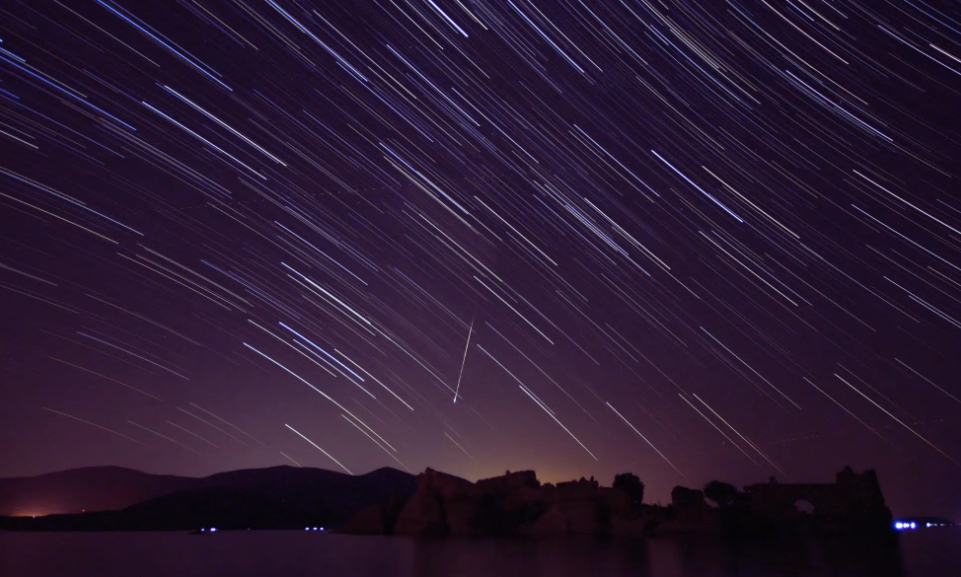
The meteor activity started around April 15 and continued for several days. During the darkest hours before dawn, fast-moving streaks of light—known as shooting stars—were seen across the sky. These meteors are tiny space rocks that burn up when entering Earth’s atmosphere, creating brief flashes of light. Some observers reported seeing multiple meteors in quick succession, with dozens visible during short viewing periods under clear skies.
This meteor shower is linked to debris from a long-period comet that takes around 400 years to orbit the Sun. As Earth passes through this trail of dust and particles, they enter the atmosphere and create glowing streaks. The event is also known for occasional fireballs—extra-bright meteors that can briefly outshine even Venus in the night sky.
Rare Comet Appears Amid Light Pollution Challenges
Alongside the meteor shower, a rare comet named C/2025 R3 PanSTARRS also appeared in the early morning sky. Originating from the outer regions of the solar system, it became visible before sunrise around 4:30 a.m. local time, adding to the unusual celestial activity during the meteor shower peak.
However, viewing conditions were challenging due to heavy urban light pollution. The bright glow from cities made faint objects in the night sky difficult to observe, and in many places the comet could not be seen clearly without cameras or long exposure techniques.
Space Mining: Pioneering Sustainable Exploration
Even under these conditions, the comet was captured as a faint bluish object. In long exposure images, it appeared more distinct, though its tail remained difficult to detect because of surrounding light interference. The best opportunity to observe it occurred in the days before April 20, after which it gradually moved lower in the sky and became harder to spot as morning light increased.
To improve clarity, photographers used image stacking, combining multiple exposures into a single frame to reduce noise and highlight faint details. However, without advanced tracking equipment, keeping the images aligned during long exposures remained difficult, especially when trying to capture subtle features like the comet’s tail.
Fireballs and Aurora Add Extra Colour to Night Sky
In addition to meteors and the comet, the sky also displayed occasional fireballs during the meteor shower period. These fireballs are unusually bright meteors that can leave glowing trails lasting several seconds. Unlike regular meteors, they are larger and produce stronger flashes when they burn up in Earth’s atmosphere.
Observers reported sudden bursts of light that briefly illuminated parts of the sky. Although these fireballs did not appear continuously, their unexpected flashes added extra excitement to the already active meteor shower.
James Webb captures giant auroras on Uranus, revealing unexpected planetary activity
At the same time, another natural phenomenon—the aurora borealis or northern lights—was seen in some regions. This glowing effect occurs when charged particles from the Sun interact with Earth’s magnetic field, creating flowing waves of color in the night sky. In some locations, faint green tones of the aurora appeared alongside the meteor activity.
This rare combination of meteor shower activity, comet visibility, fireballs, and aurora created a layered celestial display that is not commonly seen together. The Lyrid meteor shower, responsible for this activity, is one of the oldest recorded meteor showers, with observations dating back more than 2,500 years. It appears to radiate from the constellation Lyra and is known for occasional bright outbursts, especially under dark, clear skies.