

The Middle East conflict is entering a new phase where space technology is shaping battles. Reports suggest Russia may be sharing sensitive satellite intelligence with Iran, including exact locations of US ships, aircraft, and troops. This data, offering real-time tracking and detailed imagery, could help Iran plan precise strikes, though a direct link to Russian intelligence hasn’t been officially confirmed.
How Satellite Intelligence Translates to the Battlefield
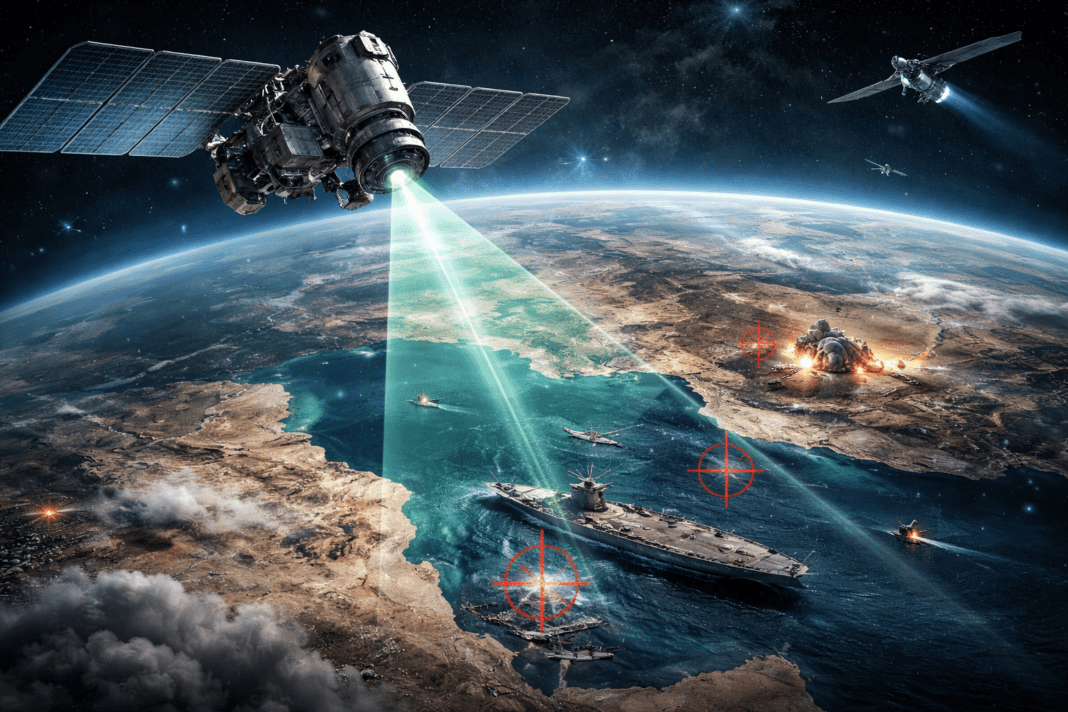
Modern satellites are capable of capturing highly detailed images from space and monitoring movements on the ground and at sea. By sharing this data, a nation can give its allies a strategic advantage without deploying additional troops. In the Middle East, reports suggest that Iran has been using such intelligence to guide drone strikes and missile attacks against US forces stationed across the region.
For example, a recent drone attack on a military facility in Kuwait killed six US service members. While there is no official confirmation that Russian intelligence directly enabled this strike, the precision of the attack raises questions about the role of satellite-guided targeting. Military experts point out that even small pieces of real-time information about troop movements, supply lines, or ship positions can drastically increase the effectiveness of such operations.
Russia moves Luch satellites near Western spacecraft raising European security concerns
Russia’s satellite network is among the most advanced in the world. By feeding Iran data on the location and movement of American assets, Moscow can indirectly influence the conflict without becoming directly involved. This form of intelligence sharing represents a significant shift in modern warfare, where real-time information is sometimes more decisive than the number of soldiers on the ground.
The Growing Military Partnership Between Russia and Iran
The relationship between Russia and Iran has strengthened in recent years, particularly through arms and technology exchanges. Iran has supplied drones and missiles in other global conflicts, while Russia has provided access to advanced military intelligence. This cooperation now appears to extend into space-based surveillance, giving Iran the ability to monitor American military operations in ways that were previously unavailable.
Russia shares intelligence with Iran on US forces amid ongoing Middle East conflict
Experts say that intelligence from satellites allows for the coordination of highly targeted strikes. For Iranian forces, this means they can choose the exact timing and location for an attack, reducing the risk to their own personnel and equipment. The combination of drones, missiles, and precise intelligence is creating a new type of battlefield advantage, where knowing where the enemy is can be more important than sheer firepower.
At the same time, China is taking a cautious approach. While it may offer financial support or provide spare parts to Iran, its dependence on Iranian oil and concerns about disruptions in the Strait of Hormuz are leading to more restrained involvement. This contrasts with Russia’s more direct role in sharing real-time intelligence.
The Expanding Role of Intelligence in Modern Conflict
The Middle East is witnessing the growing impact of electronic tracking, satellite surveillance, and intelligence sharing. As thousands of US troops and hundreds of aircraft remain deployed across the region, the ability to anticipate and track enemy movements is becoming a central factor in military operations. Intelligence from space can allow forces to hit targets that were once almost impossible to locate.
Iran leverages Russian Soyuz rocket to sidestep sanctions with Kowsar and Zafar-2 satellite launch
Reports suggest that the ongoing strikes and military maneuvers in the region are increasingly guided by this type of data. Even without boots on the ground, nations can influence the course of conflict by supplying allies with real-time information. Analysts say this trend marks a turning point in modern warfare, where technological supremacy, especially from space, can define the effectiveness of military campaigns.
Satellite intelligence is no longer just a tool for observation; it is becoming an active part of battlefield strategy. By providing detailed information on enemy positions, Russia’s satellites are enabling Iran to carry out precise and deadly strikes against US forces, reshaping the dynamics of the conflict in ways that are both immediate and profound.