
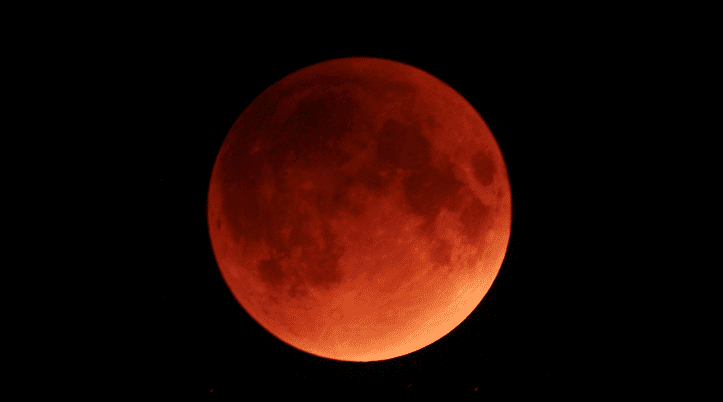

On Tuesday, March 3, skywatchers across the globe will witness an extraordinary celestial event. For 82 minutes, the moon will turn a deep blood red during a total lunar eclipse, creating a stunning blood moon and offering billions of people a chance to see one of nature’s most captivating phenomena. This rare blood moon event promises a spectacular sight, and astronomers say it will not happen again until 2028.
The March full moon, also known as the worm moon, will transform into a blood moon as the Earth’s shadow completely covers the lunar surface. The moon’s fiery hue is caused by sunlight bending through the Earth’s atmosphere, creating a striking red or reddish-brown color. This captivating display will be visible from nearly every corner of the United States, giving both casual observers and astronomy enthusiasts an unforgettable sight.
When and How to See the Blood Moon
The blood moon will reach peak illumination on Tuesday, March 3, at 4:30 a.m. Mountain Time (6:30 a.m. Eastern Time). Local visibility begins earlier, with the moon first entering Earth’s shadow at 1:46 a.m. and the eclipse ending at 6:33 a.m., giving the event a total duration of five hours and 58 minutes.
Rare blood moon rising: when the night sky will glow red across North America
While the total lunar eclipse will last 82 minutes, the full moon itself will appear bright and large on the horizon on the evenings of both Monday and Tuesday. People living in the western United States will have the best views, as the moon will glow a dramatic reddish-orange during the total phase of the eclipse.
This celestial phenomenon is fully visible to the naked eye, meaning no telescope or special equipment is required. Observers are encouraged to step outside during the peak moments for the clearest view, preferably in areas away from city lights. The blood moon will appear stunningly vibrant, painting the night sky in deep shades of red and brown.
Understanding the Worm Moon and Its Significance
The March full moon has long been called the “worm moon.” This name comes from traditional seasonal calendars, which used the full moon to mark changes in nature. The term highlights the time when the soil begins to warm after winter, signaling new life in the ground.
Moon resources in high demand among powerful nations.
During this period, earthworms start to appear on the surface, and beetle larvae, grubs, and other invertebrates emerge from their winter hiding places. These creatures play an important role in the ecosystem. They help nourish the soil and provide food for birds and other animals that are returning from hibernation.
The worm moon is a sign that spring is approaching. It reminds people and wildlife alike that the colder months are ending. This natural signal has been observed for centuries and is celebrated in many farming and cultural traditions.
This year, the worm moon becomes even more special. It coincides with a total lunar eclipse, turning the moon into a blood moon. The mix of the seasonal worm moon and the striking red moon makes the night a rare and unforgettable sight in the sky.
What Exactly is a Blood Moon?
A blood moon is a dramatic optical effect caused by the Earth’s shadow. During a total lunar eclipse, the moon passes entirely into the Earth’s shadow. While the moon is hidden, sunlight still reaches its surface indirectly. Light passing through Earth’s atmosphere bends and scatters, allowing only longer wavelengths, such as red and orange, to illuminate the moon. This makes the normally bright, whitish moon appear a deep, rusty red.
🌑 Don’t miss it: Rare total lunar eclipse to create stunning blood moon on Sept. 7
Unlike solar eclipses, lunar eclipses are safe to observe without any eye protection. The blood moon phenomenon is purely a natural result of light and shadow interacting in space, offering a rare and breathtaking view for all who watch.
This March’s blood moon promises to be a remarkable event for skywatchers of all ages. Whether viewed from a backyard, a city park, or a quiet countryside location, the 82-minute total lunar eclipse will be an unforgettable reminder of the universe’s beauty and the wonders that lie beyond our planet.