

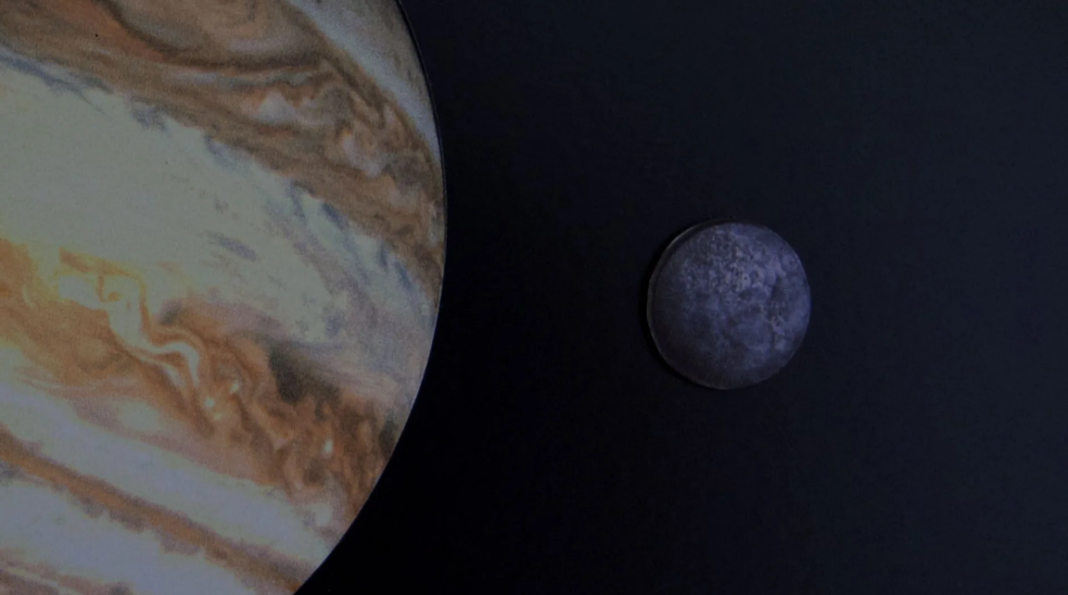

The debate over Pluto’s status has returned to the spotlight, with renewed scientific interest and fresh discussions questioning its classification as a dwarf planet. Once considered the ninth planet, Pluto is again at the center of attention as new findings and evolving ideas challenge how we define planets in our solar system.
A New Wave of Debate
The long-standing debate about Pluto’s status in our solar system has returned to the spotlight. A recent statement from the leadership of a major space agency has reignited global interest in whether Pluto should once again be called a full-fledged planet.
This discussion has captured attention not only among scientists but also among the general public. Pluto has always held a special place in people’s minds, especially for those who grew up learning that it was the ninth planet in the solar system.
James Webb captures giant auroras on Uranus, revealing unexpected planetary activity
At a recent government hearing, strong support was expressed for restoring Pluto’s planetary status. The statement also revealed that scientific efforts are underway to revisit the topic through new research papers. These studies aim to challenge the current definition of a planet and reopen discussions within the global astronomy community.
For many, this is not just a scientific issue—it is also about history, identity, and how we understand space.
Why Pluto Was No Longer Called a Planet
Pluto’s status changed in 2006 when a global group of astronomers introduced a new definition for what counts as a planet. According to this definition, a celestial body must meet three key conditions.
First, it must orbit the Sun. Second, it must be large enough for its gravity to shape it into a round form. Third, it must have cleared its orbital path of other objects, meaning it dominates the space around it.
Pluto meets the first two conditions. It travels around the Sun and has a spherical shape. However, it does not meet the third requirement. It shares its orbit with many other icy objects in a distant region known as the Kuiper Belt.
NASA Clarifies No Emergency on ISS
Because of this, Pluto was reclassified as a “dwarf planet.” This decision reduced the number of official planets in the solar system from nine to eight.
The move sparked strong reactions. Many scientists accepted the new definition, but others argued that it created confusion. Critics pointed out that even large planets like Earth and Jupiter share their space with asteroids and other objects, raising questions about whether the rule is applied fairly.
The debate quickly spread beyond the scientific world. Schools had to update textbooks, and people around the world expressed disappointment. For many, Pluto was more than just a distant object—it was part of how they understood the solar system.
New Discoveries That Changed How We See Pluto
Interest in the distant world surged after a historic space mission in 2015 provided the first close-up images. Before this, it was widely believed to be a cold and inactive object with little happening on its surface. However, the data sent back changed that view completely.
Scientists discovered a far more complex landscape than expected. It features tall ice mountains, vast frozen plains, and slow-moving nitrogen glaciers. One of its most striking features is a large, heart-shaped region, which quickly became a symbol of the mission and captured global attention.
These findings revealed that it is not just a frozen rock but an active and dynamic world. This strengthened the argument among some scientists that it should regain its status as a planet.
Supporters believe the current definition of a planet may be too narrow. They argue that factors like geological activity, surface features, and internal complexity should also play a role in classification, not just orbital behavior.
New scientific studies are now being prepared to revisit the definition of a planet. The debate centers on whether a planet should be defined only by how it moves in space or also by its physical characteristics.
For now, Pluto remains classified as a dwarf planet, but the discussion continues to gain attention.