
NASA has opened media access for its upcoming cargo mission to the International Space Station, to be launched with SpaceX. The mission highlights ongoing efforts to support astronauts in orbit and advance scientific research through regular resupply flights.
Media Accreditation Now Open for Upcoming Space Mission
NASA has opened media accreditation for its upcoming cargo mission to the International Space Station (ISS), marking the 34th resupply flight by SpaceX under its Commercial Resupply Services program. These missions play a key role in supporting astronauts and delivering important scientific equipment to space.
The launch is targeted for no earlier than May 12 and will use the Falcon 9. The rocket is scheduled to lift off from Space Launch Complex 40 at Cape Canaveral Space Force Station in the United States, a major hub for space missions.
NASA launches new NASA Force hiring portal to recruit engineers for space exploration
Media representatives across the U.S. are invited to apply for access to cover prelaunch and launch events. The deadline is 11:59 p.m. EDT on April 29, and applications must be submitted online. Approved applicants will receive confirmation via email, with additional support available through NASA’s guidelines and the Kennedy Space Center newsroom.
What the SpaceX Dragon Will Deliver to Space
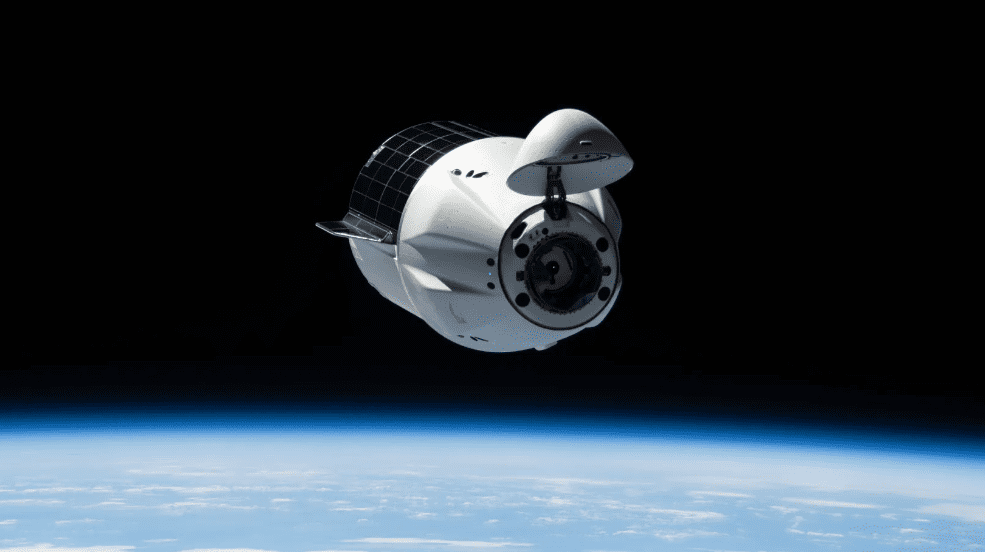
The mission will use the Dragon spacecraft, a reusable vehicle designed to transport cargo to and from the International Space Station. These missions are essential for keeping the station running smoothly and supporting astronauts living in orbit. They also allow scientists to conduct unique experiments in a microgravity environment.
Onboard the spacecraft will be a variety of supplies, including food, tools, and equipment needed for daily operations on the station. In addition to these essentials, Dragon will carry several scientific experiments that aim to expand knowledge in medicine, biology, and space science.
NASA Clarifies No Emergency on ISS
One experiment will test how well microgravity simulators on Earth can replicate space-like conditions, helping researchers improve future studies. Another project involves a wooden bone scaffold that could lead to better treatments for conditions such as osteoporosis. Scientists will also examine how red blood cells and the spleen respond to space travel.
The spacecraft will also deliver instruments to monitor charged particles around Earth, which can affect satellites and power systems. Another study will focus on how planets form, offering insights into the origins of our solar system.
The Importance of ISS Missions and Continuous Human Presence
For more than 25 years, astronauts have continuously lived and worked aboard the International Space Station. This long-term human presence has made it possible to carry out experiments that cannot be done on Earth due to gravity. Regular cargo missions play a vital role in sustaining life in orbit by delivering food, water, and essential supplies, while also supporting ongoing scientific research.
The ISS serves as a one-of-a-kind laboratory where scientists study biology, physics, Earth science, and new technologies in a microgravity environment. These studies often lead to discoveries that improve life on Earth, especially in areas like medicine and engineering. Continuous cargo deliveries ensure that astronauts always have the tools, equipment, and materials needed to carry out complex experiments and daily operations.
Nuclear power takes center stage in NASA’s plan to sustain lunar habitats during long moon nights
Cargo missions like these are essential to keep the space station running smoothly. Without regular cargo deliveries, it would be difficult to maintain equipment, support crew members, or continue long-term research projects. These missions help maintain a steady flow of resources, making it possible for astronauts to live and work safely in space.
NASA’s partnership with SpaceX has improved the efficiency and reliability of cargo missions. These efforts also support future exploration goals, including the Artemis program, which aims to return humans to the Moon and prepare for missions to Mars.