
China has voiced strong concerns about a new missile defense system planned by the Trump administration, called the “Golden Dome.”
China Strongly Opposes U.S. Missile Defense Plans
The Chinese government believes this U.S. project could lead to dangerous consequences, including the militarization of outer space. On Wednesday, Chinese Foreign Ministry spokeswoman Mao Ning stated that the U.S. was chasing “absolute security” for itself at the cost of the global balance.
According to her, this system will not only damage the security of other nations but also upset the peace that has been maintained in space and on Earth. The Golden Dome concept, she continued, goes against the principle that no nation should jeopardize the security of another in order to strengthen its own.
China warned that the Golden Dome increases the chances of a global arms race and makes it more likely that outer space will turn into a battlefield. Mao Ning urged the United States to abandon this plan, saying it fuels competition instead of cooperation and threatens international peace.
This comes after President Trump announced that his administration had “officially selected an architecture” for the missile defense system, which is planned to include technology that works across land, sea, and space. A $25 billion initial budget for the system is presently being considered by the US Congress.
Canada Turns Its Back on F-35s—Flirts With Space-Based Missile Defense
U.S. Says Missile Threats Are Growing
An unclassified report from the U.S. Defense Intelligence Agency (DIA) supported the Trump administration’s move. It stated that the U.S. military faces increasing missile threats from several countries, including China, Russia, North Korea, and Iran.
The report explained that China and Russia are developing new kinds of delivery systems, including hypersonic weapons and space-based technologies that are designed to defeat current U.S. missile defense systems. North Korea has already tested missiles that can reach the entire U.S. homeland. Meanwhile, Iran could possibly develop military-grade intercontinental ballistic missiles (ICBMs) by 2035 if it chooses to go in that direction.
According to the DIA assessment, with the current systems in place, no area of the United States is secure from the possibility of missile strikes. It also added that both Russia and China are already working on weapons in space. Some reports say these include laser weapons and satellites that can disable or capture American satellites.
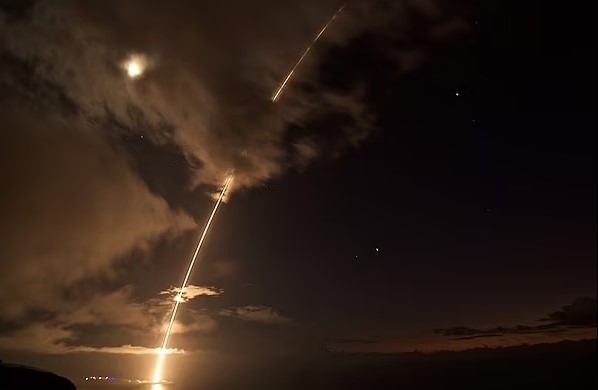
Trump’s Golden Dome system is expected to respond to these threats by building a defense shield that could shoot down missiles, even if they are launched from across the world or from space. Trump compared it to Israel’s Iron Dome but said the U.S. version would be even more advanced and able to stop hypersonic and cruise missiles.
Space Weapons Incoming? U.S. Reveals $175B Golden Dome Shield to Stop Hypersonic Missiles
Russia and China Say Space Could Become a War Zone
In addition to China’s opposition, Russia has also reacted to Trump’s missile shield announcement. On Wednesday, the Kremlin commented that such plans might require talks between Moscow and Washington. A spokesperson for Russia described the Golden Dome as a “sovereign matter” for the U.S., meaning it’s within America’s rights to decide. However, the tone was softer than before.
Previously, Russian leaders had said the Golden Dome would force Moscow to increase its space-based weapons. In fact, Russia earlier warned about a nuclear-capable anti-satellite weapon that could stay in orbit and release energy to disable multiple satellites at once.
China and Russia also issued a joint statement earlier in the month, describing the Golden Dome as “deeply destabilizing.” They claimed it could turn outer space into a place for military fights, instead of peaceful exploration and cooperation.
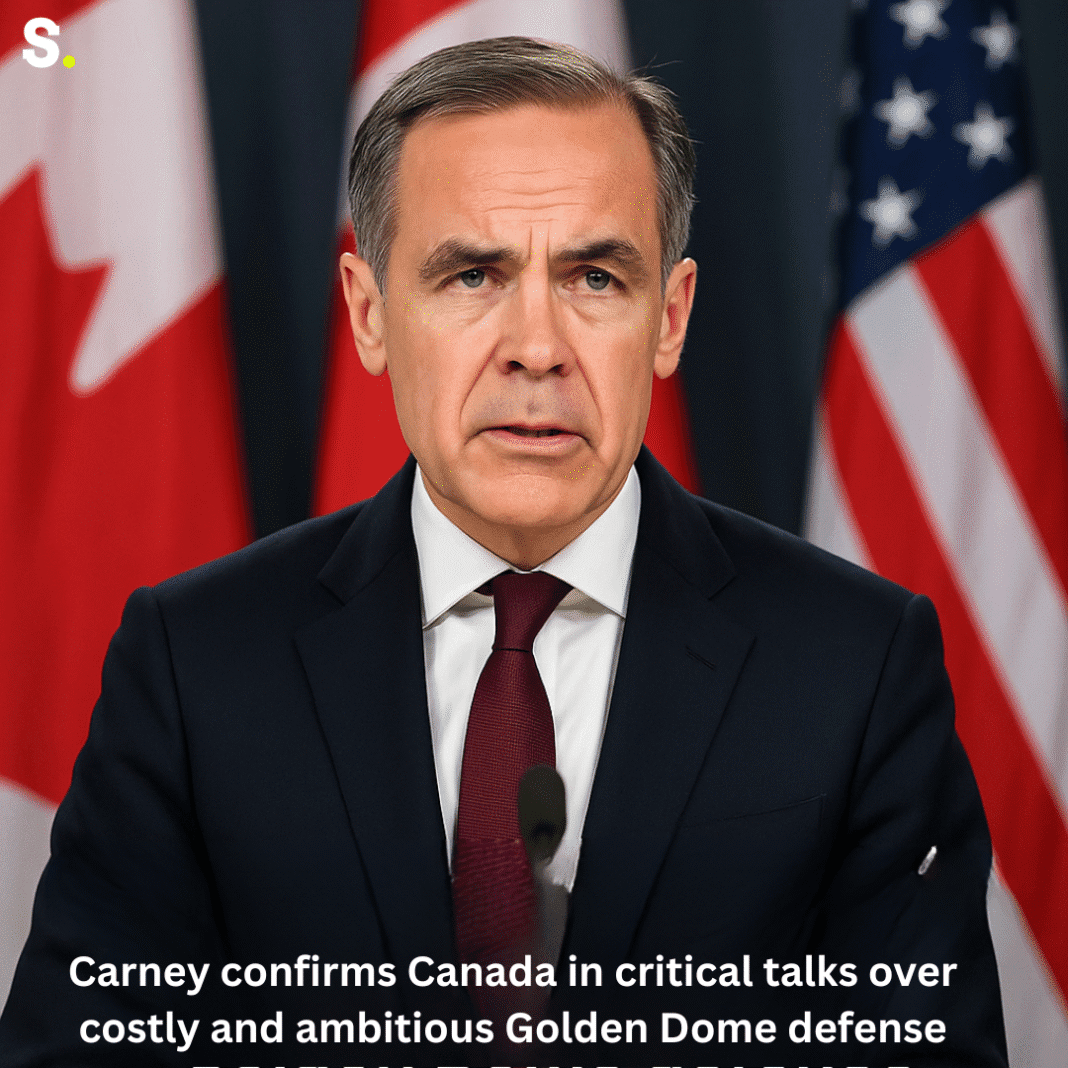
During his announcement, Trump mentioned that Canada had shown interest in joining the project. He said that Canada had called to express a desire to be part of the system. However, Canadian officials responded more carefully, stating that military decisions like this are complex and will be considered thoroughly.
Trump also mentioned that the system would be fully built in about three years, before the end of his presidential term. He declared that it would have a near 100% success rate in shooting down enemy missiles. He said it would “complete the job President Reagan started 40 years ago,” referring to Reagan’s Star Wars defense idea.
In short, the Golden Dome plan has become a source of major disagreement between the U.S. and its global rivals, especially China and Russia. While the U.S. views it as necessary for national defense, its critics argue that it risks making outer space the next battleground.