

A new electric thruster using lithium vapor has been successfully tested for future deep space missions. It produces continuous, efficient thrust using electricity instead of chemical fuel. Recent high-power tests in the United States mark an important step toward advanced space travel, including missions to Mars.
A Major Breakthrough in Space Propulsion
A major step forward in space technology has been achieved with the successful test of a powerful new electric thruster in the United States. This advanced system uses lithium metal vapor to produce thrust, offering a promising solution for future missions to Mars and deep space exploration.
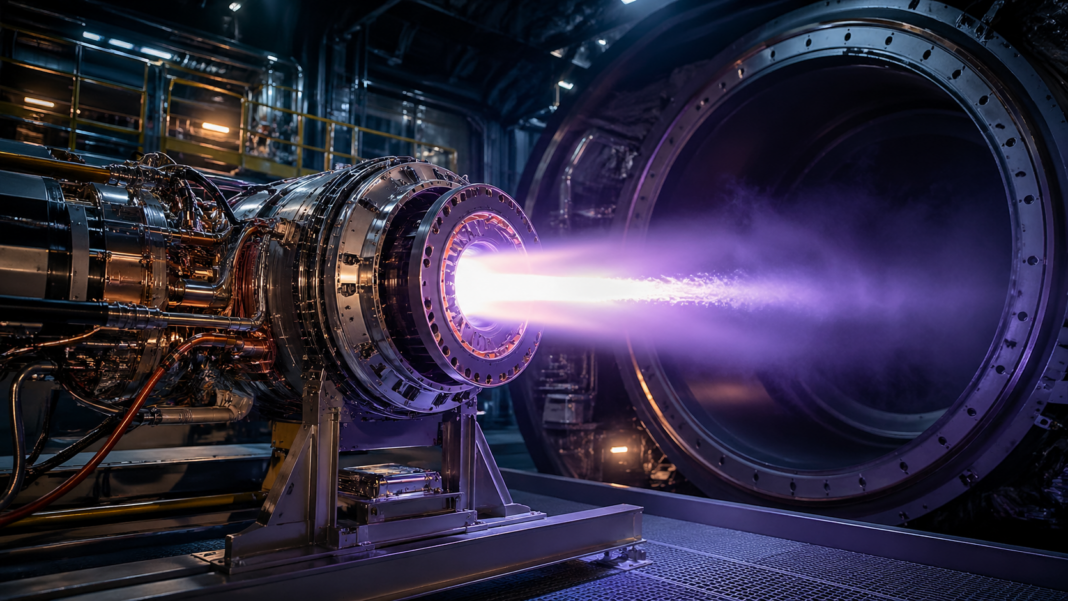
The test took place in a specialized laboratory, where the thruster reached power levels of up to 120 kilowatts—far higher than those used by current spacecraft. This makes it one of the most powerful electric propulsion systems ever tested, marking a significant milestone in space research.
Space Propulsion: The Ultimate Challenges and Breakthroughs Powering Tomorrow’s Exploration
Unlike traditional rockets that rely on short bursts of fuel, this thruster produces a steady and efficient force over time. During testing, it generated extreme heat, with components exceeding 5,000 degrees Fahrenheit and releasing a bright plume of energized particles, showing it is working as expected.
How the Lithium-Fed Thruster Works
The new thruster is part of a class called magnetoplasmadynamic (MPD) thrusters, which have been researched for decades but have never been used in actual space missions. Recent testing suggests the technology is getting closer to real-world application, especially for deep space travel.
It works by heating lithium metal until it becomes vapor, and then using electricity to turn that vapor into plasma. Plasma is an extremely hot, charged form of matter made of ions and electrons. Once formed, this plasma can be controlled using magnetic fields and strong electric currents.
Propulsion Technology: Driving Future Space Exploration
These forces push the plasma out of the engine at very high speeds, creating thrust that propels a spacecraft forward. Unlike traditional rockets that burn large amounts of chemical fuel in a short time, this system relies on electricity, making it far more efficient and reducing fuel use significantly.
The thruster can also run continuously for long periods, which is important for deep space missions where spacecraft must travel for millions of kilometers. Although the thrust is gentle, it builds up speed steadily over time. Testing was carried out in a large vacuum chamber that simulates space conditions, where multiple ignitions helped engineers collect detailed performance data for further development.
Testing High Power for Deep Space Missions
The recent test of the lithium-fed electric thruster achieved power levels far higher than those used in current spacecraft. While today’s electric thrusters already help spacecraft reach very high speeds over time, they operate at much lower power compared to this new system.
Engineers are now working to push the technology further, with future targets set between 500 kilowatts and 1 megawatt per thruster. At these higher levels, the system could support much larger space missions and carry heavier payloads than current designs allow.
One of the main challenges is managing extreme heat. The thruster components must survive very high temperatures for long periods, since deep space missions, such as journeys to Mars, would require continuous operation for tens of thousands of hours without failure.
For human missions to Mars, multiple thrusters would likely be used together. Combined, they would require a total power supply of around 2 to 4 megawatts, allowing spacecraft to transport more equipment, supplies, and possibly astronauts while still staying efficient.
Kreios Space unveils game-changing fuel-free engine for promising long-term space missions
The system is being developed alongside advanced power sources, including nuclear-based energy systems that could provide the large amounts of electricity needed for such high-performance propulsion. This combination could reduce spacecraft weight and improve mission capability.
The ongoing testing program is part of a broader effort to create next-generation propulsion systems designed for long-distance space travel. Recent results confirm that the thruster can reach key performance targets and that the testing facilities are capable of supporting this advanced technology.