Wednesday, November 25, 2026
3.7 C
Chicago

Space Mining: Pioneering Sustainable Exploration

Mining is important to develop our supplies and obtain different types of metals. But, there is one little problem… There are limited resources on Earth leading to the shortage of some elements. The shortage results in the prices rapidly increasing. If the prices are high, fewer people can access the products. Researchers from various parts of the globe suggested extracting the elements from celestial objects also known as Space Mining. Mining techniques adapted for space face unique challenges.

Challenges of Space Mining

In the vacuum of space, gravity is absent, making it extremely challenging to place stable machinery for mining operations.

Temperatures are extreme and potentially harmful to earthy technology. Cosmic Radiation and attacks from micrometeoroids are the most dangerous threats.

High atmospheric pressure poses challenges for extracting stones and metals from planetary surfaces. It affects the stability of mining equipment and structures which increases the risk of accidents or damage.

What is the solution?

There is a demand for resources in the market, like metals and minerals. We have to consider how technology keeps improving and making it easier to mine in space. The cost of reaching space and returning. It costs a lot, but in the long run, we might be making more money than we spent. This becomes especially important as Earth’s resources have started running low.

Space mining helps future space missions by building habitats and providing fuel for spacecraft. So, we don’t have to depend on Earth’s limited resources. We can explore space more, space mining gets better due to ongoing research and development.

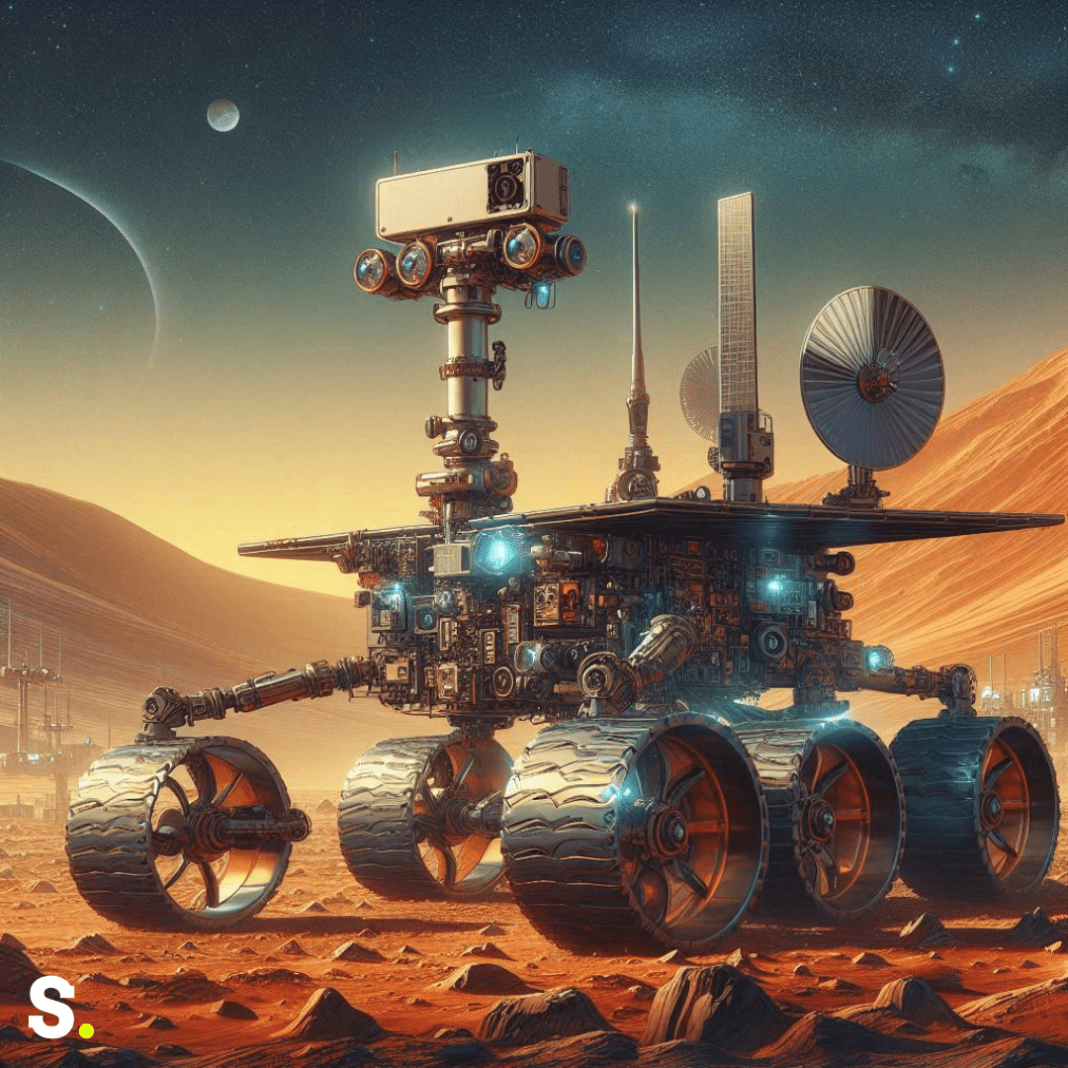
Robots are important for mining in space. They can handle tough conditions without risking anyone’s life and do repetitive tasks well. They work non-stop, which saves time and money.

Another big idea is using resources we find in space itself. For example, we can get water ice from asteroids or the Moon and turn it into water or fuel for rockets. This means we don’t have to bring everything from Earth, which makes space missions more sustainable.

Conclusion

Developing supplies and obtaining metals is crucial, but limited Earth resources cause shortages and price hikes. Space mining is suggested as a solution, but faces challenges like gravity absence, extreme temperatures, and cosmic threats. High pressure complicates mining on planetary surfaces. Technology advancements make mining more feasible, despite high costs initially. It aids future space missions by providing resources and reducing reliance on Earth’s limited supplies. Robots play a vital role in space mining, minimizing risks and saving time. Utilizing resources found in space itself, like water ice from asteroids, can make missions more sustainable. Ongoing research will improve mining techniques for the future.

“Space mining represents the next frontier of human endeavor, where our aspirations to explore the cosmos meet the practicality of resource acquisition.”

~ Neil deGrasse Tyson
Hot this week

Astronauts, Rocket Founders and Agency Chiefs: Meet LinkedIn’s 25 Biggest Space Voices

A curated guide to 15 space leaders, astronauts, founders and investors worth following on LinkedIn, each with a public profile and more than 10,000 followers.

German Startup NeuralSat Raises €2.9 Million for a 72-Satellite Data-Relay Network

NeuralSat GmbH raised €2.9 million in pre-seed funding co-led by Capnamic and Bayern Kapital to build a planned 72-satellite network for data relay and processing in orbit.

CesiumAstro Raises $730 Million at a Valuation Above $4.5 Billion

Austin-based CesiumAstro closed a $730 million Series D led by Janus Henderson on November 5, 2026, and plans a 737-satellite constellation and a large Austin manufacturing campus.

Hyderabad’s Cosmoserve Space Raises $6 Million to Build Satellite-Servicing Spacecraft

Cosmoserve Space, founded by a former ISRO engineer, raised a $6 million seed round led by Japan’s Rebright Partners to develop spacecraft that capture and refuel satellites and clear debris.

NASA’s Swift Observatory Re-enters Earth’s Atmosphere After 22 Years

NASA’s Neil Gehrels Swift Observatory re-entered over Indonesia on November 4, 2026, nearly 22 years after launch, after a private rescue attempt failed to lift it to a higher orbit.

Topics

Astronauts, Rocket Founders and Agency Chiefs: Meet LinkedIn’s 25 Biggest Space Voices

A curated guide to 15 space leaders, astronauts, founders and investors worth following on LinkedIn, each with a public profile and more than 10,000 followers.

German Startup NeuralSat Raises €2.9 Million for a 72-Satellite Data-Relay Network

NeuralSat GmbH raised €2.9 million in pre-seed funding co-led by Capnamic and Bayern Kapital to build a planned 72-satellite network for data relay and processing in orbit.

CesiumAstro Raises $730 Million at a Valuation Above $4.5 Billion

Austin-based CesiumAstro closed a $730 million Series D led by Janus Henderson on November 5, 2026, and plans a 737-satellite constellation and a large Austin manufacturing campus.

Hyderabad’s Cosmoserve Space Raises $6 Million to Build Satellite-Servicing Spacecraft

Cosmoserve Space, founded by a former ISRO engineer, raised a $6 million seed round led by Japan’s Rebright Partners to develop spacecraft that capture and refuel satellites and clear debris.

NASA’s Swift Observatory Re-enters Earth’s Atmosphere After 22 Years

NASA’s Neil Gehrels Swift Observatory re-entered over Indonesia on November 4, 2026, nearly 22 years after launch, after a private rescue attempt failed to lift it to a higher orbit.

NASA’s Twin ESCAPADE Probes Slingshot Past Earth and Head for Mars

NASA’s two ESCAPADE spacecraft completed powered Earth flybys on November 7 and 9, 2026, and are now on a roughly 10-month cruise to Mars, with orbit insertion planned for September 2027.

SpaceX’s IPO Explained: The Numbers, the Structure and What It Means for the Space Industry

SpaceX listed on Nasdaq on June 12, 2026 in the largest IPO ever. The pricing, first-day trading, share structure and what the listing means for the space sector.

India’s Spacetech Funding in 2026: How Much Startups Have Raised and Who Leads

Indian spacetech startups have raised about $871 million across 241 rounds through July 2026, with Skyroot, Pixxel, Agnikul and Digantara leading. The numbers and why sources differ.
spot_img

Related Articles

Popular Categories