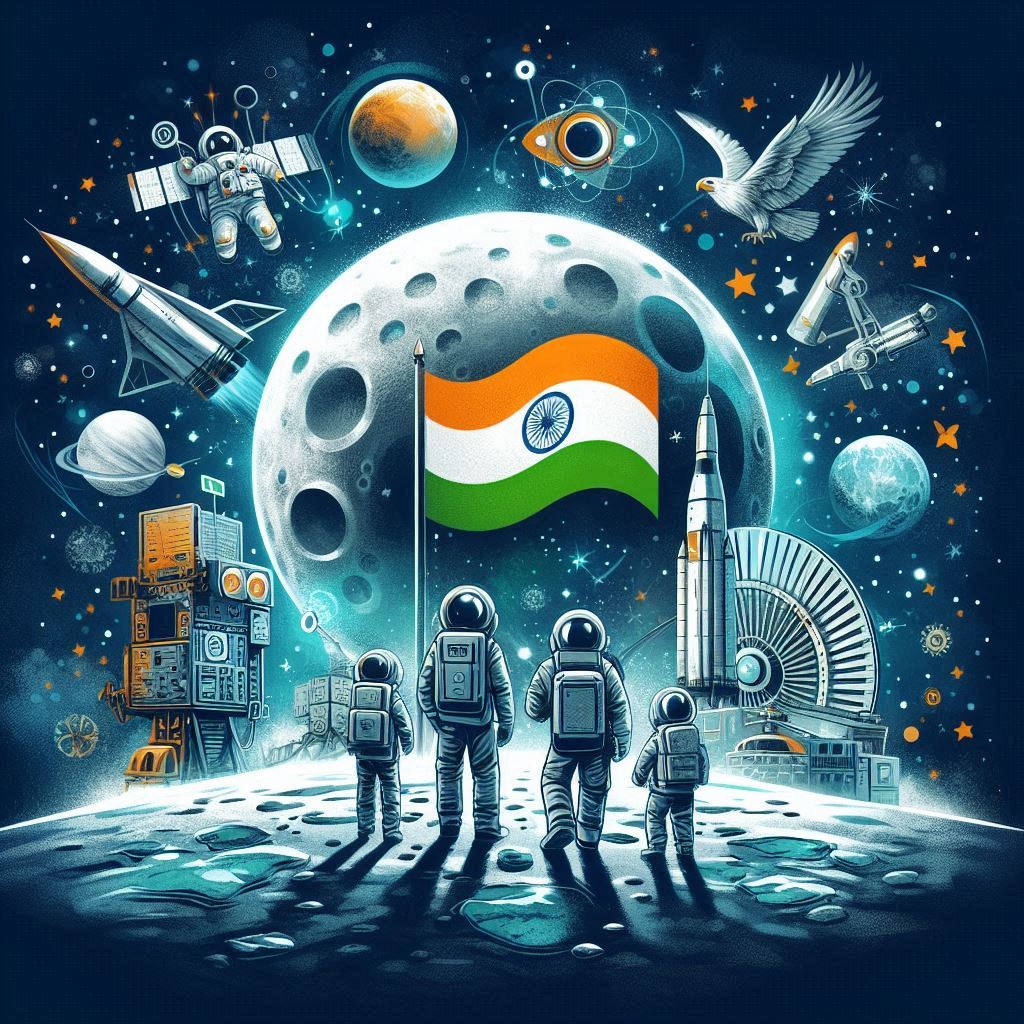

India’s First National Space Day: A Historic Milestone
On August 23, 2024, India celebrated its first-ever National Space Day, marking a momentous occasion in the nation’s space exploration journey. This date holds special significance as it commemorates the historic achievement of the Chandrayaan-3 mission, which successfully landed on the Moon’s surface exactly one year ago. India’s position as a leading participant in international space exploration has been cemented by this achievement, which made the nation the first to reach the southern pole zone of the Moon and the fourth in the world to land on the moon.
The success of the Chandrayaan-3 mission is a testament to India’s growing capabilities in space science and technology. The Vikram Lander’s touchdown on the Moon and the subsequent deployment of the Pragyan Rover to explore the lunar surface were defining moments for the Indian Space Research Organisation (ISRO) and the nation as a whole. To honor this achievement and to celebrate India’s progress in space exploration, August 23 was officially declared National Space Day by the Prime Minister, a day dedicated to recognizing the contributions of India’s space scientists, engineers, and the nation’s journey into the cosmos.
Commemorating India’s Lunar Success and Beyond
“Touching Lives while Touching the Moon: India’s Space Saga,” the topic of National Space Day 2024, highlights the significant influence that space exploration has had on society. This theme highlights how India’s journey from curiosity to active participation in space has transformed the nation’s capabilities and inspired a new generation of space enthusiasts. National Space Day is not just a celebration of past achievements but also a reminder of the importance of space technology in everyday life and its potential to bring about societal change.
A key highlight of the National Space Day celebrations took place at Bharat Mandapam in New Delhi, where a grand two-day event was held. The event featured high-profile sessions, interactive exhibitions, and significant announcements about India’s space achievements. It was a platform for showcasing the progress made by ISRO and other space organizations in India, as well as the contributions of private space tech startups that have started to leave their imprint on the international scene.
People from all throughout the nation and the world were able to participate in the celebrations by watching the live streaming of the event on ISRO’s website and YouTube channel. The event provided a comprehensive overview of India’s space journey, from the early days of space exploration to the latest advancements in technology and innovation.
Inspiring Young Minds: Shaping the Future of Space Exploration
National Space Day 2024 also placed a strong emphasis on engaging the youth and inspiring the next generation of scientists, engineers, and space enthusiasts. One of the key initiatives launched as part of the celebrations was “Space on Wheels,” a mobile exhibition that traveled to universities and colleges across India. This unique initiative aimed to bring the excitement of space exploration to students, educating them about ISRO’s activities and India’s groundbreaking space missions. By sparking curiosity and encouraging students to pursue careers in space science, the “Space on Wheels” initiative is helping to ensure that India’s legacy of exploration continues for generations to come.
In addition to the mobile exhibition, National Space Day also featured interactive activities designed to engage young minds. Among these was a student quiz that tested participants’ knowledge of space science with questions like, “Which is the closest star to Earth?” These programs showed how committed India is to fostering a deep interest in space exploration among students, which would support the growth and development of the nation’s space program.
National Space Day 2024 was a time to celebrate India’s incredible achievements in space exploration and to reflect on the progress made over the years. It served as a reminder that India’s journey into space is not just about reaching new heights but also about making a meaningful impact on society. As the nation looks to the future, National Space Day will continue to inspire, educate, and empower the next generation of space explorers, ensuring that India remains a global leader in space technology.