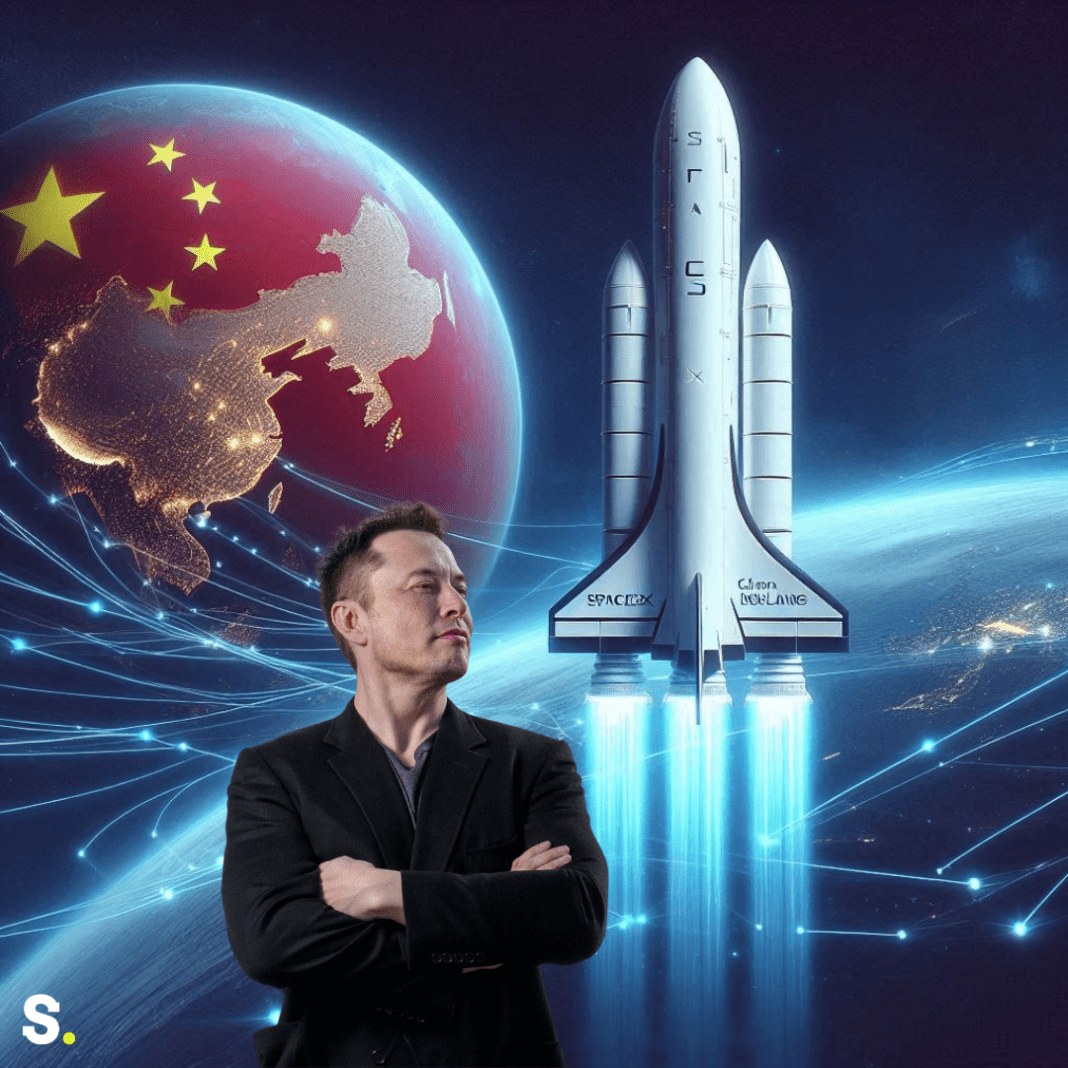

SpaceX, one of the most advanced space technology companies, has reportedly allowed Chinese investors to purchase stakes in the company through offshore financial hubs like the Cayman Islands.
Chinese Investors Quietly Buying Into SpaceX
This revelation has raised serious national security concerns, given that SpaceX works closely with the U.S. military and government agencies. The company has been involved in building classified satellite networks, handling top-secret defense contracts, and developing cutting-edge space technology.
According to reports, the details of SpaceX’s investment practices emerged during legal proceedings in Delaware. Executives testified that while a direct investment from China was blocked in 2021 due to security concerns, investments through offshore channels were deemed acceptable. These offshore methods help keep the identities of investors hidden, making it difficult to track who owns shares in the company. This practice is common in global finance but is particularly concerning when it involves a defense contractor handling sensitive U.S. government projects.
The use of offshore financial hubs means that companies and individuals can invest in businesses without revealing their true identities. This method has been used by many international investors for various reasons, including legal tax benefits and business privacy.
Mechazilla: SpaceX’s Innovative Rocket Recovery System
However, in the case of SpaceX, which deals with classified U.S. defense contracts, such hidden investments raise security concerns. Authorities fear that foreign investors could indirectly gain access to valuable technology and insights into U.S. military operations.
Offshore Loopholes and National Security Risks
Allowing investments through offshore entities means that Chinese investors can quietly buy into SpaceX without facing the usual scrutiny from U.S. regulators. National security experts worry that this could be a strategy to bypass the Committee on Foreign Investment in the United States (CFIUS), which is responsible for reviewing foreign investments that may pose risks to the country.
Historically, the U.S. has been cautious about foreign investments in companies that handle sensitive technology. Past administrations have expressed concerns about adversarial nations using secret investment methods to gain access to critical technologies. The lack of a public record showing SpaceX undergoing a formal CFIUS review has further added to the concerns. If foreign investors, particularly from China, can secure even small stakes in the company, they might gain insight into strategic operations, supply chains, or key technological advancements.
Critical Return Mission for Sunita Williams and Butch Wilmore Begins as SpaceX Launches Crew
The practice of using offshore accounts to funnel investments into American technology firms is not new. Many foreign investors, including those from China, have historically used such strategies to gain influence in high-tech industries. This is particularly concerning in the aerospace and defense sectors, where even minor financial stakes could provide indirect access to critical innovations. Without proper oversight, such investments could be exploited to gather intelligence, influence decision-making, or create vulnerabilities within the industry.
Another issue raised by experts is that even if these investments are passive and non-controlling, they can still offer valuable economic leverage. In times of economic uncertainty, foreign investors who hold shares in a key defense contractor could potentially exert indirect pressure on business decisions. This could include influencing supply chain partnerships, technological collaborations, or future investment directions.
SpaceX’s Growing Business Ties with China
This revelation comes amid increasing scrutiny of SpaceX’s business relationships with China. The company’s leadership has frequently engaged with Chinese officials to discuss business operations, especially regarding electric vehicle production and satellite technology. A significant portion of another business owned by the company’s leadership operates in China, with manufacturing facilities playing a major role in global production.
Reports suggest that Chinese investors have also funneled money into other high-tech firms linked to SpaceX. This raises concerns that investment strategies are being designed to keep financial ties hidden while still maintaining influence. The use of special-purpose investment vehicles makes it difficult to determine exactly how much foreign money is flowing into SpaceX and other related ventures.
The potential risks associated with such investments extend beyond financial influence. National security experts warn that foreign investors, even if they do not hold a controlling stake, could still gain valuable insights into SpaceX’s operations. This includes understanding how its supply chains function, what technologies it is developing, and even details about its collaborations with the U.S. government. These concerns are particularly relevant given the increasing geopolitical tensions between the U.S. and China in space and military technology.
Despite these concerns, SpaceX has not publicly responded to inquiries about its investment practices. Regulatory agencies are also yet to clarify whether they will investigate the matter further. The lack of transparency in foreign investments through offshore hubs continues to raise questions about how companies that work on sensitive national security projects should be monitored to prevent potential risks.