
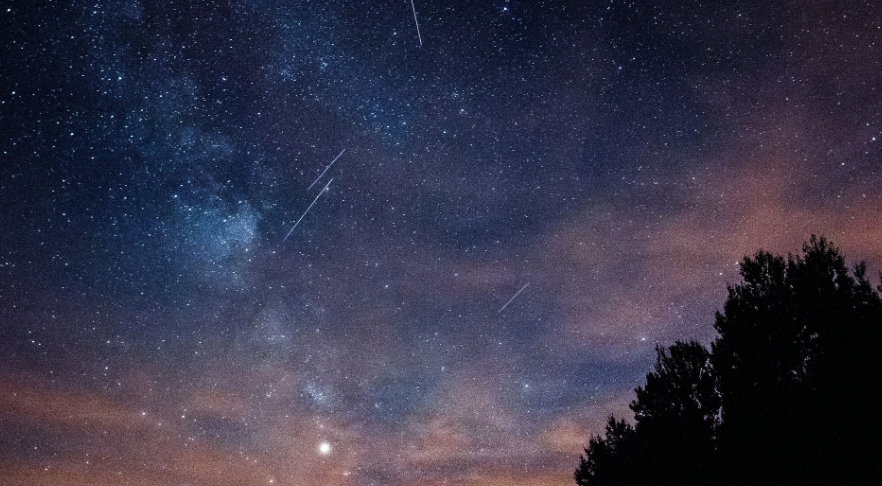

A dazzling celestial event is set to light up the skies over Melbourne and Victoria as the Eta Aquariids meteor shower reaches its peak. Known for its fast and bright shooting stars, this annual display offers skywatchers a chance to witness a stunning natural spectacle linked to Halley’s Comet.
A Stunning Meteor Shower Linked to Halley’s Comet
Skywatchers across Melbourne and wider Victoria are getting ready for a dazzling celestial event as the Eta Aquariids meteor shower reaches its peak next week. This annual meteor display is caused by debris left behind by Halley’s Comet, one of the most famous comets known to humanity, which continues to leave a trail of particles in space.
As Earth moves through this stream of dust and tiny fragments, these particles enter the atmosphere at extremely high speeds. When they burn up, they create bright streaks of light known as “shooting stars.” These meteors can travel at speeds of up to 66 kilometres per second, making them appear quick and sharp as they flash across the sky.
A rare celestial spectacle combines a meteor shower, fireballs, and a comet in the pre-dawn sky
The Eta Aquariids are active from mid-April to late May each year, with the 2026 peak expected overnight between May 5 and May 6. This meteor shower is known for its fast, bright meteors that often leave glowing trails, adding to the beauty of the night sky.
When and Where to Watch Across Victoria
For people in Melbourne and across Victoria, the best time to watch the Eta Aquariids meteor shower will be in the early hours before sunrise. The most favourable viewing period is from around 2:00 a.m. until dawn, when the sky is at its darkest and meteor activity is at its highest.
The meteor shower appears to originate from the constellation Aquarius, which rises in the eastern sky after midnight. However, viewers do not need to focus on this exact point. Shooting stars can appear anywhere in the sky, so choosing a wide, open area with a clear view is the best approach.
Spaceman Review: A Cosmic Tale That Balances Loneliness and Wonder
The Southern Hemisphere, including Australia, enjoys one of the strongest views of this meteor shower. Under ideal conditions, observers may see between 40 and 60 meteors per hour. In Melbourne, this could mean spotting up to 50 meteors per hour during peak activity, especially in darker areas away from city lights.
To improve the experience, travelling to locations with less light pollution, such as coastal or rural areas, is recommended. It is also important to allow 15 to 30 minutes for your eyes to adjust to the darkness, which helps in spotting more meteors.
What Makes Eta Aquariids Special
The Eta Aquariids meteor shower stands out because of its link to Halley’s Comet, which takes about 76 years to orbit the Sun. Even though the comet itself is not currently visible, its leftover debris creates two meteor showers each year — the Eta Aquariids in May and the Orionids in October. The next time Halley’s Comet is expected to be seen from Earth will be in 2061.
This meteor shower is known for its speed and brightness. The meteors often produce long, glowing trails that remain visible for a few seconds after passing, adding to the overall visual experience. These fast-moving streaks make the shower especially exciting for skywatchers.
Another advantage of the Eta Aquariids is that no special equipment is required. Telescopes or binoculars are not needed, as the meteors are best viewed with the naked eye under a clear, dark sky. Since viewing usually takes place before dawn, cooler temperatures are common, so bringing a blanket or chair can help make the experience more comfortable.
The shower also has a broader peak, meaning nearby mornings around the main peak can still offer good visibility. Clear skies are essential, as cloud cover or rain can block the view, making weather conditions an important factor for observers.