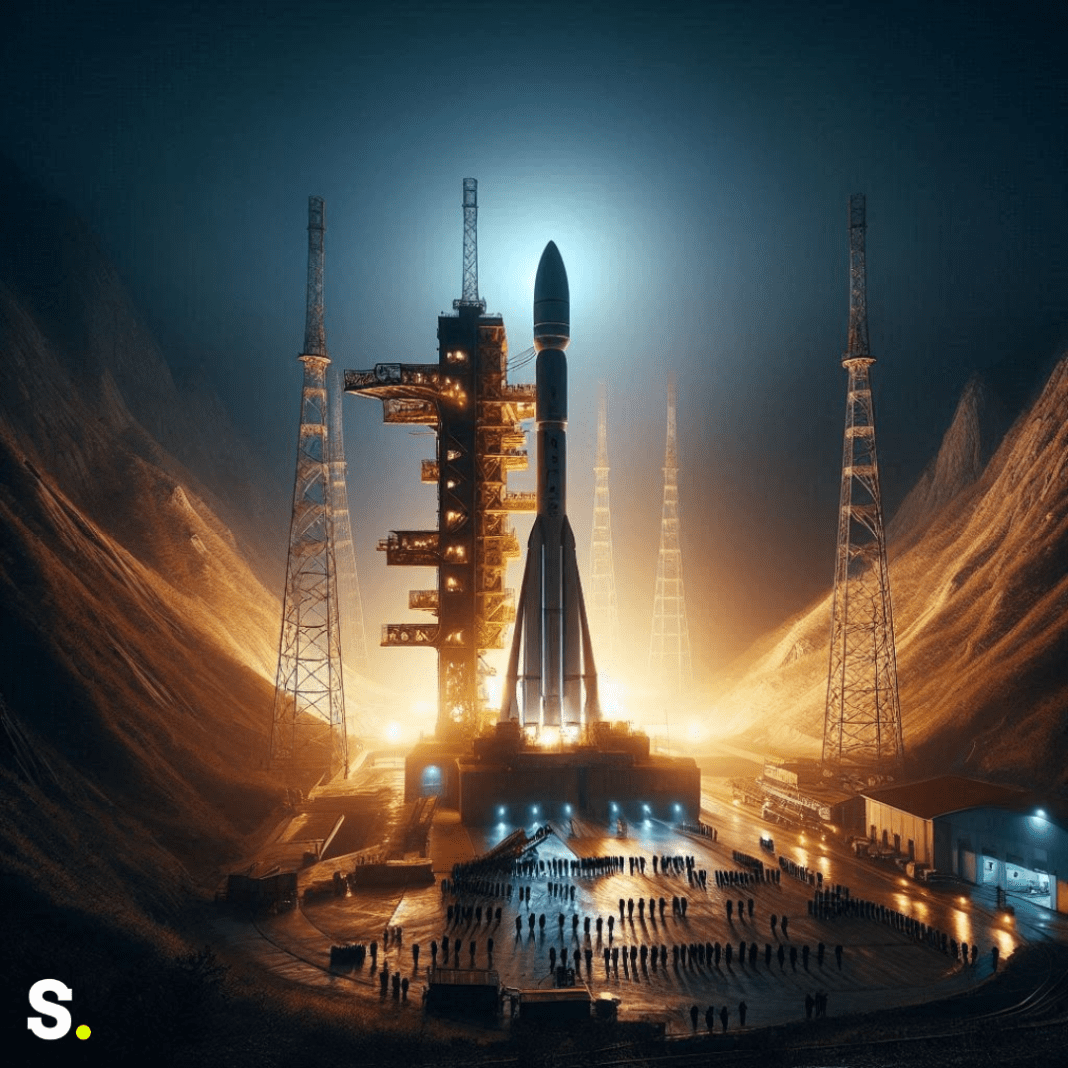

Historic Milestones in Space Tech
In recent times, the space tech sector has seen some groundbreaking events. One of the most remarkable achievements was India’s Chandrayaan-3 moon landing, which marked a significant milestone for the country’s space exploration efforts. Chandrayaan-3 landed on the Moon’s surface, demonstrating India’s growing capabilities in space technology and its dedication to exploring outer space.
Another major development was the progress made by SpaceX with its Starship program. SpaceX has been working tirelessly to refine and advance its Starship spacecraft, which is designed for deep space missions and could play a key role in future space exploration. The advancements in Starship represent a leap forward in our ability to reach farther into space and potentially make human space travel more accessible.
Additionally, the space sector saw significant mergers and acquisitions involving major companies like Maxar, Viasat, and Inmarsat. These moves are reshaping the landscape of the industry, leading to more integrated and robust space services and technologies. The consolidation of these companies highlights the increasing importance and commercial value of space technology.
The Rising Importance of Space Tech
Space technology is now essential for both economic and national security in the modern world. Countries worldwide are investing heavily in space to enhance their information sharing and surveillance capabilities. Space systems are no longer just about exploring new frontiers; they have become essential for maintaining national security and addressing geopolitical threats.
Satellites play a pivotal role in this new era. They are used for a variety of purposes, including communication, surveillance, and intelligence gathering. As more networks transition from traditional land-based communications to cloud-based systems, satellites are increasingly being used to transmit data across vast distances. This shift underscores the growing reliance on space technology for global connectivity and security.
Furthermore, the increasing use of satellites has highlighted their importance in observing and analyzing potential threats. Countries are now more dependent on space technology to monitor adversarial actions and keep track of geopolitical developments. This dependence on satellites makes them a crucial component of modern security and intelligence operations.
Exciting Developments in Space Exploration
The year 2024 is shaping up to be an exciting time for space exploration. One of the most anticipated events is the continued growth of strategic space tech partnerships. In 2023, there was a significant increase in collaborations within the space sector. For example, the UK Space Agency launched a £20 million International Bilateral Fund to foster partnerships between UK organizations and counterparts in countries like the US, Canada, Australia, Japan, India, Singapore, and South Africa. These collaborations are aimed at advancing space research and driving investment in new technologies.
The satellite communication (satcoms) sector is also experiencing consolidation as operators work to strengthen their positions against emerging threats. Mega-constellations like Starlink, OneWeb, and Amazon Kuiper are reshaping the market, and companies are responding by merging and acquiring to stay competitive. This trend indicates a dynamic and evolving industry where strategic partnerships and mergers are becoming more common.
Accurate satellite data are more important than ever in the field of Earth observation. With extreme weather events becoming more frequent and impactful, reliable Earth observation is critical for understanding and addressing climate change. The way we collect and process data about our globe is being revolutionized by satellite technology. Governments and regulatory bodies are placing increased emphasis on environmental transparency and sustainability, driving demand for advanced Earth observation technologies.
As regulations and standards for environmental reporting become stricter, businesses and organizations are turning to cutting-edge satellite data to meet these requirements. This regulatory push is expected to spur significant growth in the space tech market, leading to the development of new technologies that provide more precise and globally comparable metrics for monitoring Earth’s health.
Looking ahead, countries are gearing up for ambitious lunar missions. In 2024, Japan is set to take a leading role with its Artemis II mission. The Artemis II mission will represent a major step towards future lunar exploration, even if NASA humans won’t set foot on the Moon until 2025. The Artemis program, driven by both government and commercial interests, involves partnerships with established industry players and NewSpace companies. This initiative underscores the growing commercial interest in the Moon and the broader space exploration market.
These developments in space tech reflect a sector that is rapidly evolving and expanding. As nations and companies invest more in space, we can expect to see continued innovation and progress in the coming years.