
New Zealand has taken a strong step to stop secret spying from happening within its borders.
Hidden Activities Discovered in Space Research
On Monday, the nation declared that it would take strong action against foreign organizations attempting to surreptitiously monitor satellite and space activity on New Zealand territory. This move comes after officials discovered that some foreign entities were building space infrastructure in New Zealand while hiding their true purpose.
These groups claimed that their space projects were meant for civilian research. But investigations showed otherwise. In each case, the foreign organizations did not tell the full truth. They hid the real use of their equipment, which could help foreign militaries by collecting sensitive information from satellites and space missions. This kind of hidden activity raised alarms among New Zealand’s security agencies.
Officials explained that these foreign actors tried to set up technology in New Zealand that could track satellites, monitor activities in space, or send and receive data from spacecraft. But instead of being open about their goals, they masked their true intentions. This kind of deception made it clear that new rules were needed to protect the country’s safety and interests in space.
Space Gridlock? China Rushes to Build the World’s First Space Traffic Police
New Space Security Rules Announced
To stop such hidden operations in the future, New Zealand will start new regulations in July. These rules are designed to prevent foreign interference in space-related infrastructure. The government made it clear that space must be used in a safe and secure way, and not by those who do not share the country’s values.
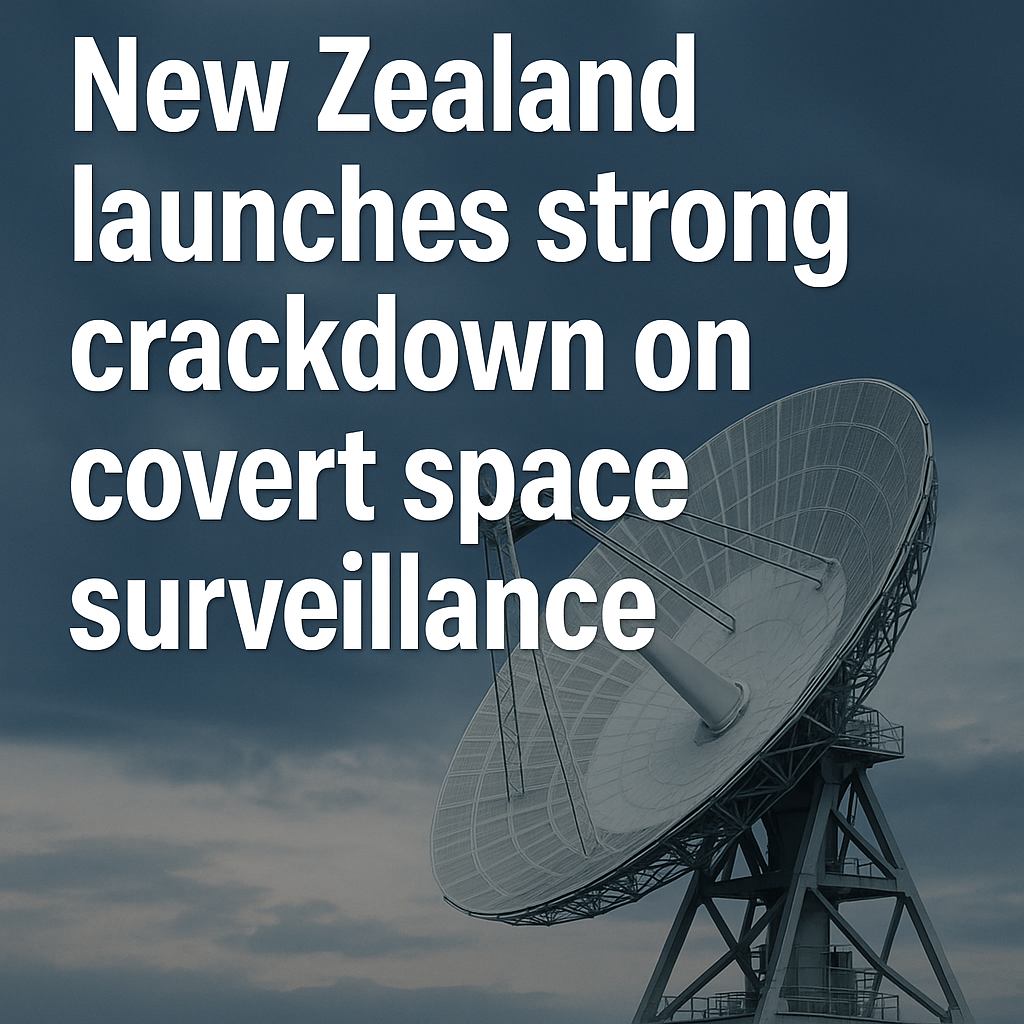
In New Zealand, ground-based infrastructure will be subject to the new rules. This includes antennas, data centers, and other equipment that connects to spacecraft. Operators of such facilities must now follow special rules to ensure safety and security. One of the main requirements is to set up protective security systems. This means that only trusted and approved users can access sensitive parts of the equipment or the data being transferred.
These rules will be introduced step by step. By March 1, 2026, the entire set of actions must be implemented. Until then, organizations will have time to make changes to meet the new safety standards.
If any person or group fails to follow the new rules, there will be serious consequences. It will be a criminal offence to ignore the requirements. An individual who breaks the law could face a fine of up to NZ$50,000 (around $30,000 USD) or up to one year in jail. If a company or organization is involved, they could face a fine of up to NZ$250,000 (around $149,000 USD). In addition, the government may seize equipment that breaks the rules. This shows how seriously New Zealand is treating the matter.
Why New Zealand Is a Target for Space Operations
New Zealand is a popular location for space-related work. The country’s geography makes it ideal for activities such as tracking satellites, observing the Earth, and calibrating space data. Its location in the Southern Hemisphere gives it a unique view of space, which is valuable for many space missions and satellite operations.
Because of this advantage, many international organizations look to New Zealand as a place to build ground infrastructure. These include dishes, antennas, and facilities that connect to satellites in orbit. Most of the time, these projects are peaceful and support scientific or commercial goals.
However, recent discoveries show that not all of these projects are honest about their purpose. Some were found to be secretly helping military forces in other countries. This creates a risk not only for New Zealand’s national security but also for the safety and fairness of space activities globally.
To stop these risks, the government has decided to keep a close watch on who is building space technology in the country and how it is being used. The new rules will make sure that every group working in New Zealand’s space sector is fully transparent and trustworthy.
New Zealand’s space officials have clearly stated that they will not allow their land to be used for activities that go against the country’s interests or values. They want to protect the space environment, make sure it is used responsibly, and prevent secret spying or data gathering by foreign actors.
This strong move by New Zealand shows how even small nations are now playing an important role in keeping space safe and secure. By tightening its rules and punishing those who break them, the country is making it harder for foreign groups to misuse space infrastructure without being noticed.