

Wednesday, November 25, 2026
3.7 C
Chicago

Artificial Intelligence in Space: Exploring New Frontiers

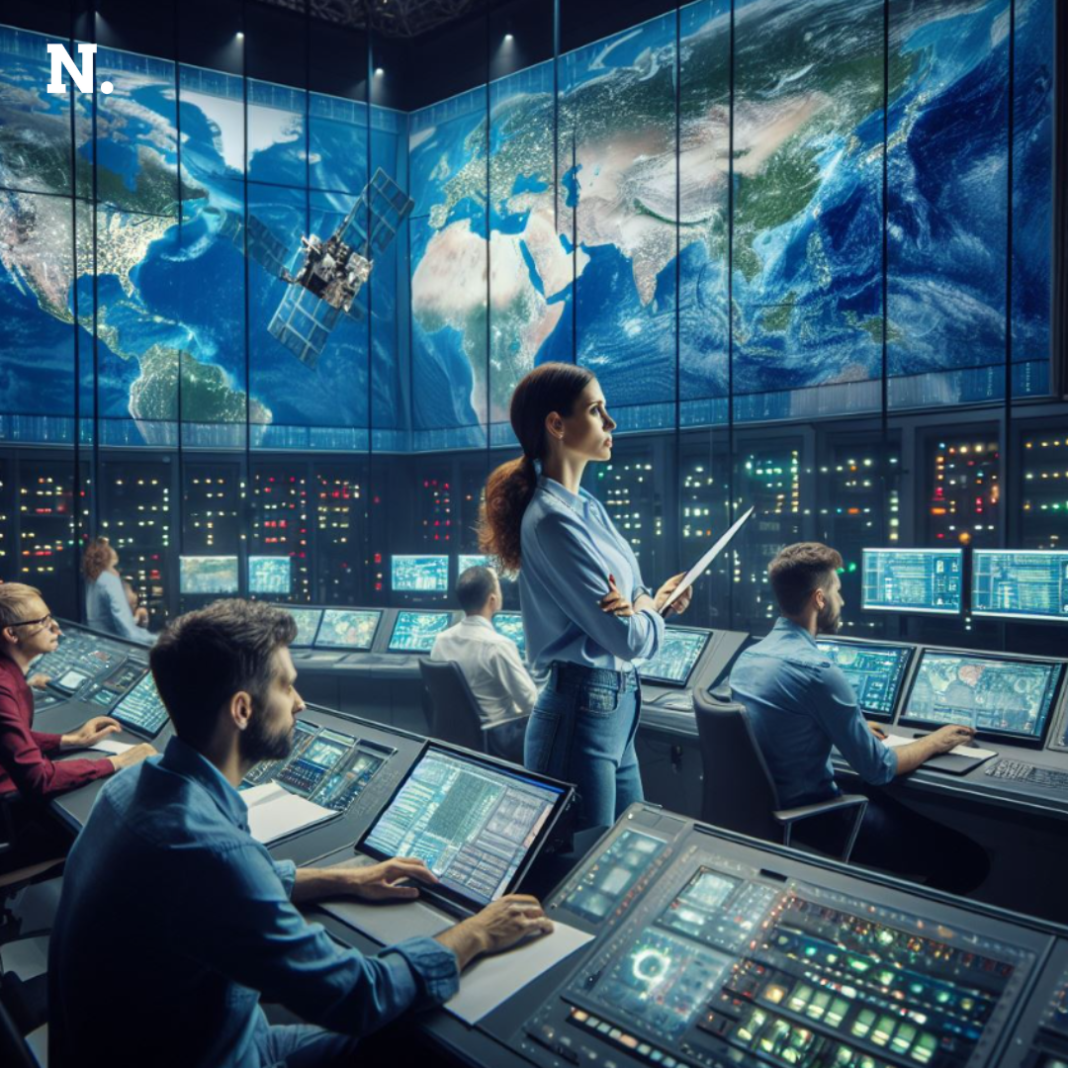
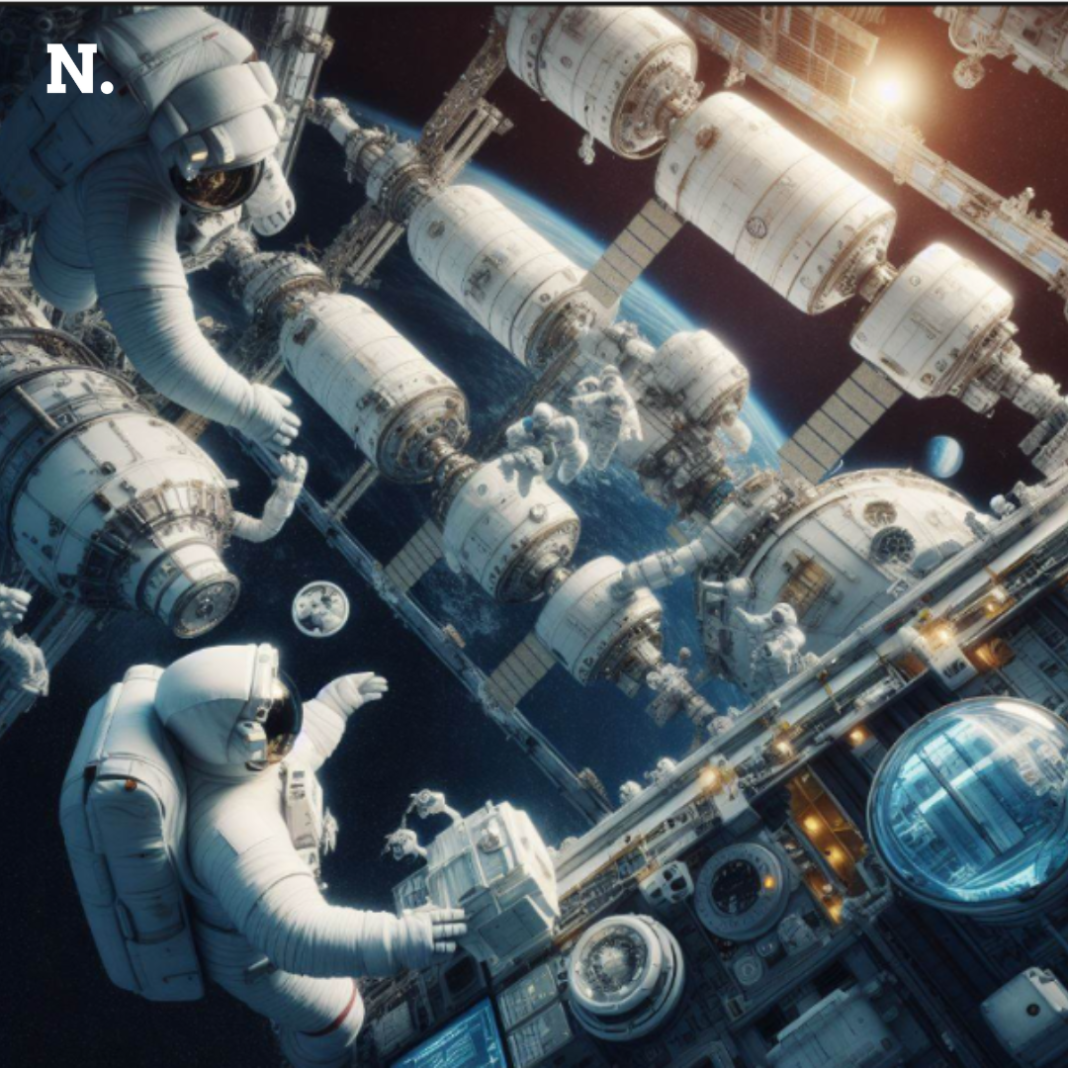
What is SpaceTech without Artificial intelligence? Let’s discover how artificial intelligence is helpful for space technology and potential colonization opportunities. What if you were an astronaut but there was nothing to guide you? What would you do without artificial intelligence by your side?

How is Artificial Intelligence used in Spacetech?

  • It helps to analyze lots of data collected by various telescopes, satellites, space probes, etc. It also assists astronomers in observing celestial objects.
  • AI helps determine mission trajectories, scheduling tasks, and planning operations for spacecraft and rovers which ensures proper resource utilization and a successful mission.
  • AI lets the spacecraft and probes make decisions independently. It can adjust its course or conduct experiments based on live data without the help of humans.
  • Artificial Intelligence can help identify exoplanets based on the changes in light patterns. AI is making it faster to discover exoplanets!
  • It can forecast space weather events like solar flares and geomagnetic storms which is necessary to protect spacecraft and astronauts from radiation hazards.

Robotics in Space

  • Robots and rovers with AI explore planets, conduct scientific experiments, and collect samples.
  • AI navigation systems enable spacecraft to navigate through space, avoid space debris, and help in docking and rendezvous operations.
  • AI controls power management, thermal regulation, and communication, improving performance in space missions.
  • Mining robots with AI technologies can extract valuable resources from celestial bodies which can help in future colonizations.

Safety Measures

Ensuring the reliability and safety of AI systems is crucial because errors could cause problems for missions and humans. Programmers work to maintain these systems, monitoring their performance to avoid potential risks. Engineers actively address issues like data privacy, access to space resources, etc.

Through regulations, we strive to create an environment where space exploration can thrive while ensuring the safety of astronauts.

Humans and AI in space missions actively seek to establish clear protocols and communication channels for proper collaboration. By involving both humans and AI in decision-making processes.

Conclusion

Artificial intelligence plays a crucial role in SpaceTech, aiding in data analysis, mission planning, spacecraft autonomy, exoplanet discovery, space weather forecasting, robotics exploration, navigation, power management, resource mining, safety measures, and collaboration between humans and AI. Engineers work to maintain AI systems for mission reliability and astronaut safety.

Hot this week

Astronauts, Rocket Founders and Agency Chiefs: Meet LinkedIn’s 25 Biggest Space Voices

A curated guide to 15 space leaders, astronauts, founders and investors worth following on LinkedIn, each with a public profile and more than 10,000 followers.

German Startup NeuralSat Raises €2.9 Million for a 72-Satellite Data-Relay Network

NeuralSat GmbH raised €2.9 million in pre-seed funding co-led by Capnamic and Bayern Kapital to build a planned 72-satellite network for data relay and processing in orbit.

CesiumAstro Raises $730 Million at a Valuation Above $4.5 Billion

Austin-based CesiumAstro closed a $730 million Series D led by Janus Henderson on November 5, 2026, and plans a 737-satellite constellation and a large Austin manufacturing campus.

Hyderabad’s Cosmoserve Space Raises $6 Million to Build Satellite-Servicing Spacecraft

Cosmoserve Space, founded by a former ISRO engineer, raised a $6 million seed round led by Japan’s Rebright Partners to develop spacecraft that capture and refuel satellites and clear debris.

NASA’s Swift Observatory Re-enters Earth’s Atmosphere After 22 Years

NASA’s Neil Gehrels Swift Observatory re-entered over Indonesia on November 4, 2026, nearly 22 years after launch, after a private rescue attempt failed to lift it to a higher orbit.

Topics

Astronauts, Rocket Founders and Agency Chiefs: Meet LinkedIn’s 25 Biggest Space Voices

A curated guide to 15 space leaders, astronauts, founders and investors worth following on LinkedIn, each with a public profile and more than 10,000 followers.

German Startup NeuralSat Raises €2.9 Million for a 72-Satellite Data-Relay Network

NeuralSat GmbH raised €2.9 million in pre-seed funding co-led by Capnamic and Bayern Kapital to build a planned 72-satellite network for data relay and processing in orbit.

CesiumAstro Raises $730 Million at a Valuation Above $4.5 Billion

Austin-based CesiumAstro closed a $730 million Series D led by Janus Henderson on November 5, 2026, and plans a 737-satellite constellation and a large Austin manufacturing campus.

Hyderabad’s Cosmoserve Space Raises $6 Million to Build Satellite-Servicing Spacecraft

Cosmoserve Space, founded by a former ISRO engineer, raised a $6 million seed round led by Japan’s Rebright Partners to develop spacecraft that capture and refuel satellites and clear debris.

NASA’s Swift Observatory Re-enters Earth’s Atmosphere After 22 Years

NASA’s Neil Gehrels Swift Observatory re-entered over Indonesia on November 4, 2026, nearly 22 years after launch, after a private rescue attempt failed to lift it to a higher orbit.

NASA’s Twin ESCAPADE Probes Slingshot Past Earth and Head for Mars

NASA’s two ESCAPADE spacecraft completed powered Earth flybys on November 7 and 9, 2026, and are now on a roughly 10-month cruise to Mars, with orbit insertion planned for September 2027.

SpaceX’s IPO Explained: The Numbers, the Structure and What It Means for the Space Industry

SpaceX listed on Nasdaq on June 12, 2026 in the largest IPO ever. The pricing, first-day trading, share structure and what the listing means for the space sector.

India’s Spacetech Funding in 2026: How Much Startups Have Raised and Who Leads

Indian spacetech startups have raised about $871 million across 241 rounds through July 2026, with Skyroot, Pixxel, Agnikul and Digantara leading. The numbers and why sources differ.
spot_img

Related Articles

Popular Categories