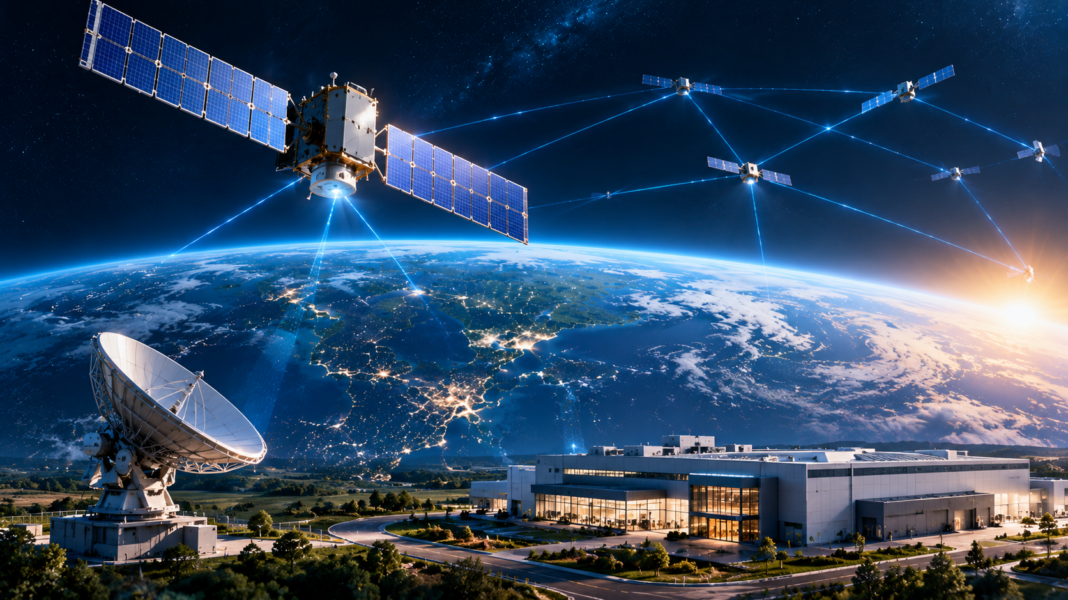

German Startup NeuralSat Raises €2.9 Million for a 72-Satellite Data-Relay Network — this article provides a comprehensive overview, covering key concepts, practical applications, and expert insights on this topic.
German Startup NeuralSat Raises €2.9 Million for a 72-Satellite Data-Relay Network — this article provides a comprehensive overview, covering key concepts, practical applications, and expert insights on this topic.
German Startup NeuralSat Raises €2.9 Million for a 72-Satellite Data-Relay Network — this article provides a comprehensive overview, covering key concepts, practical applications, and expert insights on this topic.
Published November 23, 2026.
In short: German startup NeuralSat GmbH announced on November 12, 2026 (reported November 13) a €2.9 million pre-seed round, about $3.2 million, co-led by Capnamic and Bayern Kapital. It plans a 72-satellite network to relay and process data in space.
The plan
The planned network would let satellite operators offload computing and communications. NeuralSat says it could deliver up to 50 Gbps through optical and high-frequency radio links. Intended services include real-time processing near the source of the data, hosted workloads for commercial and defence customers, and time-critical missions such as Earth observation and signals intelligence.
The first in-orbit demonstration node is planned for October 2027, with commercial satellites to follow. The company was founded in early 2026 and its CEO is Mohd Bilal.
Who is backing it
Besides the two lead investors, the round includes ZOHO.VC, Robin Capital, BAB (the development bank for Bremen and Bremerhaven), Mission E and KIEMIS Holding.
The competition
Space data relay is getting crowded. SiliconANGLE notes that Canada’s Kepler Communications launched its first commercial relay service in January and announced a next-generation optical network in August, and that Skyloom, acquired by IonQ in early 2026, deployed 84 optical terminals in low Earth orbit. The article does not say whether this round funds the full 72-satellite constellation, so the funding gap to that goal is unclear.
For background on constellations, see satellite internet constellations explained and our glossary.
Sources
News reporting:
Sources & Attribution
The information in this article is based on publicly available research, industry reports, and expert analysis. Readers are encouraged to verify claims with primary sources and consult qualified professionals for advice specific to their circumstances.