
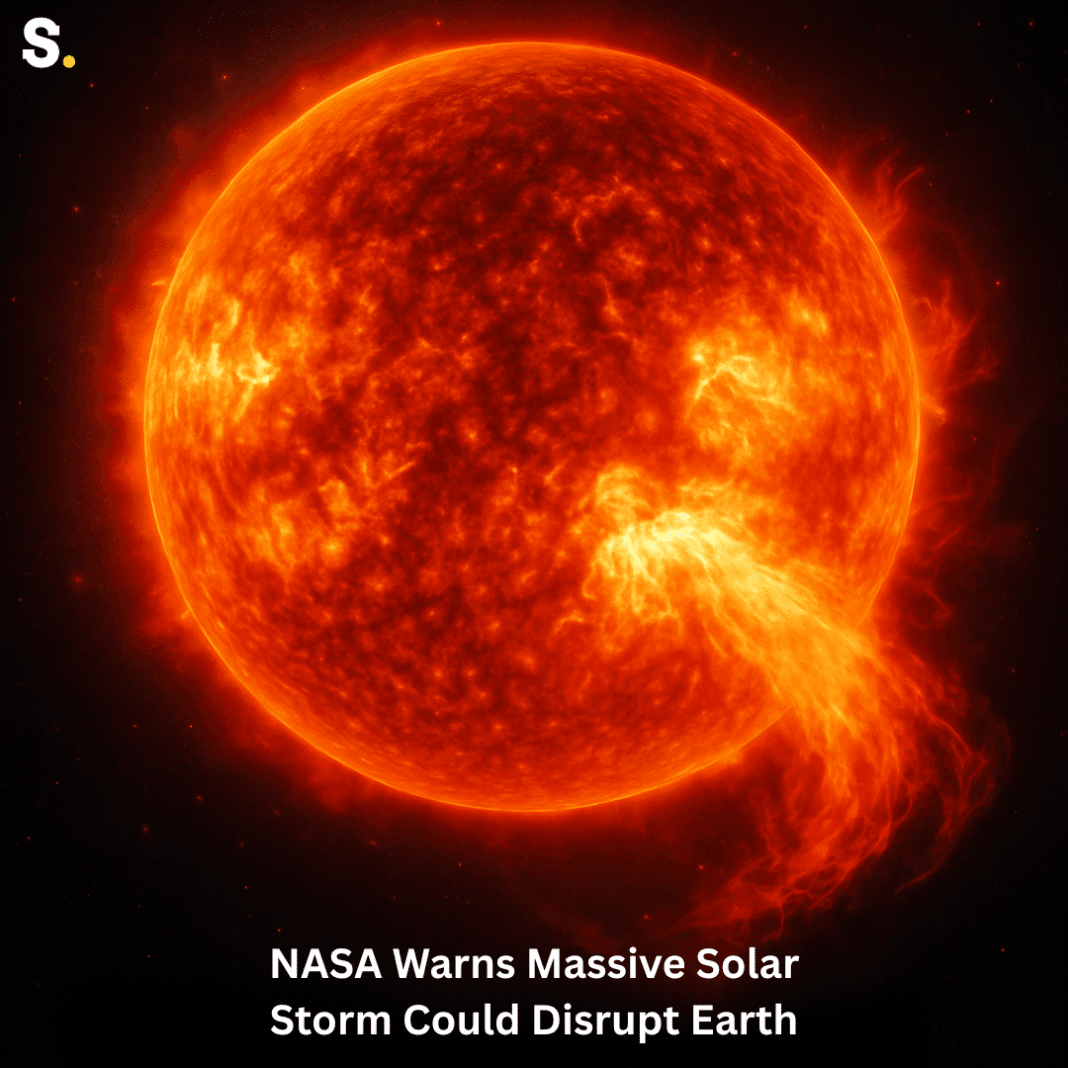

A powerful and worrying event is taking place on the surface of the Sun. A highly active region, known as Sunspot AR4087, is shooting out some of the most intense solar explosions seen in recent times. These explosions are not ordinary—they are called X-class solar flares, and they are the strongest type of solar flare known to scientists.
Sunspot AR4087 Triggers Massive Solar Eruptions
These flares are giant bursts of energy and light that come from the Sun’s surface. When they explode, they release massive amounts of solar radiation. This energy moves very quickly through space, and when it’s pointed directly at Earth, it can affect many systems we depend on every day.
The alarm was first raised on May 13, when a strong flare, called an X1.2-class, erupted and was pointed straight toward Earth. This was serious enough, but the next day, an even more powerful explosion occurred—this one was an X2.7-class flare. This second burst caused radio signal issues in many areas around the world, signaling how dangerous these solar storms can be.
Global Impact: Radio Blackouts and Network Risks
After the massive solar flare on May 14, people in several regions began facing disruptions. These powerful solar rays led to radio blackouts. For some time, there was no radio communication in areas like the United States, Europe, Africa, and South Asia. Radio signals rely on the Earth’s atmosphere to bounce across long distances, and when solar flares hit, they can disturb these layers in space.
This was not just a small issue. Emergency services, aircraft communication, and even internet links can depend on radio frequencies. The blackouts show that a large solar storm can affect daily life in a big way. If more flares come or if even stronger ones are released, we could see trouble with mobile networks, navigation systems, satellite communication, and even power lines.
Türkiye Makes Space History—Turksat 6A Now Serves South Asia
Many satellites orbit the Earth to help us communicate, use GPS, and provide weather updates. These satellites are vulnerable when strong solar energy hits them. They can stop working, or worse, get damaged permanently. This would cause major problems in both big cities and rural areas.
US Conducts Solar Storm Drill Amid Threats
In response to this rising solar activity, the United States carried out a special training drill earlier this month. This was not a random event—it was carefully planned to help the country prepare for a big solar storm. The practice drill took place on May 8 in Colorado, where many national agencies and space-related teams took part.
During the exercise, they imagined a situation in the year 2028. In that situation, a giant solar storm hits Earth, and the results are serious. The internet goes down in many places, power grids fail, and millions of people are left without electricity. The drill was designed to test how emergency services and systems would respond in such a crisis.
This drill shows how seriously experts are treating the current activity from the Sun. They know that storms like this have happened in the past and can happen again. In the worst cases, they can knock out large parts of modern technology and leave countries struggling to respond.
People are being advised to take simple steps to stay safe in case of future disruptions. These include not depending only on mobile phones for communication, keeping a battery-powered radio handy, and watching for alerts from official agencies. The effects of a solar storm can come suddenly, so being ready is important.
Trump plans massive $6 billion NASA cut, redirects $1 billion to Mars efforts
These facts point to a simple truth—our modern world depends a lot on technology that can be affected by the Sun. When the Sun becomes active and fires powerful flares toward Earth, we all feel the impact in some way. Whether it’s slower internet, no GPS, or even power cuts, the threat from space is very real and must be taken seriously.