

Imagine seeing someone behind you as you make your way home from school. At first, you think it’s nothing. But after five or six blocks, they’re still there—getting closer and not changing direction. That same uneasy feeling is now happening… in space.
A Mysterious Chase by Russian Satellites in Space
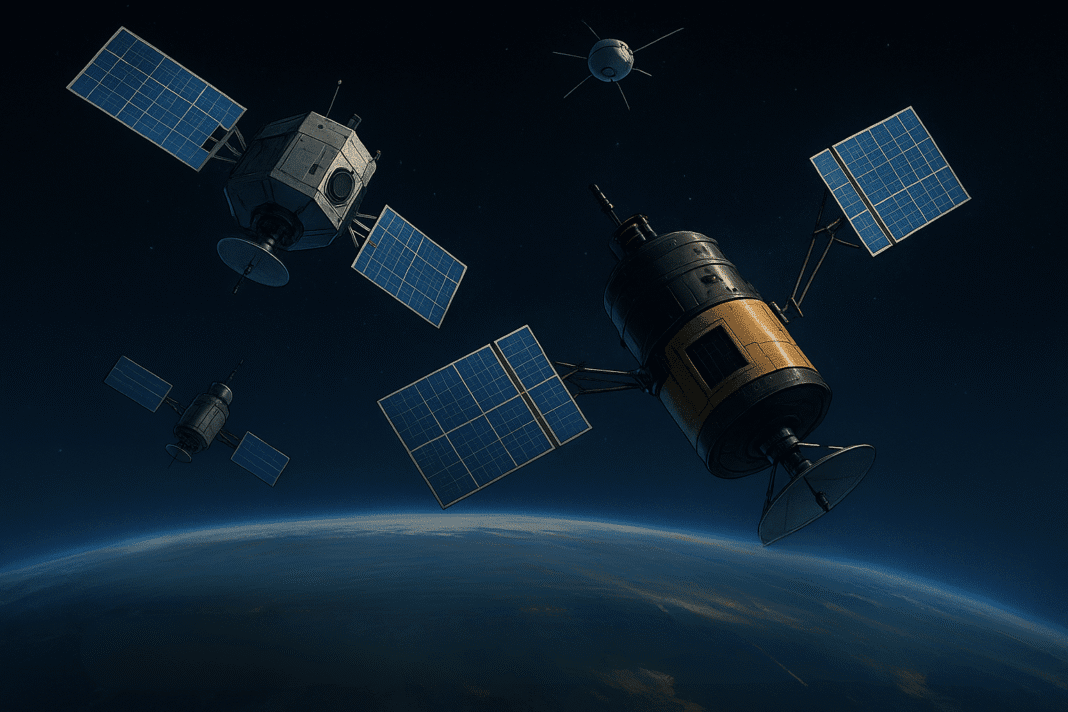
A Russian satellite called Cosmos 2588 was launched on May 23. It entered an orbit that is almost exactly in line with an American satellite believed to be part of a sensitive surveillance network. These satellites are located hundreds of kilometers above Earth in low Earth orbit. But even there, space isn’t so empty anymore.
What makes this more alarming is that Russian satellites are not just passing by—they’re sticking close. Unlike ordinary monitoring satellites that move along, these Russian satellites seem to be following and watching the American object closely, raising concerns about their true purpose.
This Russian satellite is not the only one, the US Space Command said. It’s been spotted near a US government satellite and is now traveling in a pattern that closely follows the American one. To make matters more suspicious, two other Russian satellites have also joined in this space-following activity.
Russia says its satellites are just meant to observe what’s going on around them. But this specific group of satellites isn’t simply passing by. They’re staying in close range, keeping their eyes locked on the American satellite, and not moving on like usual monitoring satellites do.
Russia Launches Trio of Satellites—Then a Strange Object Appears From Nowhere
How Close is Too Close?
In space, satellites usually have plenty of room. They zip around the Earth in their orbits, and most of the time, they’re far away from one another. That’s what’s so odd about this circumstance.
The American satellite, believed to be part of the “Crystal” constellation, is used for taking detailed images of the Earth. It’s thought to belong to a government organization that manages space-based surveillance.
Now, Russian satellites—including Cosmos 2588 and two other Russian devices—are getting closer and holding their position right next to the American satellite. It’s not just a drive-by glance. These Russian satellites are behaving like they’re preparing to do more than just watch. They’re following a pattern that some experts say looks more like shadowing than spying.
In the world of satellites, this type of movement raises red flags. If a satellite gets too close, it could interfere with the target or even cause damage. While Russia claims these are harmless “neighborhood watch” satellites, the way these Russian satellites are behaving is different from what is usually seen in peaceful monitoring operations.
A Space Pattern That Looks Familiar
This isn’t the first time this kind of pattern has been seen. Military experts compare it to the way Russian aircraft sometimes fly near North American defense zones to see how fast and how strongly forces respond. The idea is not to attack, but to test reactions.
In this case, the Russian satellites appear to be doing something similar, but in space. They might be testing how American systems react to close approaches. The problem is, space is no longer a completely peaceful place, and satellites play a big role in security, communication, and surveillance. There could be major problems if you get too close.
The American side has not officially confirmed which satellite is being tracked, but independent observers—people who watch the skies and track objects in orbit—have shared that Cosmos 2588 is in a nearly identical orbit with the American satellite known as USA 338. This orbit match has added more weight to the suspicions.
Ukraine’s Drones Navigate GPS Dead Zones Through Russia’s Electronic Fog
These watchers also say that the Russian satellites aren’t just coincidentally nearby. Their movements suggest coordination. They’re carefully keeping their distances in a way that seems planned. It’s not like they’re drifting randomly. They’re acting with purpose.
The US Space Command has acknowledged the situation, confirming the Russian satellite’s position but has not given detailed public updates beyond that. This is common when dealing with sensitive or classified equipment, especially when intelligence is involved.
But what if these close approaches are just the tip of something far more dangerous?
Launch of Kosmos 2553
In a chilling signal of rising space militarization, the Russian military has launched Cosmos 2553 (Sometimes also referred to as Kosmos 2553), a satellite that experts fear could be tied to a secretive nuclear anti-satellite weapon program.
Blasting off from the Plesetsk Cosmodrome, a site historically associated with military-grade payloads, the satellite launch triggered immediate alerts across Western space command networks. While official reports from Russia remain vague, defense analysts believe Cosmos 2553 may represent a major leap in space weapon development—particularly those designed to disrupt or destroy vital assets in Earth orbit.
According to sources close to the Ministry of Defense, this satellite could be part of a broader strategy involving the development of nuclear capabilities beyond traditional battlefields.
Several intelligence briefings suggest Moscow is exploring deployment of nuclear weapons in space—what many now call the dawn of a nuclear space era. Such weapons, especially if placed in orbit, could blind satellites, paralyze communication systems, and destabilize global security, all without firing a single shot on Earth.
US Space Command Concerned over Cosmos 2553
The growing threat has prompted urgent meetings within U.S. space command, with officials warning that a nuclear payload in Earth orbit would violate longstanding treaties and provoke international outrage.
As the world watches closely, Cosmos 2553 has become the centerpiece of a new kind of arms race. The launch may mark not just another Russian satellite, but the potential beginning of a shadow war above our heads—where invisible threats in orbit carry the destructive power of nuclear weapons, and where the boundaries between atmosphere and armament grow ever more dangerously thin.
In space, moving satellites into such close and calculated positions doesn’t happen without a plan. While countries like Russia and the United States both operate satellites that observe others, the current situation is being watched very closely because of its aggressive pattern.
Right now, this story continues to unfold in the silence of space. A Russian satellite and its companions are keeping close company with an American one. And down on Earth, space watchers, defense agencies, and governments are keeping a very close eye on what comes next.