Wednesday, November 25, 2026
2.3 C
Chicago

NASA’s Swift Observatory Re-enters Earth’s Atmosphere After 22 Years

Published November 23, 2026.

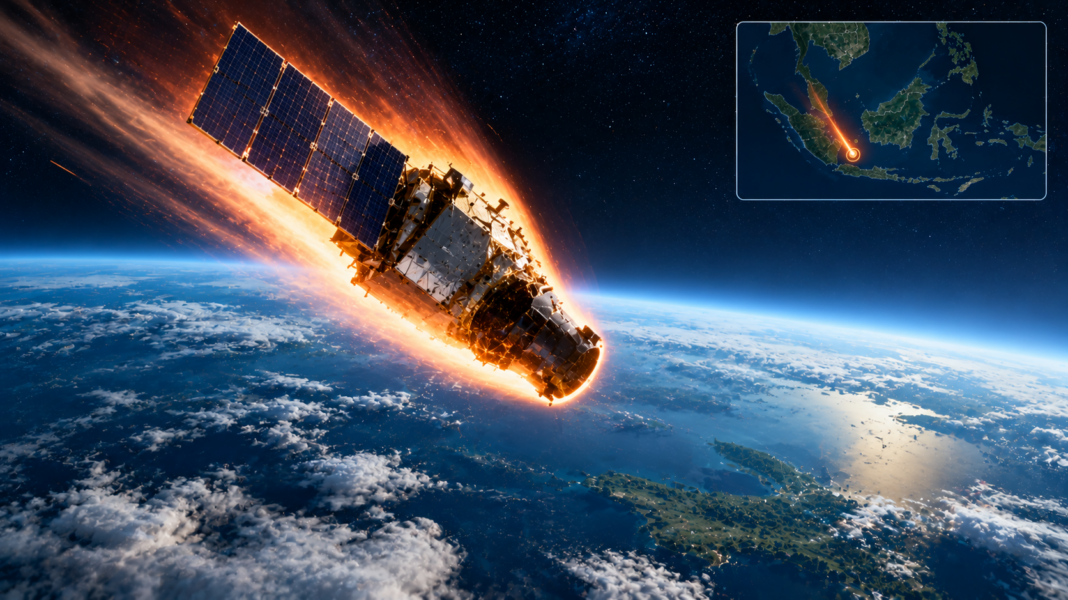
In short: NASA’s Neil Gehrels Swift Observatory re-entered Earth’s atmosphere at 7:39 a.m. EST on November 4, 2026, over the North Sumatra region of Indonesia, according to the US Space Force. It had been in orbit for almost 22 years.

The end of a long mission

Swift launched in 2004 to study gamma-ray bursts, the most powerful explosions in the universe. NASA originally planned a two-year mission, and the observatory kept working for more than ten times that long. The roughly 3,200-pound spacecraft carried instruments that detect different kinds of light, which let scientists study the same event in several ways.

NASA said it expected most of the spacecraft to burn up in the atmosphere, but that some components could have survived. At the time of the latest reports we found, no recovered debris had been publicly confirmed. Before re-entry, NASA had estimated the risk of harm to anyone on Earth at about 1 in 2,100.

Why it came down

Increased solar activity thickened the upper atmosphere and raised drag on the spacecraft, pulling it down faster than engineers expected. NASA suspended science observations earlier this year and repositioned Swift to reduce drag and buy time.

The failed rescue

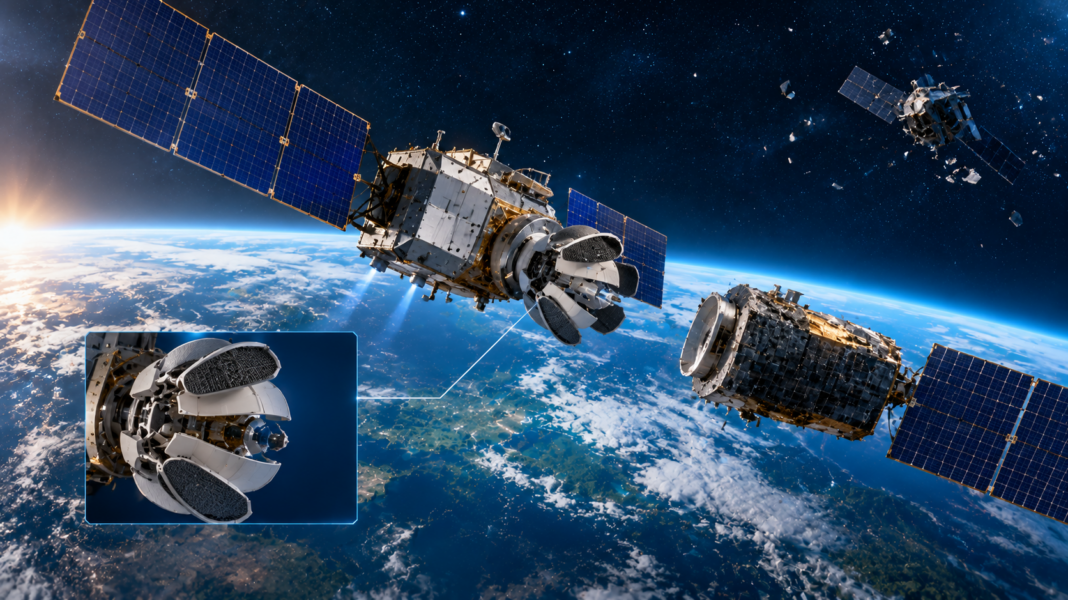
NASA sponsored a roughly $30 million commercial attempt by Katalyst Space Technologies to attach a robotic spacecraft called Link to Swift and boost it to a higher orbit. Katalyst announced that Link re-entered the atmosphere without completing the rescue, which closed that effort.

The episode is a real-world test of satellite servicing, a market that startups are targeting. See our explainer on orbital crowding and the space technology glossary for terms such as re-entry and drag.

Sources

Primary and official:

News reporting:
Hot this week

Astronauts, Rocket Founders and Agency Chiefs: Meet LinkedIn’s 25 Biggest Space Voices

A curated guide to 15 space leaders, astronauts, founders and investors worth following on LinkedIn, each with a public profile and more than 10,000 followers.

German Startup NeuralSat Raises €2.9 Million for a 72-Satellite Data-Relay Network

NeuralSat GmbH raised €2.9 million in pre-seed funding co-led by Capnamic and Bayern Kapital to build a planned 72-satellite network for data relay and processing in orbit.

CesiumAstro Raises $730 Million at a Valuation Above $4.5 Billion

Austin-based CesiumAstro closed a $730 million Series D led by Janus Henderson on November 5, 2026, and plans a 737-satellite constellation and a large Austin manufacturing campus.

Hyderabad’s Cosmoserve Space Raises $6 Million to Build Satellite-Servicing Spacecraft

Cosmoserve Space, founded by a former ISRO engineer, raised a $6 million seed round led by Japan’s Rebright Partners to develop spacecraft that capture and refuel satellites and clear debris.

NASA’s Twin ESCAPADE Probes Slingshot Past Earth and Head for Mars

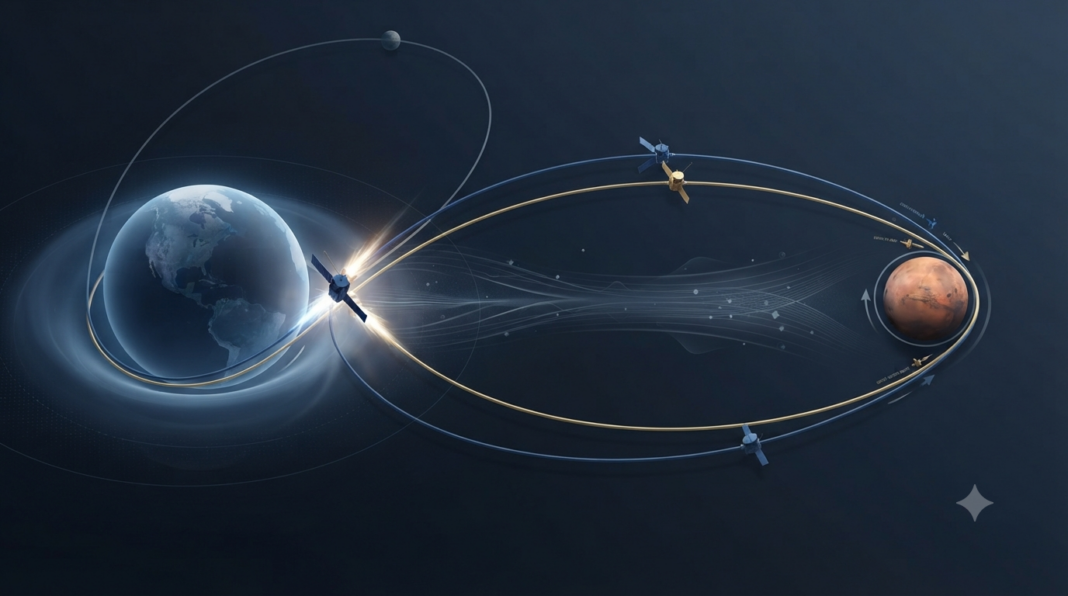
NASA’s two ESCAPADE spacecraft completed powered Earth flybys on November 7 and 9, 2026, and are now on a roughly 10-month cruise to Mars, with orbit insertion planned for September 2027.

Topics

Astronauts, Rocket Founders and Agency Chiefs: Meet LinkedIn’s 25 Biggest Space Voices

A curated guide to 15 space leaders, astronauts, founders and investors worth following on LinkedIn, each with a public profile and more than 10,000 followers.

German Startup NeuralSat Raises €2.9 Million for a 72-Satellite Data-Relay Network

NeuralSat GmbH raised €2.9 million in pre-seed funding co-led by Capnamic and Bayern Kapital to build a planned 72-satellite network for data relay and processing in orbit.

CesiumAstro Raises $730 Million at a Valuation Above $4.5 Billion

Austin-based CesiumAstro closed a $730 million Series D led by Janus Henderson on November 5, 2026, and plans a 737-satellite constellation and a large Austin manufacturing campus.

Hyderabad’s Cosmoserve Space Raises $6 Million to Build Satellite-Servicing Spacecraft

Cosmoserve Space, founded by a former ISRO engineer, raised a $6 million seed round led by Japan’s Rebright Partners to develop spacecraft that capture and refuel satellites and clear debris.

NASA’s Twin ESCAPADE Probes Slingshot Past Earth and Head for Mars

NASA’s two ESCAPADE spacecraft completed powered Earth flybys on November 7 and 9, 2026, and are now on a roughly 10-month cruise to Mars, with orbit insertion planned for September 2027.

SpaceX’s IPO Explained: The Numbers, the Structure and What It Means for the Space Industry

SpaceX listed on Nasdaq on June 12, 2026 in the largest IPO ever. The pricing, first-day trading, share structure and what the listing means for the space sector.

India’s Spacetech Funding in 2026: How Much Startups Have Raised and Who Leads

Indian spacetech startups have raised about $871 million across 241 rounds through July 2026, with Skyroot, Pixxel, Agnikul and Digantara leading. The numbers and why sources differ.

Space and Sky Events in 2027: The Total Solar Eclipse, Meteor Showers and More

A guide to 2027’s biggest sky events: the August 2 total solar eclipse (6 minutes 23 seconds), the February annular eclipse, lunar eclipses and meteor showers.
spot_img

Related Articles

Popular Categories