

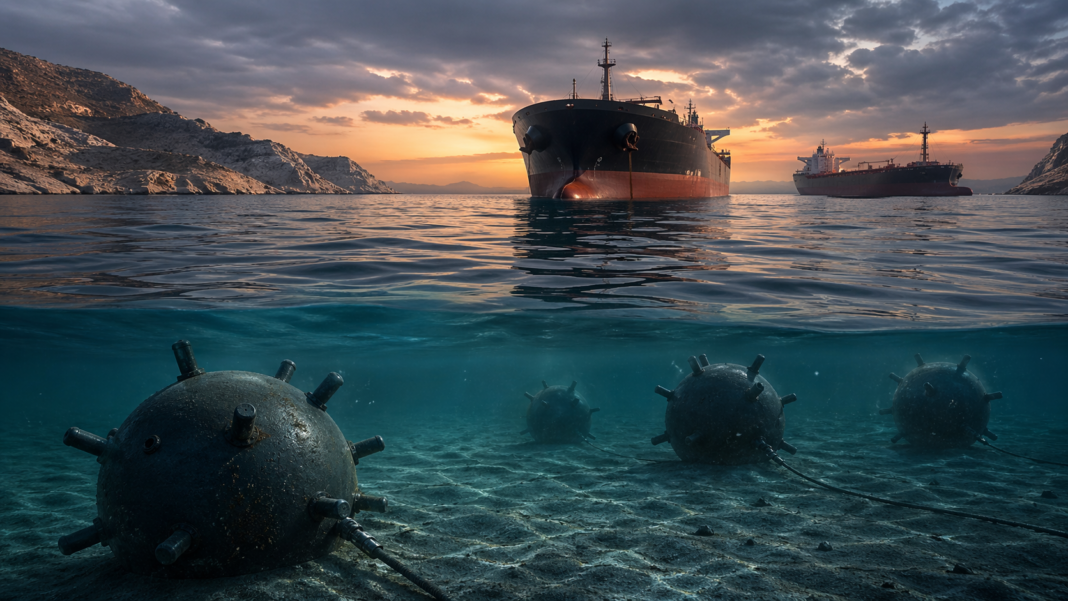

Rising tensions have placed the Strait of Hormuz at the center of a growing global crisis. As a key route for the world’s oil supply, its closure has raised serious concerns about energy disruptions and rising fuel prices. Reports of dangerous underwater threats, including GPS-guided sea mines, and delays in reopening the passage have further increased uncertainty in global markets.
A Critical Waterway Faces a Dangerous Standstill
The Strait of Hormuz is one of the world’s most vital shipping routes, often described as a “global oil chokepoint” because a significant portion of the world’s oil passes through this narrow waterway every day. Any disruption here can quickly send shockwaves across global markets, especially in countries that rely heavily on imported oil for energy and transportation.
The route has been shut following escalating tensions and conflict that began on February 28. Although it briefly reopened for a short period, it was quickly closed again due to renewed accusations and growing hostilities. This back-and-forth situation has created uncertainty in global energy supplies, pushing traders and governments to closely monitor developments.
US Air Force cancels the troubled OCX GPS program to protect vital global navigation stability
Reports suggest reopening the strait may take up to six months due to the presence of underwater mines. These mines are extremely dangerous and difficult to locate, requiring slow, careful operations to ensure safe removal.
The Threat of GPS-Guided Mines Explained
One of the most concerning details from the briefing is the possible use of advanced mine technology. Officials indicated that mines in the strait may not be simple, old-style devices. Instead, they could include GPS-guided systems, making them harder to locate and more dangerous to remove.
GPS-guided mines can be placed with precision. They may also be programmed to activate under specific conditions, such as when a large ship passes nearby. This makes them far more complex than traditional sea mines, which usually rely on simple triggers like contact or pressure.
It is believed that around 20 such mines could be present in or near the strait. While this number may sound small, even a single mine can halt shipping traffic. Clearing them requires specialized equipment, trained personnel, and careful planning.
Brain Health Alert: Why Experts Say You Shouldn’t Rely on GPS Too Much
The process of mine clearance is slow and methodical. Ships equipped with detection systems must scan the water inch by inch. Divers or robotic devices are then used to neutralize each mine safely. Weather conditions, water depth, and visibility can further complicate the operation.
Another challenge is the possibility of hidden or additional mines. Even after clearing known threats, crews must double-check the area to ensure it is completely safe. This level of caution is necessary before allowing commercial ships to pass through again.
Rising Fuel Prices and Economic Impact
The closure of the Strait of Hormuz is already having a noticeable impact on everyday life, particularly in the United States. Fuel prices have risen sharply since the conflict began, with the national average for regular gasoline climbing to $3.99 per gallon. This is a significant jump compared to prices seen before late February, adding pressure on both households and businesses.
Higher fuel prices do not only affect people at the gas station. They also increase the cost of transporting goods across the country. As a result, prices for essential items like food, clothing, and basic supplies may rise. Businesses are forced to manage higher operating costs, and these increases are often passed on to consumers, making daily life more expensive.
Russia space nuclear threat could wipe out global GPS and communications, Canada warns
The issue has also turned into a political talking point. While some claims suggest that fuel prices could ease soon, other estimates indicate that relief may take several months. Some projections even suggest that lower prices may not return until late September, keeping the pressure on consumers for an extended period.
At the same time, restricted oil exports are believed to be causing major financial losses for the opposing side. Despite these pressures, uncertainty around the strait continues to worry global markets, as even small disruptions in oil supply can quickly influence prices worldwide.