

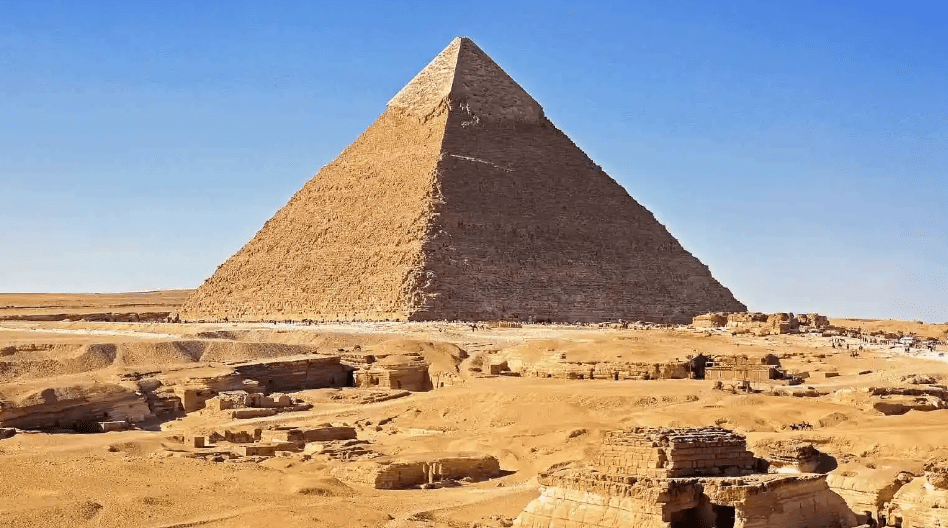

In March 2025, a satellite study suggested possible underground structures beneath Egypt’s Pyramid of Khafre using space-based radar data. The findings, which hint at deep shafts and chambers, have sparked online interest, but experts caution they remain unverified and could represent natural geological formations rather than human-made features.
Satellite Radar Technology Detects Possible Underground Features
The research uses Synthetic Aperture Radar (SAR), a technology that sends radar signals from satellites toward Earth and measures how they bounce back. Because different materials reflect radar waves in different ways, scientists can study variations in underground density. After gathering the data, computers convert the signals into composite images that may reveal hidden spaces or structural changes beneath the surface.
According to the study, the processed images show patterns resembling vertical shafts extending deep below the pyramid, including eight cylindrical formations reaching hundreds of meters into limestone bedrock. Radar signals also appear to indicate two large chamber-like spaces at deeper levels and five possible voids inside the pyramid itself.
Mars mystery cracked open after NASA’s dramatic radar test pierces 1,500 meters of polar ice
Researchers stress that these findings are interpretations of radar patterns, not direct observations. No excavation or ground-based scanning has confirmed the structures. While SAR is widely used in environmental and geological studies, subsurface imaging remains complex, and natural geological features can sometimes appear similar to man-made formations.
Online Buzz Grows While Academic Circles Urge Caution
The announcement quickly gained traction across social media platforms. Videos, graphics, and commentary discussing hidden chambers beneath the pyramids spread widely online within days. Many posts framed the findings as evidence of undiscovered ancient structures, drawing attention from audiences interested in history mysteries and alternative archaeology.
Despite the excitement online, academic reactions have been measured. Experts familiar with pyramid research note that satellite imagery often produces ambiguous results. Image processing techniques can amplify patterns, sometimes creating visual forms that appear structured even when they are natural.
Cuba’s New Radar Site: A Strategic Surveillance Tool Near the United States
Without ground verification methods such as excavation, drilling, or ground-penetrating radar surveys, specialists say it is difficult to determine the true nature of the detected signals. Radar reflections show differences in density, not necessarily walls, tunnels, or constructed rooms.
The difference between interpretation and confirmation is central to the discussion. Archaeological discoveries typically require physical evidence gathered directly at a site. Remote sensing can guide research, but it does not replace field investigation.
For now, the study has added new data to an already complex scientific conversation rather than settling any long-standing questions about the pyramid’s internal or underground design.
Natural Caves, Geological Voids, and Speculation Around Ancient Myths
The geology of the Giza region is central to understanding recent claims about underground structures. The plateau is mainly made of limestone, a rock that naturally develops cavities, cracks, and hollow spaces over long periods due to water movement and erosion. Earlier geological surveys have already identified natural voids beneath parts of the area, and past explorations confirmed that the bedrock under the pyramids is not entirely solid.
Because such caves are common in limestone landscapes, some researchers believe the radar signals may reflect natural geological formations rather than human-made shafts or chambers. Distinguishing between natural and artificial structures is difficult when relying only on satellite imaging without physical investigation.
The claims have also sparked cultural speculation. Some commentators have linked the suggested underground spaces to ancient Egyptian ideas of an underworld described in funerary texts, while others compare them with prehistoric traditions from distant regions. However, these connections remain speculative and lack archaeological evidence.
The radar study has added new discussion around one of the world’s most studied archaeological sites, but the findings remain interpretations based on satellite data and have not been confirmed through excavation or on-site scientific verification.

