

A Chinese commercial satellite has come under focus after reports said its high-resolution images were used by Iran to monitor Israeli- and US-linked targets. The case highlights how private space technology is increasingly playing a role in surveillance and military operations, with TEE-01B at the center of attention.
A New Kind of Satellite Deal Raises Concerns
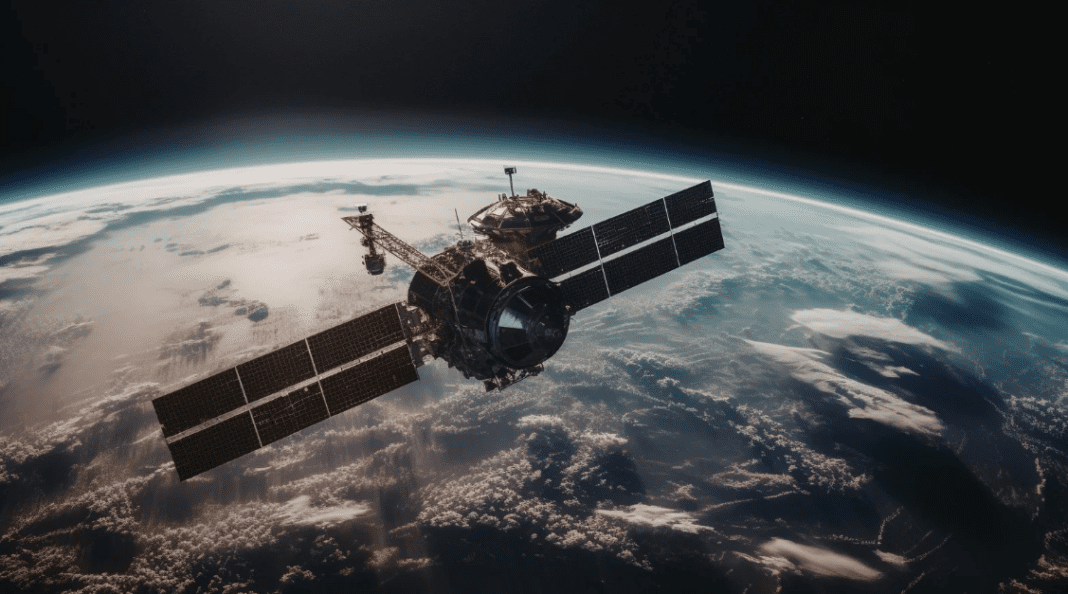
A Chinese commercial satellite, TEE-01B, has come into focus after reports revealed its high-resolution images were used to support military operations. Developed by a private Chinese space company, TEE-01B is part of a growing trend in commercial Earth observation services. Unlike traditional government-controlled systems, it follows an “in-orbit delivery” model, allowing control to be transferred to external clients after launch.
In late 2024, the Islamic Revolutionary Guard Corps (IRGC) Aerospace Force secured operational control of TEE-01B in a deal worth about $36.6 million. The agreement included access to tasking, data services, and technical support from Chinese ground providers.
China’s 56-satellite navigation system creates a massive strategic edge over India
This marked a major leap for Iran’s space-based surveillance capabilities. Earlier systems like the Noor series had limited performance, but TEE-01B offers imagery with a resolution of around 0.5 metres, enabling clear identification of vehicles, aircraft, and small infrastructure changes on the ground.
High-Resolution Images and Target Monitoring
Satellite imagery from TEE-01B with a 0.5-metre resolution is considered highly detailed and advanced. At this level, objects roughly the size of a small table can be clearly seen from space. This allows users to identify vehicles, aircraft, and even subtle changes in buildings or infrastructure. Such precision makes these images extremely valuable for tracking movement and planning operations with greater accuracy.
Reports based on leaked documents and satellite tasking records suggest that TEE-01B was used to monitor several sensitive locations linked to the United States and its allies. These included key military bases and strategic facilities, where even small changes on the ground can carry significant importance.
The US-led blockade of the Strait of Hormuz uses 15 warships and F-35B jets to enforce control
The monitored sites were spread across the Middle East, including Prince Sultan Air Base in Saudi Arabia, Muwaffaq Salti Air Base in Jordan, and areas connected to the US Fifth Fleet in Bahrain. Additional locations included Erbil Airport in Iraq, along with sites in Kuwait, Djibouti, Oman, and the United Arab Emirates. Some of these were located near civilian areas, increasing the sensitivity of the surveillance.
Data indicates that these locations were observed both before and after Iranian strikes. This suggests TEE-01B imagery was used not only for planning but also for assessing damage, helping improve accuracy and reduce uncertainty.
Commercial Space Technology and Strategic Impact
The use of commercial satellites like TEE-01B in military-related activities highlights a major shift in global space technology. In the past, only a few powerful governments had access to high-resolution imaging systems. Today, private companies are offering similar capabilities to paying clients, making advanced satellite data more accessible than ever before.
This shift has significantly changed how countries approach surveillance and intelligence gathering. Instead of spending years and large amounts of money developing their own satellite programs, nations can now buy access to systems like TEE-01B. This allows them to quickly obtain detailed images of locations around the world and respond faster to changing situations.
The new front line: Why satellite intelligence is becoming Iran’s most powerful weapon
For Iran, this type of arrangement appears to have helped bypass long-standing international restrictions and sanctions. By working with a commercial provider, it gained access to high-quality satellite imagery without relying entirely on its domestic capabilities. At the same time, the involvement of China reflects its expanding role in the global satellite and space services market.
However, the use of such technology to monitor military targets has raised concerns among global observers. The ability to track sensitive locations using commercially available tools adds a new layer of complexity to international security. It also shows how clearer images and faster access to data can improve decision-making and increase operational precision on the ground.