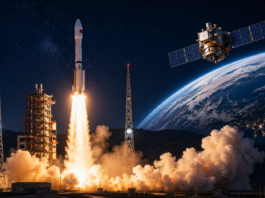
Korea is set for a key milestone in its space program as the launch of its Earth observation satellite, CAS500-2, finally approaches after years of delays. The mission is now back on track and ready for liftoff from Vandenberg Space Force Base aboard a Falcon 9 rocket, marking an important step in the country’s growing presence in space technology.
A Long-Awaited Liftoff Finally Approaches
After facing nearly four years of delays, Korea’s Compact Advanced Satellite 500-2 (CAS500-2) is now ready for launch. This midsize Earth observation satellite will lift off from Vandenberg Space Force Base aboard a Falcon 9 rocket. The launch is scheduled for 3:59 p.m. on Sunday, marking a significant moment for Korea’s growing space program.
Before reaching this stage, the satellite went through about 30 days of detailed prelaunch preparations. These included careful system checks and fueling processes to make sure everything is working correctly. Now, the satellite is fully prepared and waiting for its journey into space.
🚀 Korea blasts into crewed space history — first satellite K-RadCube heads to NASA for Moon mission
The launch process will follow a well-planned sequence. Around 60 minutes after liftoff, CAS500-2 will separate from the rocket. Shortly after, it is expected to establish its first communication with a ground station located in Svalbard. This first contact is a critical step to confirm that the satellite is functioning properly in orbit.
What CAS500-2 Will Do in Space
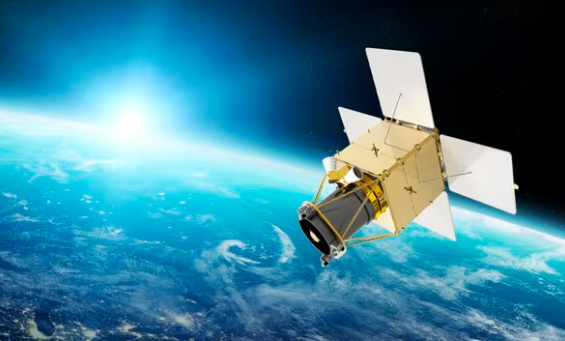
Once in orbit, CAS500-2 will operate at an altitude of about 498 kilometers above Earth. From this height, it will observe the planet and capture high-quality images. These images are used for many important purposes, including environmental monitoring, urban planning, and disaster management.
The satellite weighs around 534 kilograms, making it part of the 500-kilogram-class satellite category. Despite its relatively compact size, it is equipped with advanced imaging technology. CAS500-2 can detect objects as small as 0.5 meters in black-and-white images. In color images, it can distinguish objects about 2 meters in size.
This level of detail allows the satellite to provide clear and useful information from space. For example, it can help track changes in forests, monitor construction in cities, or observe natural disasters like floods and wildfires. Such data is valuable for governments, researchers, and emergency teams.
CAS500-2 will first go through a four-month initial operation phase. During this period, its systems will be tested and adjusted to ensure smooth performance. After that, it will begin full operations alongside CAS500-1, another satellite in the same series that is already in orbit.
Delays, Development, and Program Goals
The journey of CAS500-2 has been long and complicated. The satellite was originally scheduled to launch in the second half of 2022 on a Russian rocket. However, the Russia-Ukraine war caused major disruptions to global space activities. Many launches were delayed or canceled, and CAS500-2 was one of the missions affected by these sudden changes.
After the delay, the launch plan was moved to a rocket from SpaceX. Even with this new arrangement, the mission did not move forward immediately. Plans for a shared launch with another satellite were later revised, and CAS500-2 was reassigned to its own dedicated launch. This decision improved mission planning but also extended the waiting period further.
South Korea’s Mini Marvel to Spy on Venus: CubeSat Aims to Crack the Cloudy Code
Due to these repeated delays, CAS500-2 will now launch after CAS500-3. This is unusual, as satellites are usually launched in sequence based on their numbering. CAS500-3 was successfully placed into orbit in November last year using Korea’s Nuri rocket, highlighting how timelines in space missions can shift unexpectedly.
The CAS500 program plays a key role in strengthening Korea’s satellite capabilities. It aims to build a standardized platform for mid-sized Earth observation satellites, making future development faster and more efficient. CAS500-2 was developed by Korea Aerospace Industries, which took over as lead developer in 2018, continuing earlier work with the Korea Aerospace Research Institute.